
The Celebration Of The Battle Of Vučji Do – A Symbol Of Unity And A Mirror Of Deep Divisions In Montenegro – The Balkan
Please follow us on Truth Social, X, YouTube, Minds, Telegram, Rumble, GETTR, Gab, Instagram
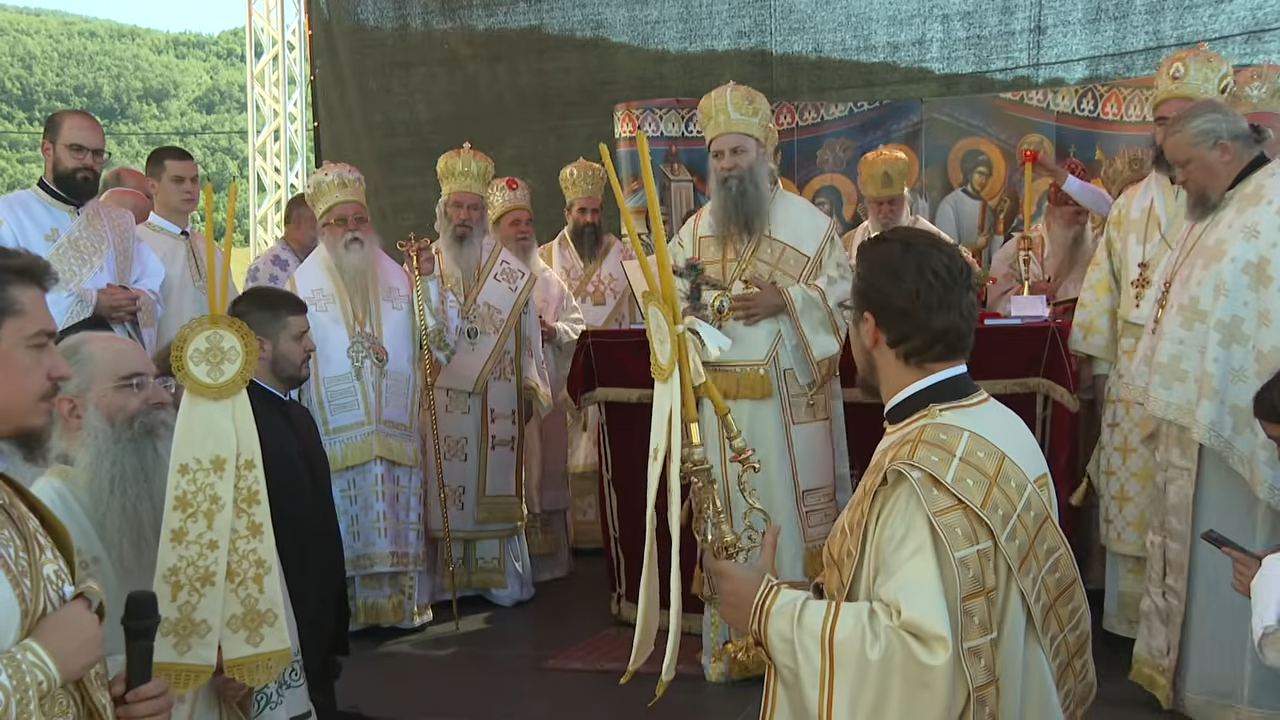
In recent days, Montenegro marked the 150th anniversary of the Battle of Vučji Do (1876), one of the most significant victories in the modern history of the South Slavic peoples against the Ottoman Empire. The presence of His Holiness Serbian Patriarch Porfirije, along with local clergy and a large number of faithful, gave the event a strong spiritual and national character.
Historical Significance of the Battle
The Battle of Vučji Do was not merely a military victory. At a time when the Ottoman Empire was still a major power in the Balkans, the combined forces of Montenegrins and Herzegovinians, with support from Serbia, inflicted a heavy defeat on the Turkish army. It was part of the wider Herzegovina Uprising, which foreshadowed major changes in the Balkans and contributed to the liberation wars of the 1870s.
For the Christian peoples under Turkish rule, this victory carried deep symbolic and religious meaning – it represented the triumph of the Cross over the Crescent, and the defense of identity, faith, and freedom. At that time, the population of Montenegro was overwhelmingly Serbian in ethnic and national sentiment. The Petrović-Njegoš dynasty openly nurtured Serbian identity. Montenegrin distinctiveness existed primarily in a state-legal and geographical sense, not in opposition to Serbdom.
Contemporary Divisions – A Reflection of an Identity Crisis
However, this year’s celebration clearly highlighted the deep divisions tearing through modern Montenegro. While one segment of citizens — mostly those identifying as Serbs — celebrated together with the Serbian Church and the Patriarch, another segment — ethnic Montenegrins — organized separate, parallel commemorations.
This division is not accidental. It is the result of a process that began after World War II, accelerated during the communist period, and intensified especially after the 1990s and Montenegro’s independence in 2006. The modern Montenegrin nation is a relatively new phenomenon — constructed and encouraged through state policy, media, and the education system with the aim of distancing from Serbian identity.
Today, Montenegro is increasingly fragmenting along ethnic lines into:
Serbs,
ethnic Montenegrins,
and other minorities (Bosniaks, Albanians…).
This kind of ethnic division strongly resembles the Bosnian model — “Bosnization.” In Bosnia and Herzegovina, the three constituent peoples live in parallel worlds with minimal shared identity. If the current trend in Montenegro continues, the same fate awaits this small country: ever deeper divisions, political deadlock, weakening of common institutions, and constant disputes over identity, language, faith, and history
Conclusion
The celebration of the Battle of Vučji Do simultaneously revealed both the best and the worst of Montenegro. On one hand — a heroic tradition, Christian faith, and remembrance of a common struggle for freedom. On the other — a profound societal split that can no longer be hidden.
If Montenegro fails to build a more inclusive civic identity that does not negate the Serbian and Orthodox roots of the majority population, these divisions will only deepen. Historical dates like Vučji Do will then serve not as bridges of connection, but as new reasons for separation.
In an era when small Balkan nations face major challenges (demographics, economy, migration), such internal divisions are a luxury that Montenegro can increasingly ill afford.