
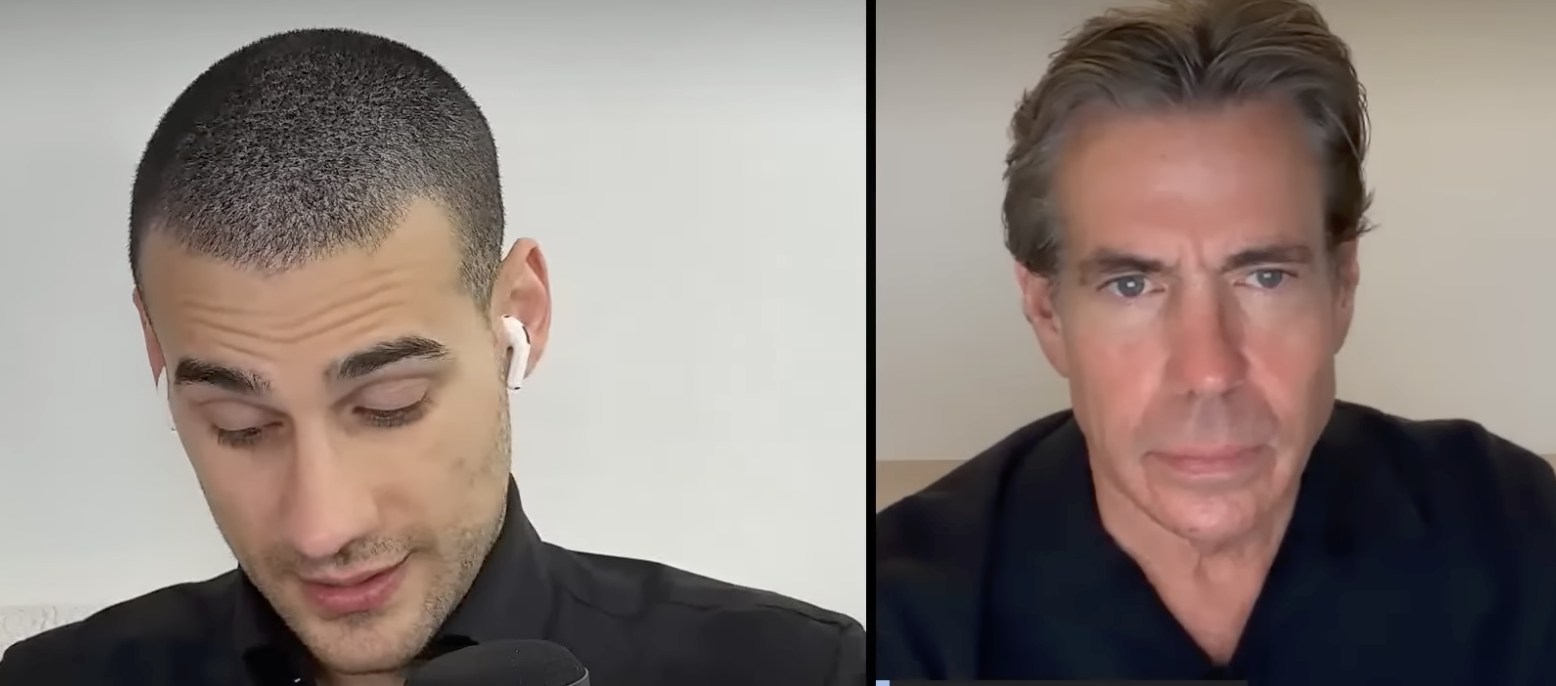
Jeffrey Currie: Ukraine and Iran Wars are Merging
Exclusive Interviews, Videos
Jeffrey Currie: Ukraine and Iran Wars are Merging
By
Matt Morgan – July 29, 2026
Matt Morgan – July 29, 2026
/script type=”text/javascript” data-src=”https://app.getresponse.com/view_webform_v2.js?u=S6bT5&webforms_id=A25R”>
Summary
The guest argues that Trump can no longer walk away from the Iran conflict because the offramp — the MOU that was written and then abandoned out of pride — is gone, and because Houthi strikes on Saudi oil production and Ukrainian strikes on Russian refineries continue regardless of US involvement. He contends that surrendering the Strait of Hormuz to Iranian-Omani management under a fee structure would set a precedent cracking American maritime hegemony, since the 1945 Bretton Woods grand bargain traded US Navy protection of global sea lanes for dollar-denominated trade recycled through New York. He argues this “exorbitant privilege” is what lets the US consume 7% more than it produces, and warns that once the US is no longer the guarantor of free trade, dollar reserve status — and the credit access underpinning the American consumer — is directly threatened.
Top 5 Key Topics
- The merging of the Ukraine and Iran wars: The host says people he respects are claiming Zelensky and neocons are dragging Iran into the Ukraine war, effectively merging the two conflicts, and both speakers describe the situation as a world war “for all practical purposes.” The guest argues Trump lost his exit when he walked away from an MOU written in terms unfavorable to Iran.
- Why the US cannot cede Hormuz: The guest imagines Trump having to ask Iran for permission for the Fifth Fleet to transit the strait, calling it not a viable option for a superpower. He argues losing control would demonstrate to the world that the US is no longer the protectorate of global trade, prompting others to ask why they pay for a service they no longer receive.
- The Bretton Woods grand bargain: Rather than taking imperial control after WWII, the US offered reconstruction money through the World Bank in exchange for dollar-based trade settled through New York, backed by the Navy keeping sea lanes open — with oil as the strategically critical commodity. The petrodollar itself only emerged after Nixon left the gold standard in 1971, but the underlying arrangement has run for roughly 80 years.
- Reserve currency privilege quantified: The guest cites 30-year fixed mortgage rates in Switzerland at 50 basis points as an illustration of what capital inflows do for a country’s credit conditions. He argues the US currently spends 7% more than it produces, and removing that privilege would be “pretty painful” for the economy.
- Oil pricing absent the Middle East premium: If Hormuz reopened and the Saudis paid off the Houthis, leaving only the Caspian Sea and Russia-Ukraine issues on the table, the guest estimates crude would sit somewhere in the $80–85 range. He notes that is only modestly below current levels, implying the war premium is smaller than assumed.
Posted in Exclusive Interviews, Videos