
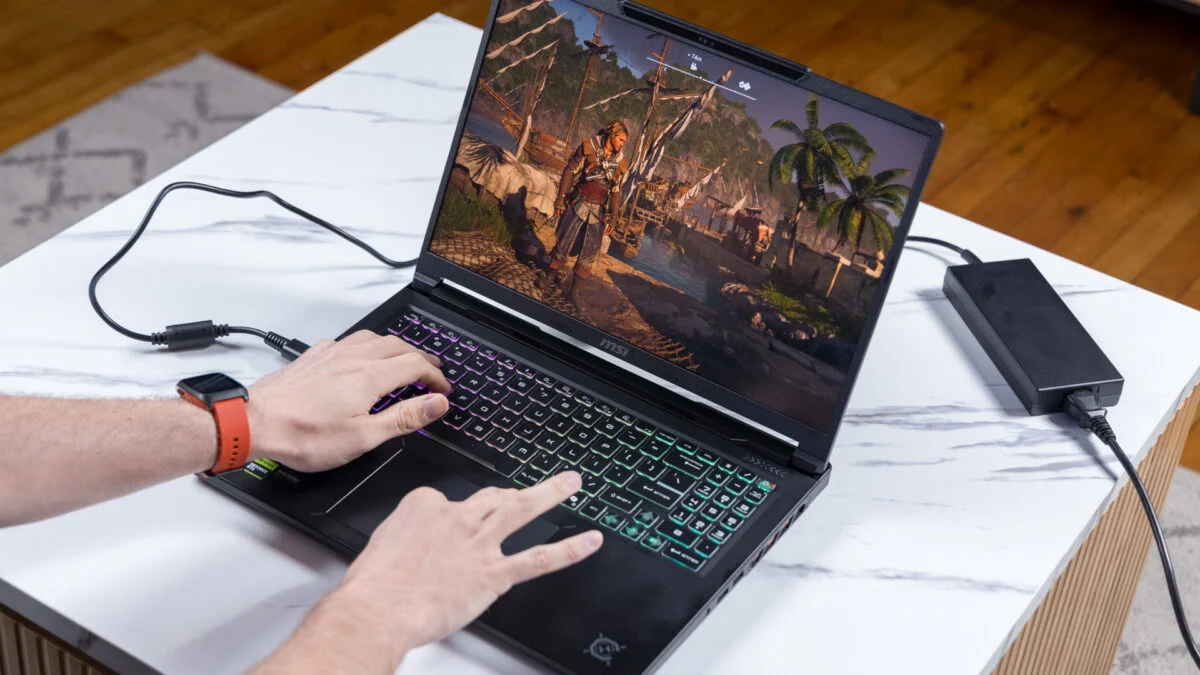
MSI Crosshair 16 HX E14W Review: Beating the RAMpocalpyse Requires Compromise
When we’re discussing budget laptops to buy in 2026, we would normally try to emphasize a minimum expectation for specs. If you’re gunning for a gaming machine, you want a certain amount of memory to go along with it. At least, that was before the RAMpocalypse.
The last few years of laptop designs have improved on a few concepts we had come to expect as routine. More fool us. New chips have supplied better battery life than you would normally expect, even in a laptop with a discrete GPU. You can throw all that out the window with the MSI Crosshair 16, specifically the E14WFK-036US model. It’s running on 16GB of RAM, the Nvidia RTX 5060 laptop GPU, an older Intel Raptor Lake chip—the Core i7 14560HX—and a measly 512GB of storage. Let me tell you right now, you’re not getting even a sliver of your Steam library on this laptop alone.
MSI Crosshair 16 HX E14W
MSI’s low-end, relatively affordable gaming laptop loses out on memory but can still pack a punch.
- Bright, fast display
- Excellent thermals
- Performance for gaming and beyond
- Excessively gamer-fueled icons and RGB
- No VRR
- Odd port placement
- Performance issues at low power
- Minimal storage will get annoying
But you shouldn’t dismiss the Crosshair out of hand. You can forgive a lot for a gaming laptop that you can find for $1,300 (this specific model is only available through Walmart). A year ago, that price point would seem perfectly achievable with these specs. Hell, it would probably be too expensive considering the 512GB SSD. Today, that’s low enough I can honestly advise students or gamers on a budget to seriously consider the MSI Crosshair 16 HX. You’ll be hard-pressed to find a better deal on a new laptop today, not when prices just keep getting worse.
And thankfully, MSI has supplied other reasons to care about this laptop, other than price. The 240Hz refresh on the IPS LCD display promises to let you run games as fast as they will go. The laptop itself boasts a surprising amount of power despite the use of older-gen components. Sure, the Crosshair 16 HX is a compromise, but it’s a better compromise than most.
One extremely gamer-fueled laptop
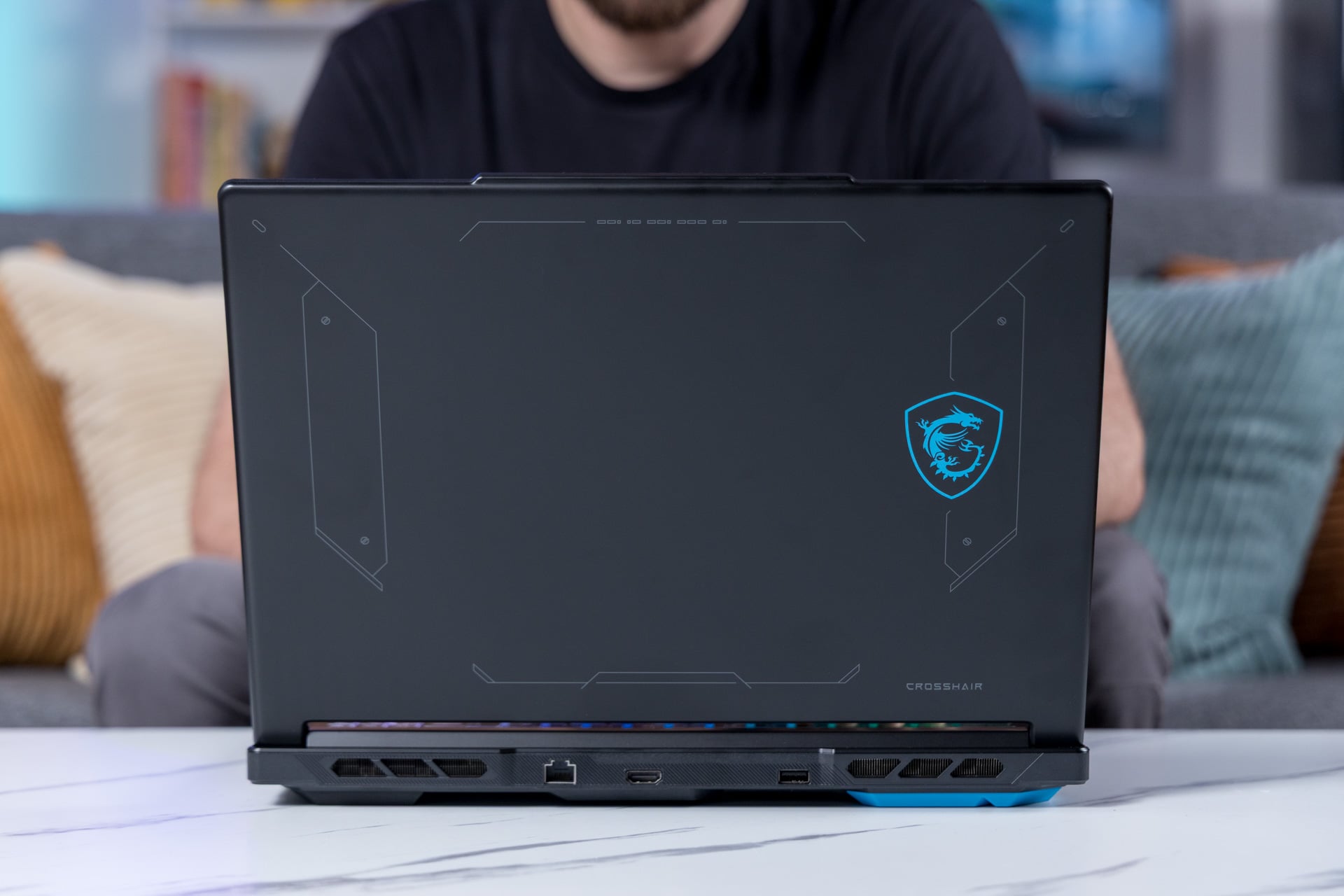
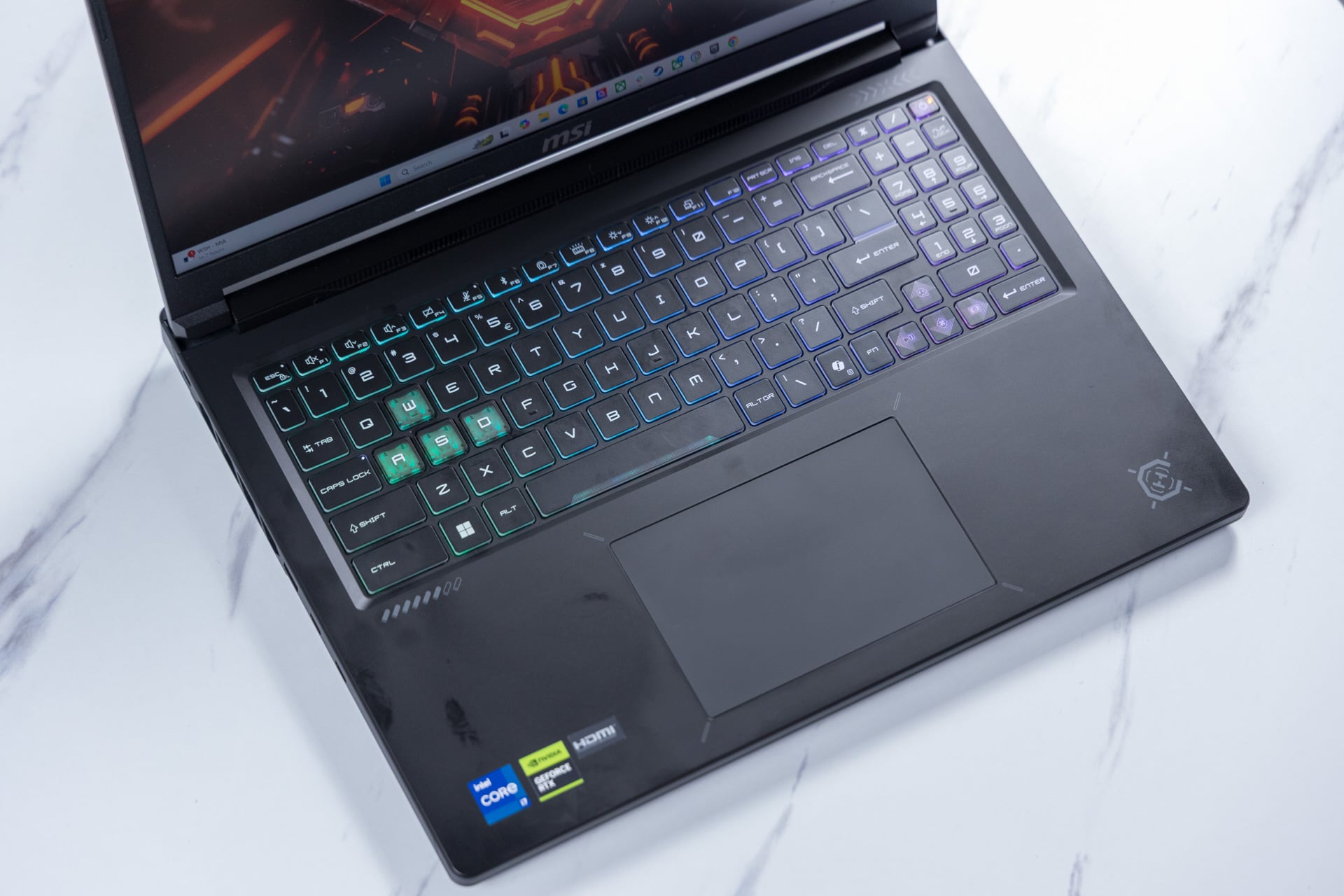
The MSI Crosshair is an extremely gamer-fueled laptop. From the moment you take it out of the box, you’re greeted with a cheap-feeling plastic cover adorned with an MSI logo and several more vaguely tech-y decals. Inside, you’ll find more stenciled-on patterns that are supposed to remind you of an in-game crosshair and an ammo counter. Everything’s plastic, which means your grubby hands will immediately mar the palm rest and laptop lid with ugly smudge marks that seem impossible to wash off.
For all that obscene gamer aesthetic, you are also greeted with a full four-zone RGB-backlit keyboard. It includes a scrunched numpad on the right, just to ensure you’re not missing any keys you may require in or out of games. As for the PC’s other controls, running my finger along the large trackpad feels stiffer than I would prefer on most laptops. It also has a dead zone that won’t accept a physical click about an inch from the keyboard. That’s normal for this price of laptop, but I’ve been spoiled by the MacBook Neo’s clicky mechanical trackpad.
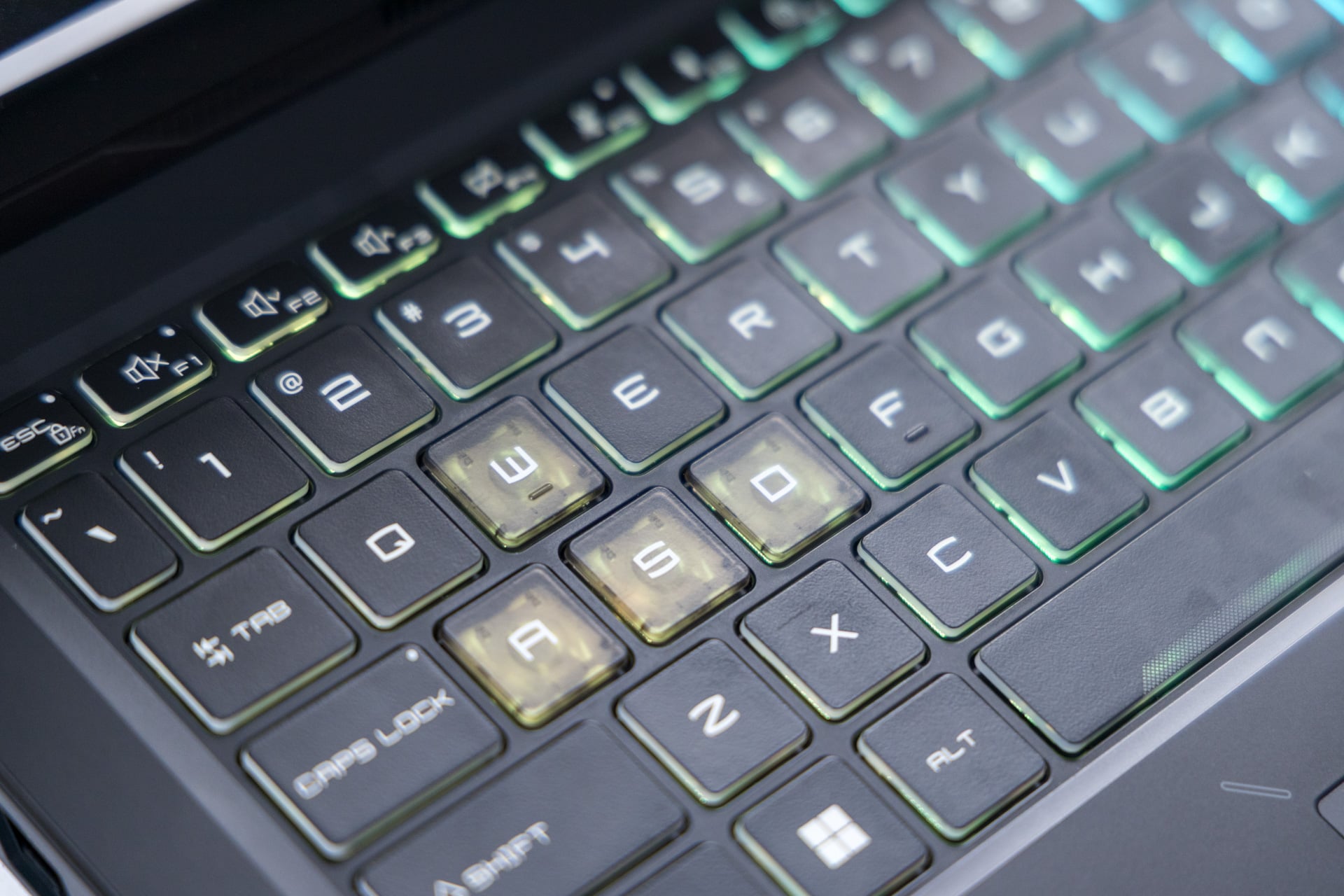
The bright RGB lights set the scene of how this laptop feels in hand. The translucent plastic surrounding the WASD keys and power button is especially evocative for those who enjoy the unicorn puke-colored lifestyle—like yours truly. The issue for some users is that the trackpad is not centered with the main typing keys, meaning your palm will rest on the trackpad more often than not. The keyboard doesn’t offer the type of bouncy experience I would hope for on a high-end machine, but the PC’s control is good enough for work or play.
I know there are some potential buyers looking at this laptop for work reasons. You just need a mobile RTX 5060, and this laptop does indeed bring that to the table. You’ll just have to suffer the motley of RGB and annoying decals that you’ll either need to cover with stickers or simply learn to live with.
A bright, fast screen for $1,300
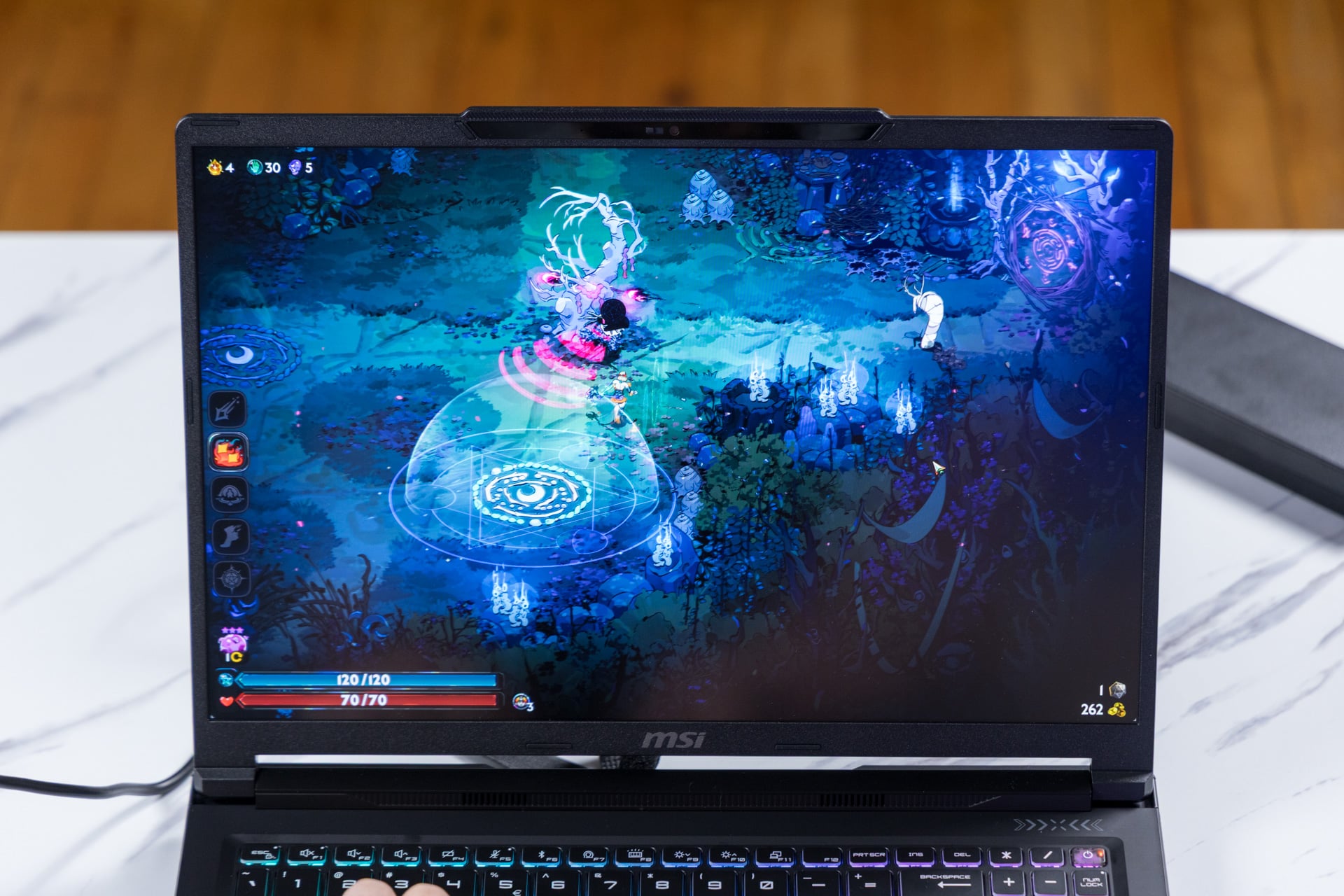
I don’t expect to see a 240Hz display on a laptop at this price point, but you can be sure that I’m happy it’s here. The larger issue is how the display does not include any kind of variable refresh rate (VRR), Nvidia G-Sync, or any other screen technology to help you avoid potential screen tearing issues during gameplay.
The Crosshair 16 HX’s QHD+ (2,560 x 1,600 pixel resolution) IPS LCD display is especially bright for this budget(ish) gaming laptop. There was rarely a point I couldn’t use it, whether working in front of floor-to-ceiling windows or in the dank space of my Brooklyn apartment with the blinds drawn. The screen is also surprisingly resistant to reflections and glare, so I could work or play in almost any environment.
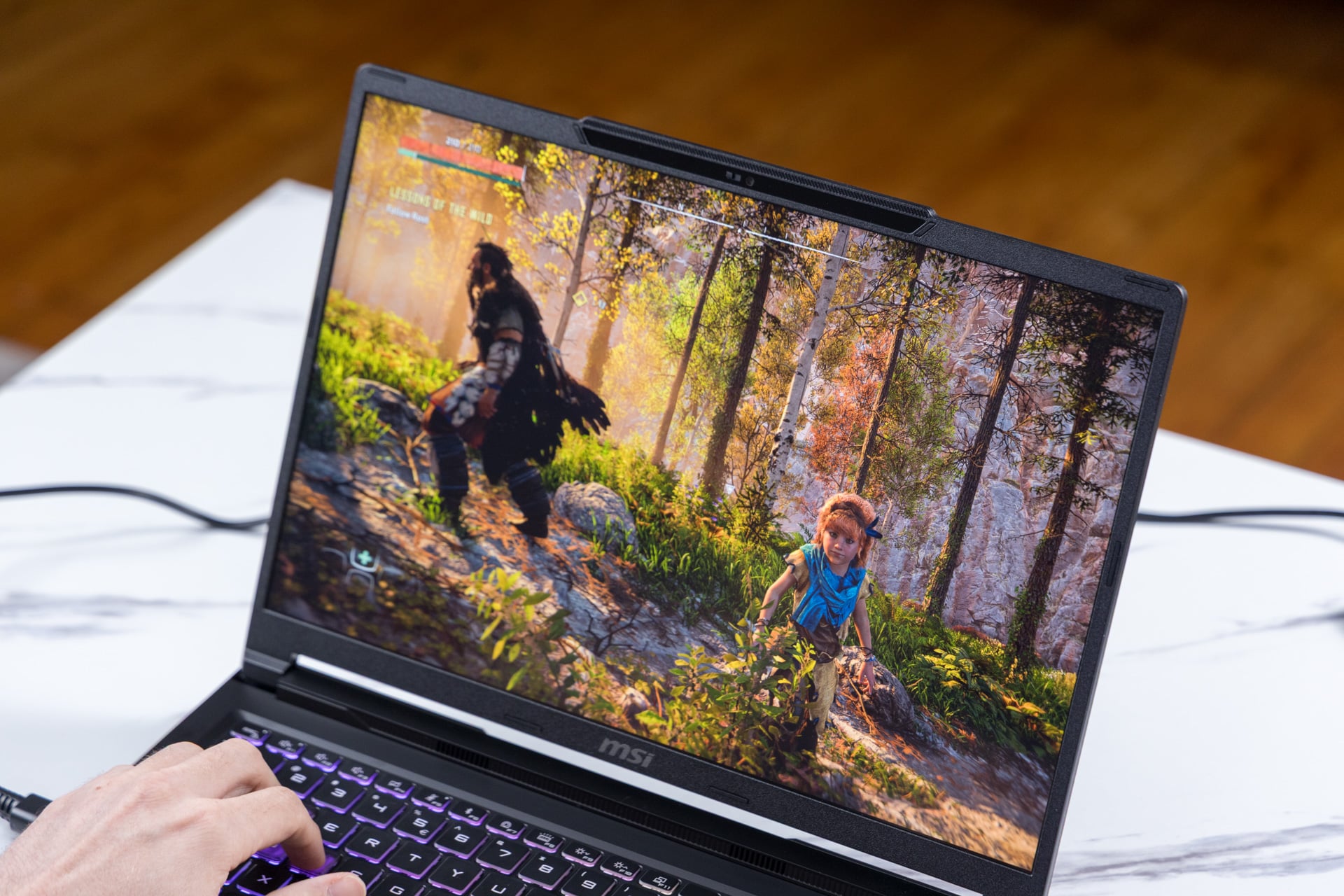
As much as I may complain about the missing VRR, I never actually experienced any issues during my weeks spent with the Crosshari 16 HX. That doesn’t mean it won’t rear its head after hours of gameplay where framerates dip or spike. The max 240Hz is an odd choice on a laptop with a lower-end CPU/GPU combo, but it will mean that some less-intensive titles like Hades II can max out the frame rates and have a very speedy gaming experience.
As for sound, the Crosshair 16 HX is… fine. The dual 2W speakers on this 16-inch laptop don’t get too loud, especially not boisterous enough to eclipse the noise of the system fans. Even with Nahimic 3 Audio Enhancer enabled, the audio doesn’t have much presence, even if it offers a balanced sound profile overall. My suggestion is to keep your favorite pair of gaming headphones or earbuds handy.
Is that a jet engine in your backpack?
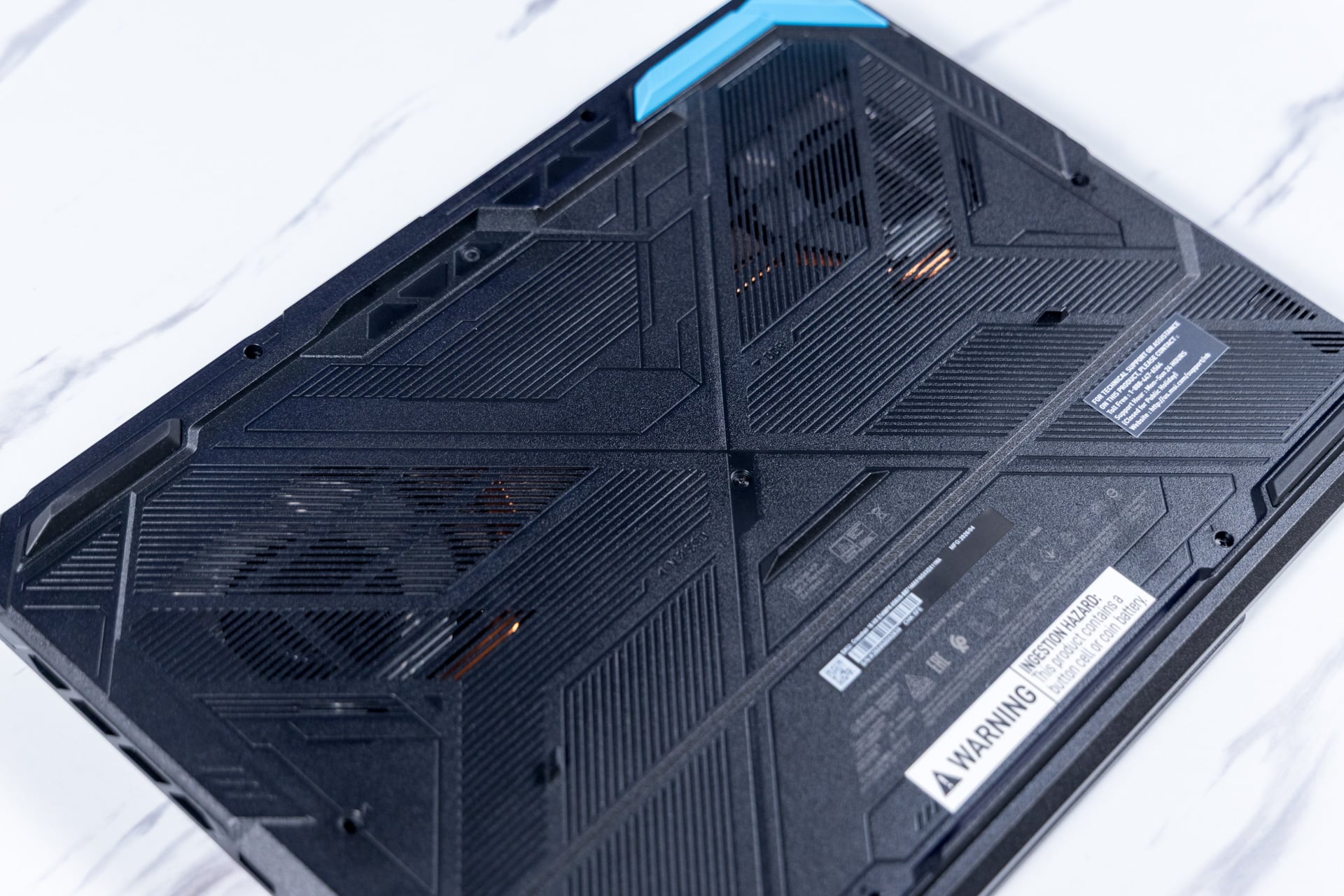
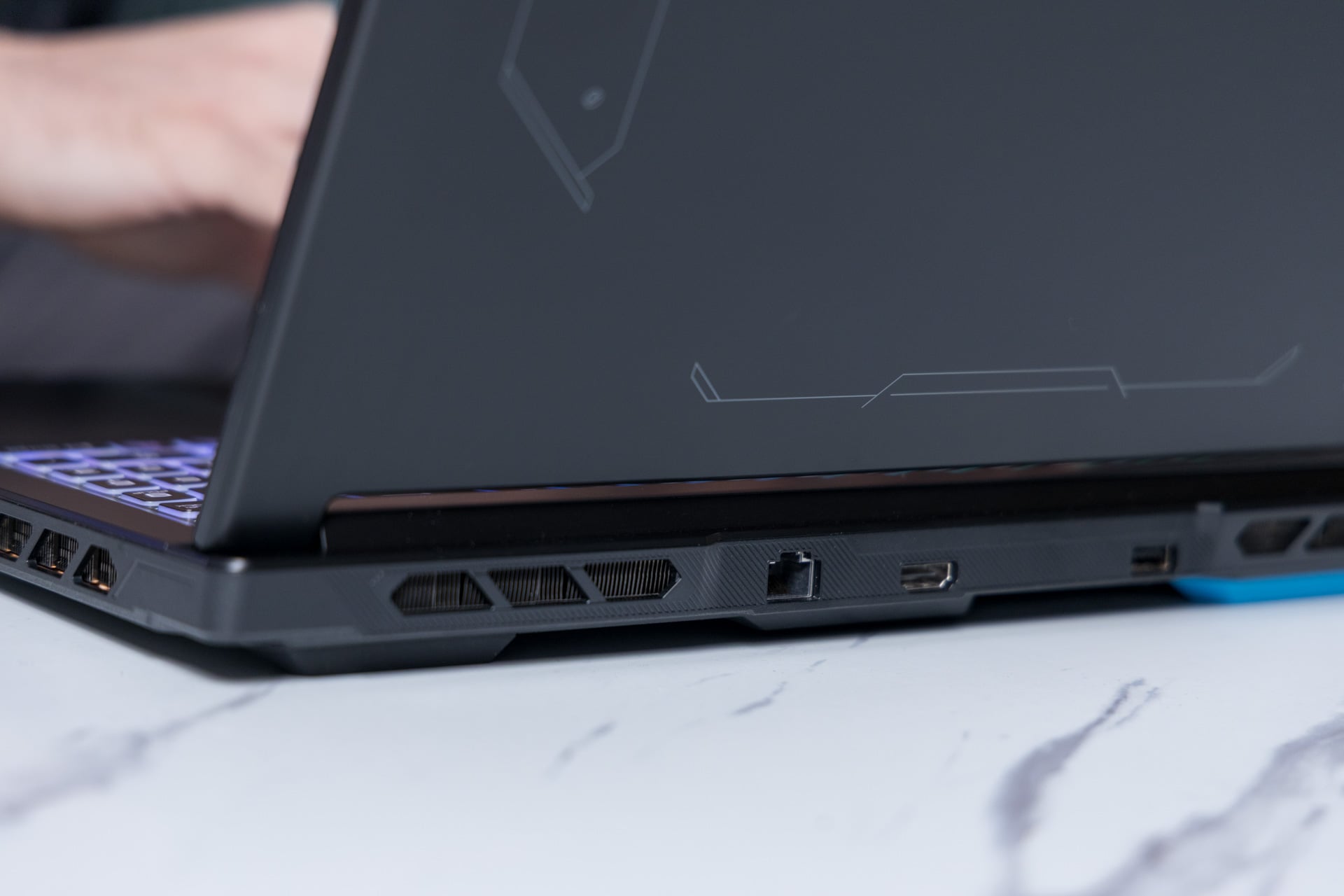
The screen, keyboard, and controls offer everything I expect from a budget laptop—maybe even more. There’s certainly not any one complaint that sticks in my craw that drives me up the wall. However, I have a bone to pick with MSI’s port placement. The back of the unit packs in Ethernet, HDMI, and a single USB-A port. There are another two USB-A ports and a headphone jack on the right flank, though on the other side you’ll find two USB-C 3.2 ports and the extra-large proprietary charging port.
The laptop’s thermal system seems built to keep the heat away from your hands, which is extremely welcome during gaming. It also seems to have pushed the charging port closer to the center of the laptop, not in the back. where it could sit out of the way. However, the thermal management of this laptop may be its greatest strength. Despite running at top speed for hours, the device never felt hot on my palms. During gameplay, it read a high of 108 degrees Fahrenheit in the middle of the keyboard but never reached more than around 78 degrees Fahrenheit on the palm rests, according to readings from a laser thermometer.

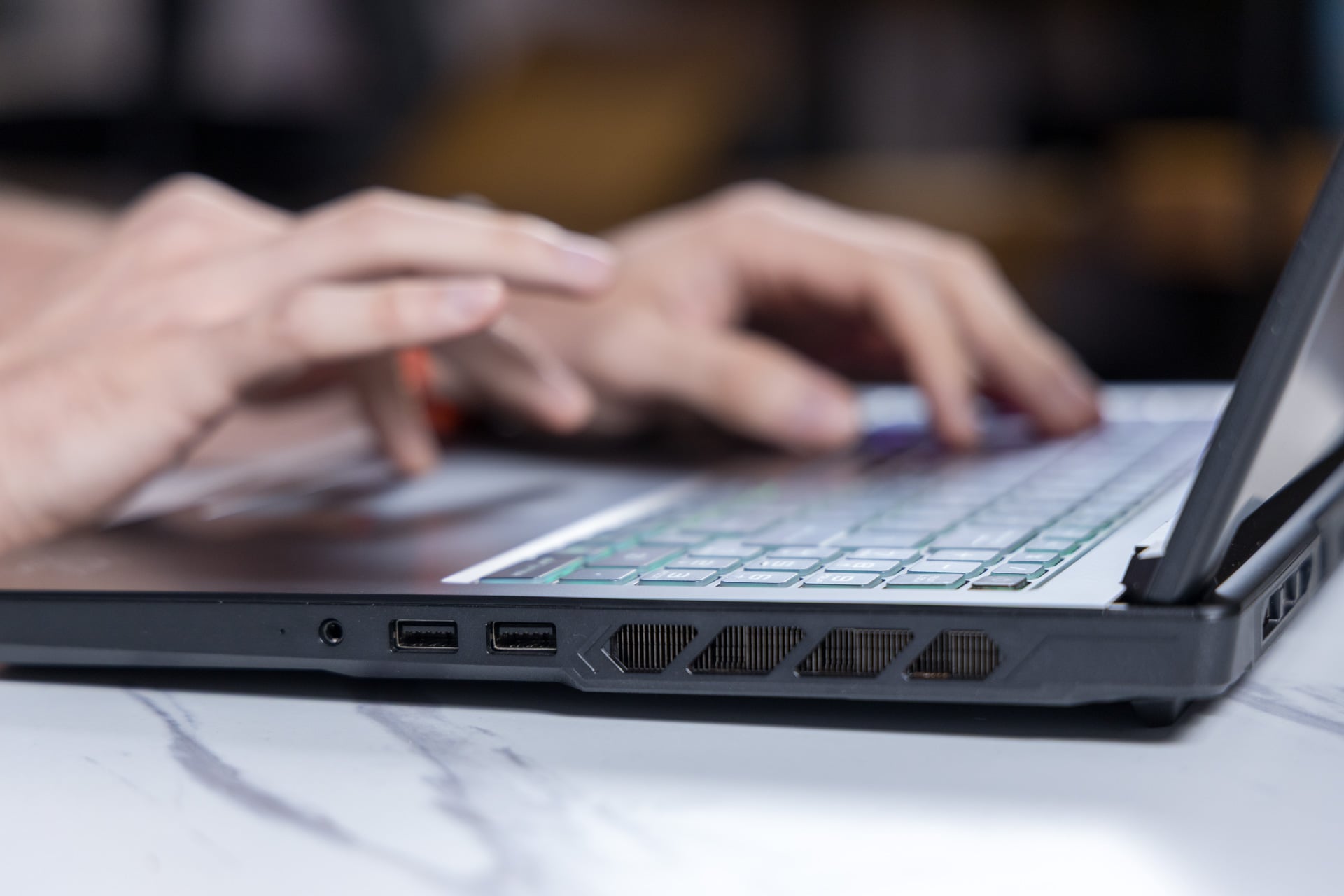
For all that heat dissipation, it comes at the cost of a quiet work environment. The MSI Crosshair 16 HX’s fans kick up such a racket that my editor, sitting 15 feet away, told me he thought it had suddenly started raining indoors. That high-speed fan system kicks out a lot of heat behind the Crosshair 16 HX as well. Be prepared for a toasty desk.
The size of this laptop doesn’t lend itself to much mobile use. At 0.86 inches thick and 10.6 inches wide, it won’t fit in any of my backpack’s laptop holders. It will be additionally heavy if you ever need to lug around that thick 240W power brick.
Wait, do you need the brick with you all the time?
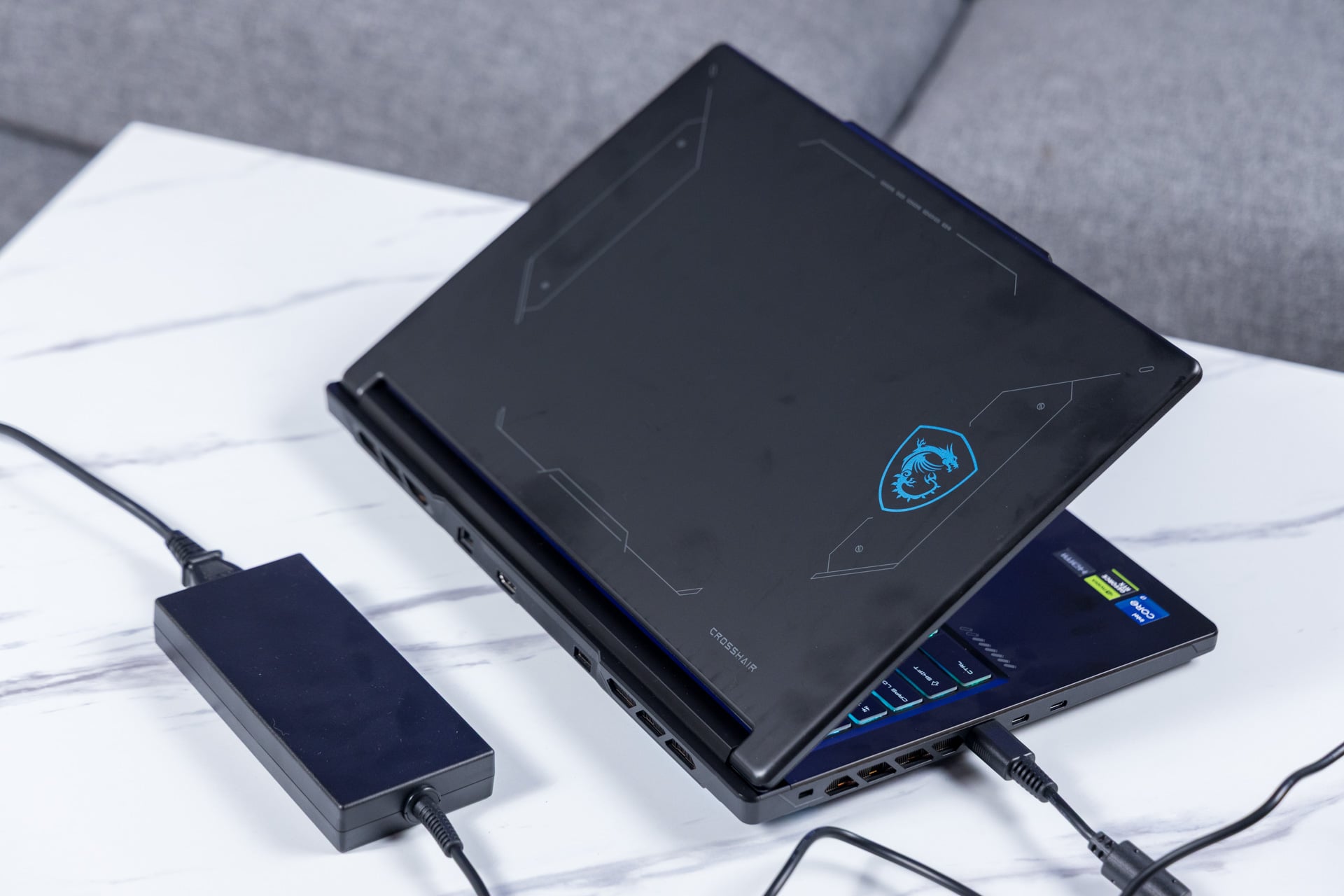
The brick and its proprietary port are married to this device if you want to hit the best performance with the Crosshair 16 HX’s 200W TDP (thermal design power). You can use both USB-C ports for charging instead, and a smaller 65W unit may be enough if you’re planning to stick to “Balanced” Windows power settings for daily work.
In either case, I don’t recommend leaving home without at least one way to charge the Crosshair 16 HX. On balanced power settings, this laptop lasts a little more than two hours. That’s just running the Chrome browser and Slack with the screen at medium brightness settings. If I try to conserve power, I can make it closer to three hours of runtime. The only problem with that is this laptop really doesn’t enjoy running on minimum power settings.
After tuning the laptop to “Best Power Efficiency,” the Crosshair 16 HX started straining under its own weight. Browser pages took seconds longer than they should have. Apps felt sluggish. The laptop stopped responding at one point, requiring a full restart.
This can pose a problem when you’re running your laptop and Windows 11 automatically switches to power savings if you run low on power. The issues make running this laptop without a plug nearby potentially hazardous.
Limited battery life is a consistent issue among all gaming laptops, or at least it was before the introduction of more modern CPUs that boast better efficiency. A Razer Blade 16—a much more high-end gaming laptop—can last twice as long without needing a sippy cup for a little more battery juice. A 14th-gen Intel chip is not going to allow for any longevity, and it’s not going to help the laptop run any better with just 16GB of RAM. That being said, this laptop has a surprising depth of performance that may prove more than enough for gaming and—dare I say it—non-gaming tasks.
Not-too-shabby performance
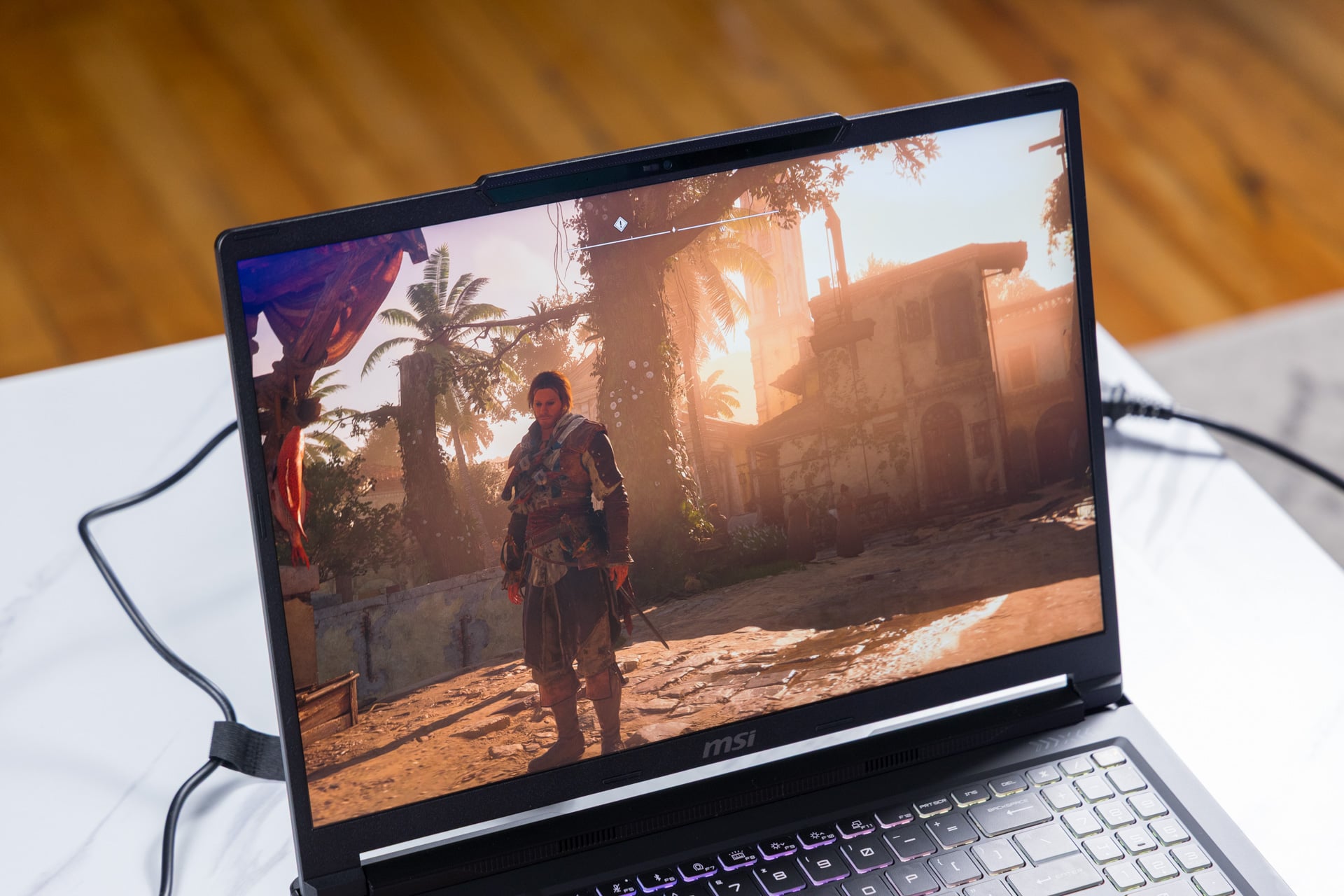
I’m happy to report the MSI Crosshair 16 HX can be your one and only gaming laptop, and you don’t have to feel too bad about not spending more. In all the regular benchmark games I tested (and beyond), the Crosshair managed to meet the challenge to play graphically demanding games on high settings with the laptop’s screen’s maximum 2,560 x 1,600 resolution. Will you have to stray from the peak settings in most games? Of course, but what did you expect from a $1,300 laptop?
For other tasks that require a discrete GPU, the Crosshair 16 HX is no slouch. If I compared this gaming rig to a creator laptop, like the $2,400 Lenovo Pro 9i 16 G11 Aura Edition, the Crosshair comes out on top in most tests despite running an older CPU. That’s not just because this HX CPU was built for high-end workloads; it’s thanks in large part to the 200W total power package supported by this $1,300 workhorse.
For instance, in Cinebench 2026 tests, which benchmark a CPU’s rendering capabilities, the Crosshair 16 HX made out with a 9% better score than the Lenovo Pro and 11% better than a Razer Blade 16, two laptops that pack an Intel Core Ultra 386H chip. You could argue that’s actually a better result for the newer Panther Lake chip, since that processor is so much more efficient than the Intel Core i7 14560HX. Price-wise, however, those other two creator and gaming laptops cost $1,000 more with the same GPU.
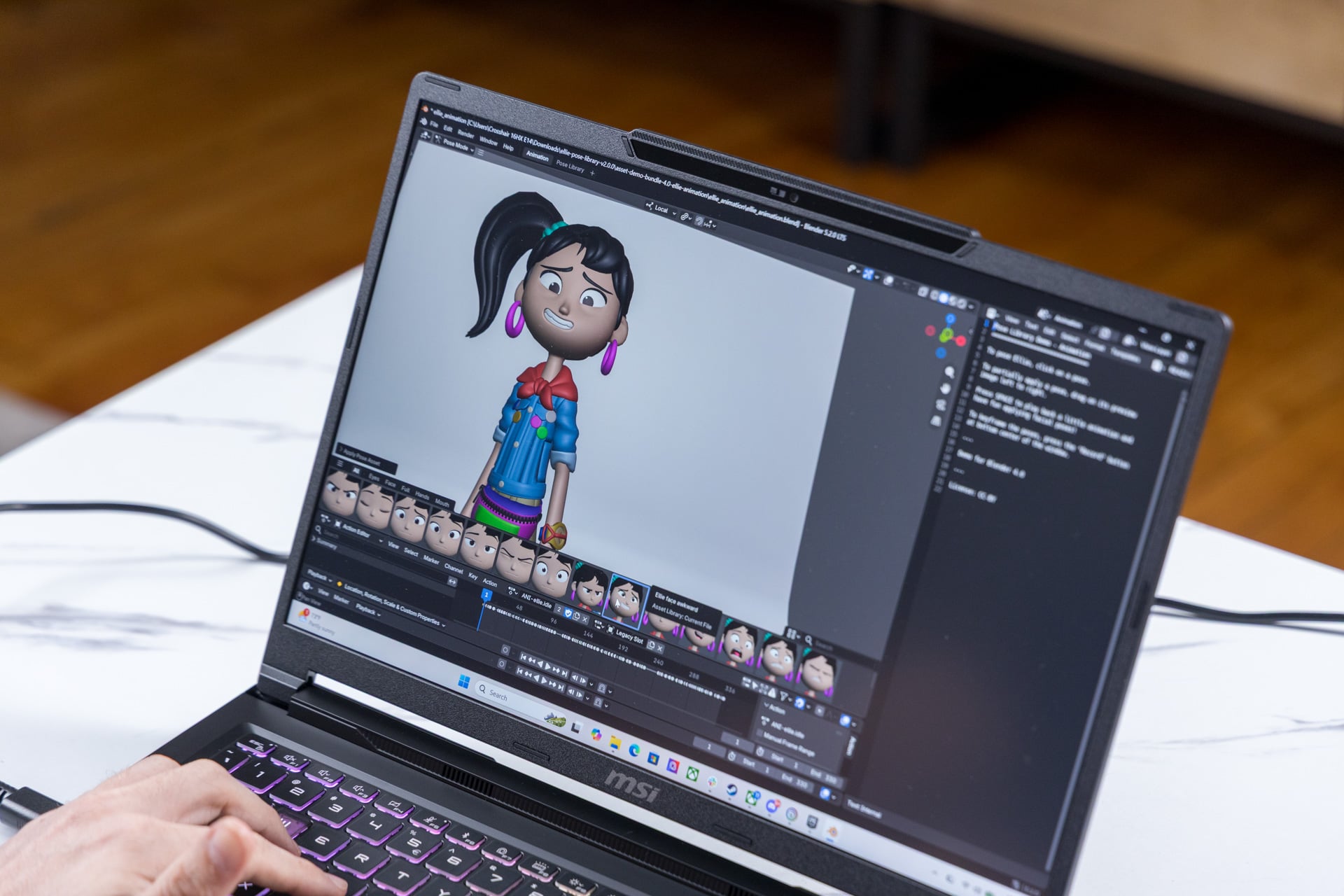
This laptop is no slouch for its price for tasks like rendering. In our Blender benchmark, where we test how long it takes the laptop to render a scene of a BMW, it took the CPU 1 minute and 33 seconds, nearly 30 seconds faster than an ultra-slim 16-inch laptop like the Acer Swift 16 AI and 40 seconds faster than an M5 MacBook Pro.
Running the same Blender test on the RTX 5060 GPU, the MSI laptop took about 20 seconds, about as long as the Lenovo Pro 9i. Still, you need to consider that laptops sporting a new Intel Core Ultra X7 or X9 chip may do the same with slightly slower GPU. Those laptops, like MSI’s own Prestige 14 Flip, will promise much better battery life.

If it’s gaming you’re after, this is where the laptop shines. In Cyberpunk 2077, I could hit nearly 60 fps in benchmark tests at high settings at this laptop’s max resolution. Even with ray tracing turned on, I was still able to get 46 fps and then use DLSS upscaling to make up the rest to achieve a speedy framerate.
The laptop is even better when running games at lower resolutions. I could achieve 40% better framerates in Horizon Zero Dawn: Remastered than on the Lenovo Legion 9i with the same GPU. Again, if you want to push how far this laptop will go, you’ll need to rely on DLSS upscaling to some degree, but if you were wondering if this machine is ray-tracing capable, I can happily say yes.
Memory is the sticking point
That 512GB storage is a sticking point if you actually want to use this laptop for gaming. In the process of this review, I had to uninstall several games just so I could finish all my benchmarking.
And no, two sticks of 8GB of DDR5 RAM aren’t a lot for gaming in 2026, even if this laptop proves itself serviceable. You can replace both the RAM and SSD with more if you have any loose memory lying around. Otherwise, you’ll end up spending way too much just to buy replacements for what was supposed to be a more affordable laptop.
So this is where we’re at in 2026, accepting shrinkflation as the norm, adjusting our expectations on pricing, and coming out surprised that a laptop only costs $1,300. That’s not to knock the MSI Crosshair 16 HX as a good-value laptop. I can only bemoan the current state of affairs for the entire laptop industry.