
DOJ Asks SCOTUS To End Block On WH Ballroom Construction
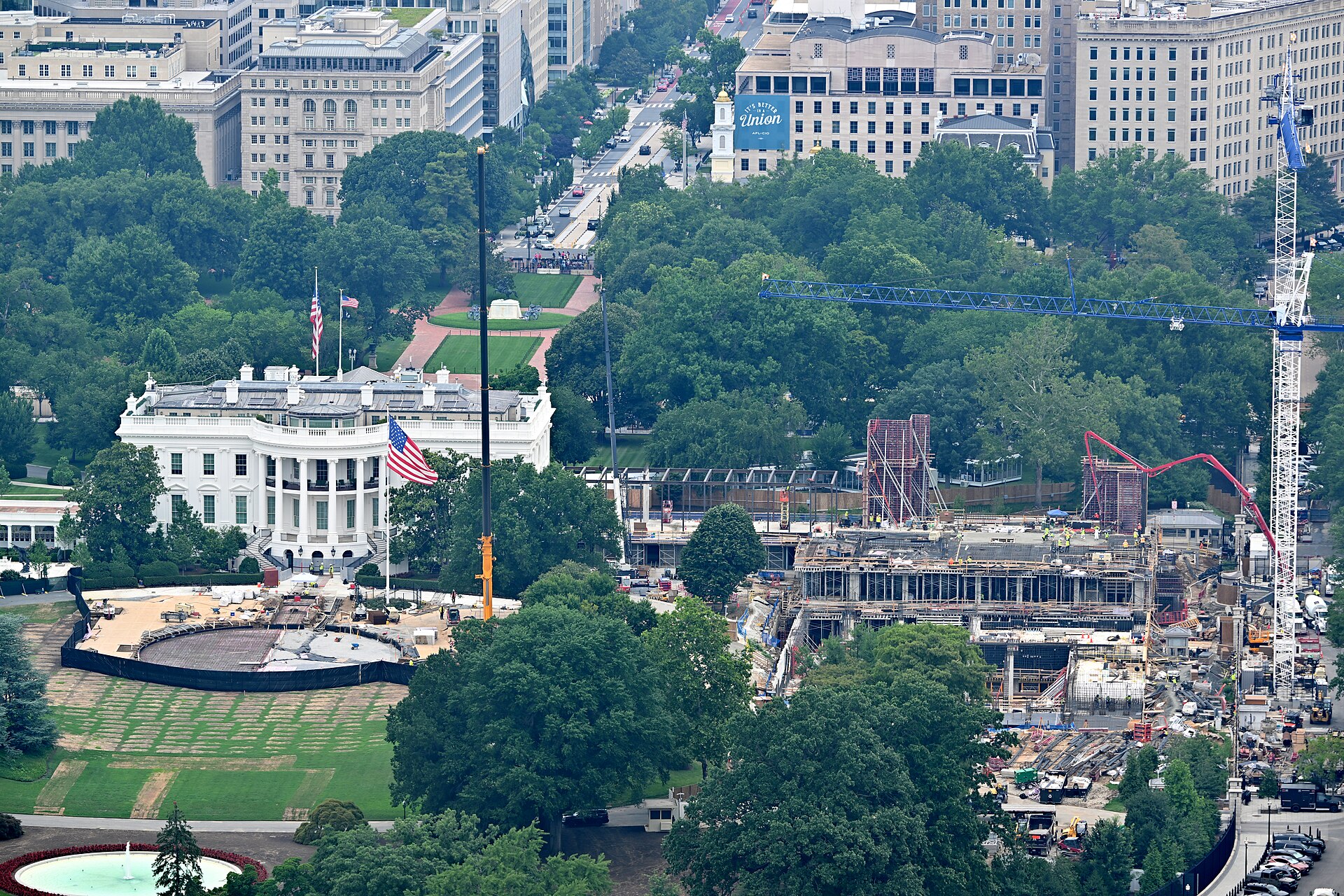
The Trump Justice Department asked the U.S. Supreme Court on Friday to lift a lower court blockade on construction of the new White House ballroom.
In its emergency application for stay, the Trump administration requested the high court to temporarily pause a preliminary injunction by D.C. District Senior Judge Richard Leon. Issued by the Bush 43 appointee earlier this year, the order barred the White House from undertaking above-ground construction on the privately-funded project because he said it lacked congressional approval.
The injunction included an exception for “actions strictly necessary to ensure the safety and security of the White House and its grounds,” such as the underground bunker portion of the development. It is one in a series of overreaching edicts issued by activist lower court judges against the administration.
A three-judge panel for the D.C. Circuit Court of Appeals rejected (2-1) the administration’s request to lift Leon’s blockade earlier this month.
In its application to SCOTUS, the Justice Department characterized Leon’s injunction as “extraordinary and unlawful,” and argued that the project (“integrated military complex”) “is vitally required by national security.” The agency further contended that, if permitted to take effect, the Bush appointee’s injunction “would wrongfully install a single district judge as sole arbiter of what further construction is ‘strictly necessary’ to protect the safety of the President, his family, staff members, and visitors to the White House, including foreign dignitaries, and presidents and prime ministers of other countries.”
“President Trump has been the target of a growing number of recent assassination attempts, including a heavily armed assassin who breached the security perimeter of the White House Correspondents’ Dinner; a gunman who opened fire at the west entrance of the White House complex; a conspiracy to deploy drones armed with explosives at the UFC Freedom 250 event; the threat of a missile attack against Air Force One on July 8; a sniper caught in the act by the Secret Service at Trump International Golf Club, Palm Beach County, Florida; and a sniper’s bullet that struck the President’s ear in Butler, Pennsylvania,” the filing reads. “The updated East Wing complex is absolutely required and should not be enjoined.”
The DOJ went on to highlight several “glaring” legal errors with Leon’s injunction and the D.C. Circuit majority’s analysis of the case. The agency notably cited D.C. Circuit Judge Neomi Rao’s dissent in the matter, in which she found that the district court “abuse[d]” its discretion because the challenger (the National Trust for Historic Preservation) “has no standing to stop construction at the White House.”
“[T]he balance of equities [also] overwhelmingly favors the government,” Rao wrote. “The district court elevated the aesthetic displeasure of a single passerby over the government’s security interests in the ballroom and the security risks of leaving an open construction site at the President’s home and office. These errors in equitable judgment require vacating the injunction.”
Chief Justice John Roberts, who oversees applications from the D.C. Circuit, has instructed the National Trust for Historic Preservation to file a response to the government’s application by noon ET on Tuesday.
Shawn Fleetwood is a staff writer for The Federalist and a graduate of the University of Mary Washington. He is a co-recipient of the 2025 Dao Prize for Excellence in Investigative Journalism. His work has been featured in numerous outlets, including RealClearPolitics and RealClearHealth. Follow him on Twitter @ShawnFleetwood