
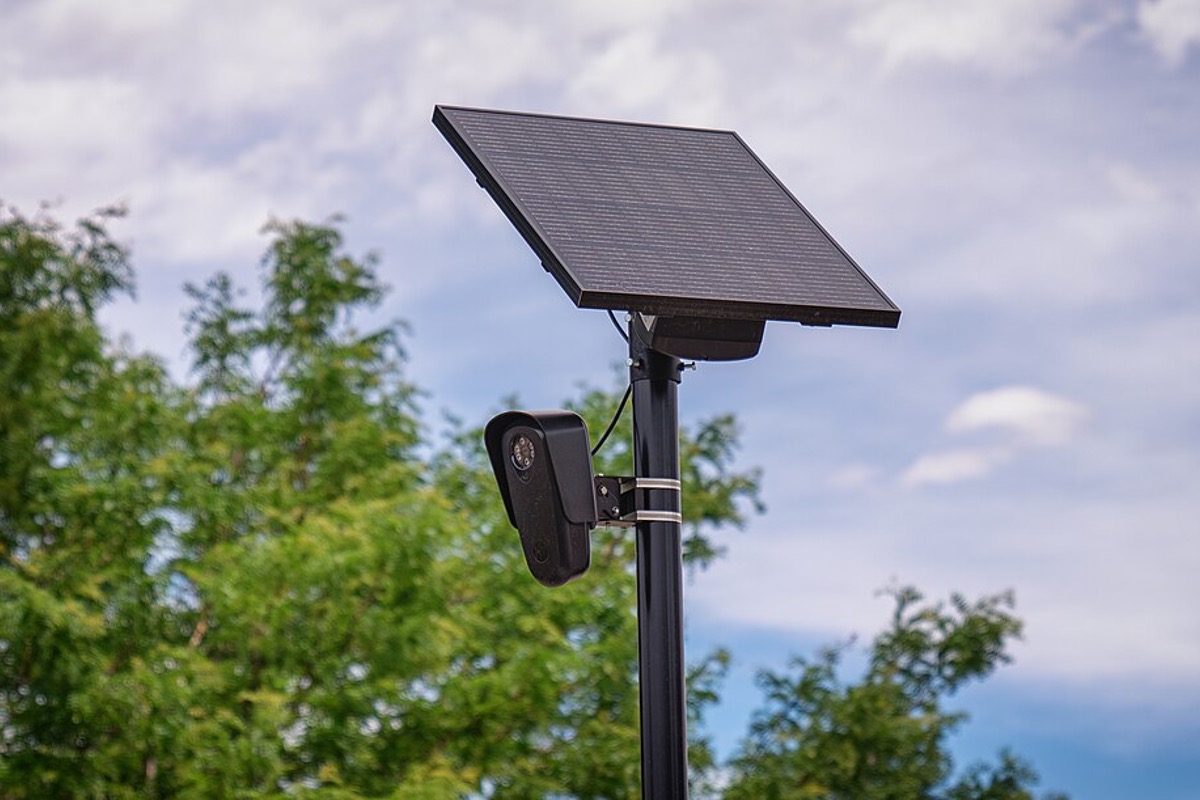
Cities Turn Against Flock as Surveillance Concerns Mount
A fast-growing police surveillance network is running into a local revolt.
Cities across the country are canceling contracts, shutting down cameras, or refusing new deals with Flock Safety. The company’s automated license-plate readers have become a common police tool. Their spread has also intensified a broader reckoning over privacy, police power, misconduct, and the limits of government surveillance.
Increasingly, that debate is producing concrete action at the local level.
The Municipal Revolt
No single tally captures the backlash perfectly, but every recent count reflects growing alarm over the reach of Flock’s surveillance network.
The San Francisco Standard counted 82 Flock contract terminations or suspensions in 28 states between August 2021 and May 2026. Thirty-nine came during the first five months of this year.
A newer Washington Examiner analysis found about 23 cities had canceled, rejected, declined to renew, or deactivated Flock systems since January. It counted roughly 98 such actions since 2021.
Los Angeles delivered one of the most visible recent blows. The Los Angeles Police Department (LAPD) allowed its agreement with Flock to expire in July. Officials cited concerns about privacy, data ownership, security, and information sharing.
Santa Cruz went further. Its City Council voted in January to terminate the city’s Flock contract and discontinue use of the system.
For all the growing resistance, the retreat remains small compared with Flock’s enormous footprint. The company says more than 5,000 law enforcement agencies and over 6,000 communities use its technology.
Flock cameras do more than photograph license plates.
The system records a vehicle at a particular place and time, then organizes observations by make, model, color, body type, plate state, and other characteristics. Investigators can search those records for vehicles linked to crimes.
Flock says its readers do not use facial recognition and normally delete data after 30 days.
That technology ostensibly gives police speed and reach. An investigator looking for a suspect or stolen vehicle can quickly determine where it appeared.
The same capability drives the privacy fight.
One camera records one vehicle at one place. Thousands of connected cameras can reveal far more. Repeated observations can help reconstruct where a vehicle traveled and when.
The immigration crackdown made those concerns harder to dismiss.
JP reported in January that Immigration and Customs Enforcement (ICE) investigators had obtained Flock information through local police, even though Flock does not contract directly with ICE.
An Associated Press investigation found that Border Patrol had access for a time to at least 1,600 Flock readers across 22 states.
California uncovered another problem. A San Francisco police audit found that the city’s Flock network had been improperly searched nearly 300 times on behalf of federal or out-of-state agencies.
Flock states that ICE lacks direct access unless a local agency permits it. But that distinction offers limited reassurance. Federal authorities do not need their own Flock account if local agencies can search the network and share the results.
When Access Becomes Abuse
This summer brought another problem into view.
Police officers themselves have allegedly abused access to Flock.
On July 6, the Georgia Bureau of Investigation (GBI) arrested five former Albany police officers. Investigators accused them of repeatedly using retained license plate information for purposes unrelated to law enforcement.
Savannah soon found problems of its own. Its Flock auditing system initially flagged 127 searches among roughly 39,000 queries for review. Investigators eventually focused on six employees.
On August 7, the Savannah Police Department fired four sworn officers and two civilian employees. The department referred all six cases to the GBI for criminal investigation.
DeKalb County suspended eight more officers on August 7 for violations involving the system.
A North Carolina case made the potential for personal abuse especially clear. Mooresville police accused an officer of accessing Flock cameras 31 times for personal purposes, including searches allegedly used to track her boyfriend’s former wife.
Flock offers a counterargument. The company says its system creates permanent audit records showing who searched, what they searched, and when. Those records have helped departments discover misconduct.
Critics can draw the opposite lesson. An audit trail can expose abuse after someone conducts a search. It does not prevent the search from happening.
The Los Angeles Warning
The Los Angeles Police Department uncovered a different problem.
A camera can accurately read a license plate and still send police after an innocent driver.
An LAPD inspector general review examined stolen-vehicle alerts over a two-month period. Officers acknowledged 161 alerts as accurate plate matches, but subsequent investigations found that the vehicles were not stolen. Another 337 alerts resulted in stolen vehicle recoveries.
That produces a 32.3-percent false-alert rate among the two categories.
The inspector general warned:
In addition to creating an inconvenience for vehicle owners, these inaccuracies can affect individual liberty interests, erode public trust, and potentially create substantial legal and financial liability concerns.
Outdated information appears to have been a major culprit. The inspector general found that stolen-vehicle records were sometimes not updated promptly after cars were recovered. A Flock camera could therefore read a plate correctly while the system behind it still treated the vehicle as stolen.
Effectiveness Is Not the Only Test
Police departments have hardly abandoned Flock en masse.
Law enforcement agencies say license-plate readers help find stolen cars, identify suspects, locate missing people, and connect crimes across jurisdictions.
Flock points to its own customer research. Its 2025 Impact Census surveyed about 700 law enforcement agencies and found that one in five cleared cases among responding agencies involved Flock technology.
Those are company-generated figures, not an independent national study. But they help explain why many police departments remain enthusiastic.
Recent events in Austin, Texas, demonstrate the argument. After a shooting spree involving stolen vehicles, Democratic Mayor Kirk Watson called for Austin to reconsider license-plate readers. Police argued that the technology could have helped them find the suspects faster.
Sure, Flock may help police solve some crimes. But that does not resolve the larger issue.
The traditional model of police surveillance starts with suspicion and then targets a person, vehicle, or place. Flock reverses that logic. It continuously collects information about ordinary drivers so investigators can search the records later if someone becomes a “suspect.”
A useful investigative tool can create powers that government should not possess without stronger limits. Flock has grown through thousands of local purchases, yet their cameras increasingly function as part of a national network. Data can cross jurisdictions. Officers can misuse access. And federal agencies, with a long history of surveillance mission creep, can obtain the information indirectly. Audits, if they even take place, may uncover abuses, but only after they occur.
The result is a surveillance capability that is expanding much faster than the legal and political safeguards around it.
Americans have long accepted police searches based on evidence and suspicion. But a system that records the movements of millions of people first, and asks who deserves scrutiny later, demands a far higher justification.
Americans Are Destroying Flock Cameras in Protest
Condition 1984: Flock AI Cameras Surveilling U.S.