
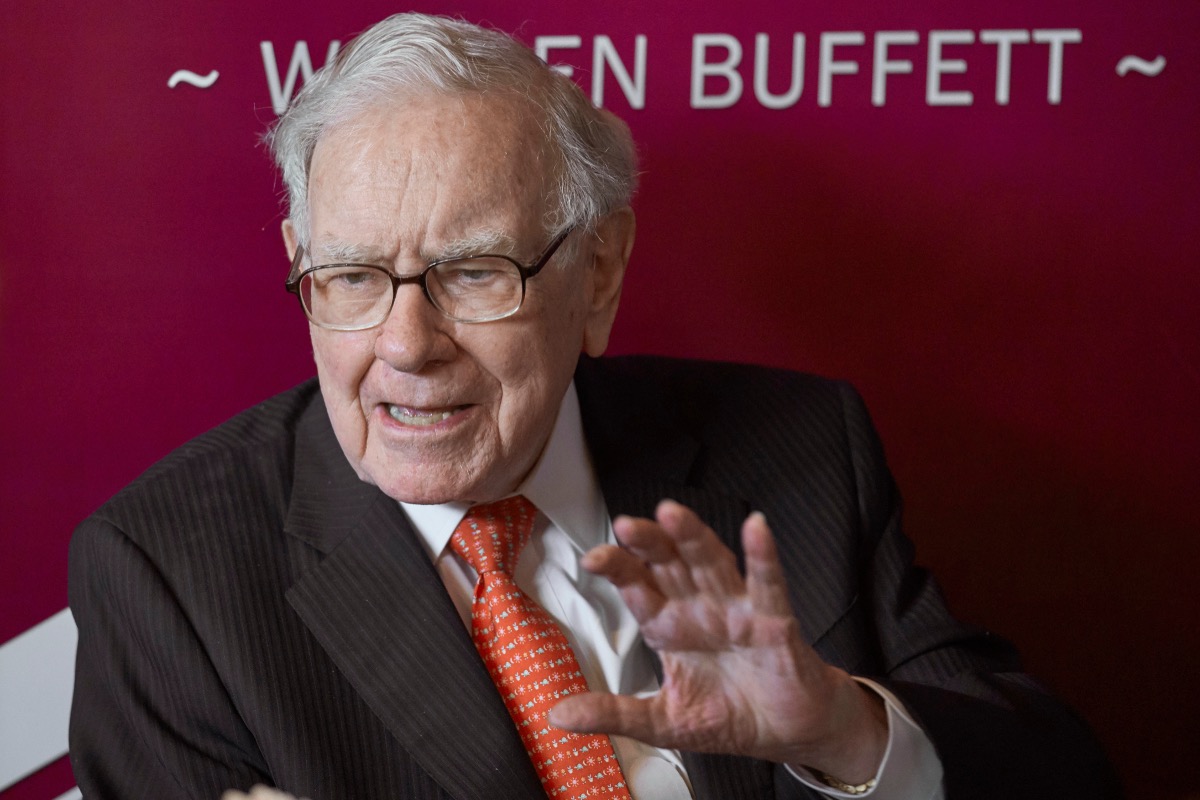
Warren Buffett’s Retirement, and the Quiet Power of Other People’s Money
After more than half a century at the helm, Warren Buffett has stepped down as chairman of Berkshire Hathaway. His son, Howard Buffett, takes over as chairman, while Greg Abel, Buffett’s designated successor since 2021, continues as chief executive. The transition caps one of the most consequential runs in American business history. Buffett took control of a failing New England textile mill in 1965 and built it into a conglomerate whose book value has grown roughly 5,000,000 percent, encompassing everything from GEICO and Dairy Queen to massive equity stakes in Coca-Cola, Apple, and American Express.
What’s most interesting is how Buffett generated the capital to make that decades-long buying spree possible. The answer is insurance: specifically, a mechanism called “float.”
The Insurance Float
When an insurer collects a premium, claims may be delayed by years or even decades. In the meantime, that money sits with the insurer, fully investable. Buffett bought his first insurer, National Indemnity, in 1967 for $8.6 million; by 2022, Berkshire’s float had grown roughly 8,000-fold, reaching $164 billion. Because Berkshire’s insurance operations have typically underwritten at a profit rather than a loss, that float has functioned as a permanent, interest-free, and profitable pool of other people’s premium payments, which Buffett then deployed to acquire entire companies and take massive equity stakes elsewhere. It is, in the most literal sense, other people’s money working for Buffett’s benefit before it was ever needed to pay their claims. GEICO (1996) and General Re (1998) supercharged the mechanism further, and reinsurance (insuring other insurers against catastrophic loss) let Berkshire collect enormous premiums that competitors were too undercapitalized to bid on.
Buffett has been explaining the float mechanism in shareholder letters for decades. It points to the outsized, structurally hidden power that insurance confers on those who control it. Insurers don’t just pool risk; they pool information, and that information has historically had value well beyond underwriting.
Gathering Intelligence
In Underwriters of the United States, historian Hannah Farber documents how early American insurers, from the nation’s founding onward, functioned as de facto intelligence gatherers. Their actuarial and shipping data was valuable enough to interest the government. The pattern reached a striking peak in World War II. Cornelius Vander Starr, founder of what became AIG, built his insurance network across Shanghai and greater Asia in the 1920s and ’30s.
When war came, he placed that global information apparatus directly at the disposal of the Office of Strategic Services, the CIA’s wartime predecessor, helping establish an OSS insurance-intelligence unit with agency director William “Wild Bill” Donovan in 1943. As journalist Mark Fritz put it in a 2000 Los Angeles Times piece, “The Secret (Insurance) Agent Men,” Starr’s underwriters “knew which factories to burn, which bridges to blow up, which cargo ships could be sunk in good conscience.” AIG’s postwar general counsel, Duncan Lee, was himself a former OSS captain.
Using Insurers Instead of Law
The Covid era offered a subtler, domestic illustration of the same underlying power. No law is needed to mandate a given workplace policy when an insurer’s premium structure could accomplish the same result: comply with a given health protocol, or pay more. In that sense, insurance functions as a type of quiet, unelected regulatory layer sitting beside, and sometimes ahead of, the formal legislative process, since businesses often respond faster to their carrier’s incentives than to Congress.
None of this is to suggest Buffett was engaged in anything covert. His genius was disciplined capital allocation, conducted in full public view for 60 years. But his single greatest tool, the insurance float, sits atop an industry with a documented history of serving purposes well beyond actuarial tables.
This article is part of JP’s weekly online newsletter Insider Report, which is emailed to TNA subscribers each week. Click here to subscribe to JP to receive the Insider Report and access exclusive content.