
That Time When the UN Protected Children “Before as Well as After Birth”
I have spent decades listening to people at the United Nations explain human rights, and as the years have progressed, those rights have expanded and changed name and meaning. Some days their mental gymnastics become so elaborate and convoluted in redefining rights that I mentally reach for something written long before today’s fainthearted discussions of “frameworks” and “indicators.”
The declaration I reach for was adopted by the UN on November 20, 1959: the Declaration of the Rights of the Child. And on most days now, I realize one sentence in the preamble of that highly negotiated, momentous document deserves a place on every delegate’s desk.
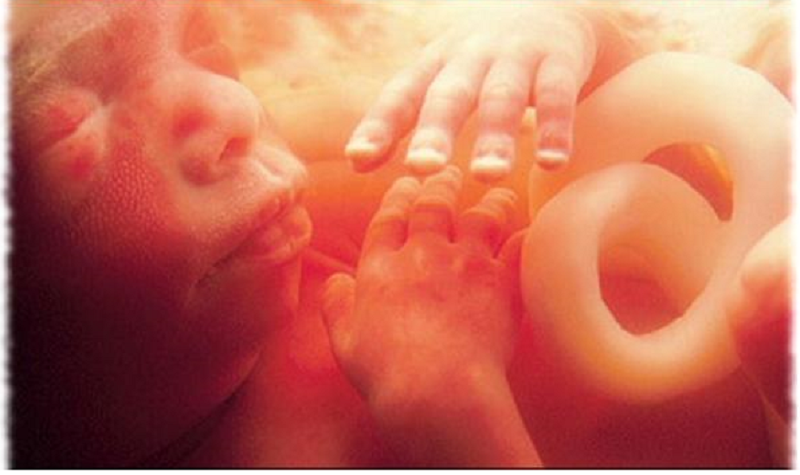
The child, the Declaration stated, needs special safeguard and care, including legal protection “before as well as after birth.” Those six words aren’t complicated, and they are not excessive. All that they do, in their simplicity, is recognize that a child is vulnerable even before the world has seen her face, heard her cry, or discovered her name. The protections she needs do not suddenly become more real and immediate in a delivery room.
The Declaration is so significant that the UN itself declared that, from that point on, November 20th, the day it was adopted, would be universally recognized as World Children’s Day.
REACH PRO-LIFE PEOPLE WORLDWIDE! Advertise with LifeNews to reach hundreds of thousands of pro-life readers every week. Contact us today.
There is also something remarkably tender about the whole document. Its authors wrote of love, understanding, nutrition, and education. They acknowledged that mothers need care, including during pregnancy. Principle 4 of the Declaration placed mother and child together, not in opposing corners. What a humane way to look at pregnancy. A woman carrying a child is someone to cherish and help, while the little human being growing within her deserves care of his own.
And those words were the result of a real debate. There were delegations (like the Italians) who wanted the Declaration to specify protection from conception. Others objected. The Philippines came to the rescue and offered the language that survived, and nations with profoundly different legal traditions agreed to it.
Their compromise did not settle all of the questions and reservations about abortion. They just did not allow the Declaration’s language to erase the child before birth. On November 20, 1959, countries that could scarcely agree on anything else came to an agreement on the responsibility to protect vulnerable human life.
Then, thirty years later, on November 20, 1989, the United Nations adopted the Convention on the Rights of the Child. This new treaty expanded children’s protections and gave participating nations legal obligations. Its drafters could have easily omitted that old phrase. Instead, they repeated the promise of protection before as well as after birth in the preamble. Article 6 of the 89 Declaration also affirmed every child’s inherent right to life. Again, the negotiators left several disputes over prenatal legal status unresolved, but they did not discard the earlier protective language.
In recent years, I find myself thinking about the preamble’s deliberative history during current deliberations and discussions on the new, so-called “sexual and reproductive health and rights.” The phrase covers genuinely important care, including safe childbirth and treatment for women who suffer complications during pregnancy. Yet in contemporary UN policy work, it also encompasses abortion access, and that is where the beautiful simplicity of 1959 seems to vanish under an avalanche of technical language.
The World Health Organization now regularly publishes detailed abortion guidelines and even instructions for governments considering changes to their pro-life laws. The United Nations Population Fund (UNFPA) claims that it neither performs nor funds abortions; those claims are often repudiated. But the UNFPA does say extensively that it encourages access wherever abortion is legal and supplies guidance built around that goal.
The committee overseeing the Convention on the Elimination of All Forms of Discrimination Against Women (CEDAW) now vehemently urges governments to decriminalize abortion. Another UN committee, charged with interpreting the Convention on the Rights of the Child itself, has urged countries to decriminalize abortion for adolescent girls. I cannot read those recommendations without wondering who speaks for the younger child, the one still in the womb.
The thing is, I know the explanations those offices, commissions, and committees would give for departing from the wording of the Convention on the Rights of the Child.
They would talk about women’s health, their newly found autonomy, and their fear of unsafe procedures. Those concerns deserve serious attention, not dismissal. Women can face frightening pregnancies, isolation, poverty, and genuine medical danger. I have never believed we honor an unborn child by neglecting his mother. What troubles me is the assumption that defending one human being must require ending another’s life by dismemberment, poisoning, or with a Manual Vacuum Aspiration machine. What is troubling is the astonishing ease with which the child has disappeared from the institutional conversation. Gone.
The shift is especially poignant when I remember Cairo in 1994. Even the International Conference on Population and Development agreed that abortion should not be promoted as a method of family planning. Yet debates concerning the Commission on Population and Development (CPD) now so often revolve around ever more expansive, so-called “reproductive-rights” language. At its April 2026 session, the Commission could not reach consensus on an outcome text because many countries understand that expanding “reproductive rights” means more abortion. At the UN, we debate terminology endlessly, and yet most countries now hesitate to repeat the words accepted in 1959.
Still, I refuse to spend this anniversary incensed. I just mostly feel sad because I think of the children who never got to celebrate a birthday. I’m sad because when so many mothers needed someone to stay beside them, the international community pushed her towards abortion. I also think of the distance between the UN’s original aspiration for the child and the conversations I hear today.
The Declaration did not imagine a child as an inconvenience to manage. It imagined someone small enough to need the world’s protection.
But I also think of the people who refuse to forget. Around the world, pro-life champions are helping frightened mothers find medical care, companionship, housing, and practical support. We speak in meeting rooms, legislatures, clinics, churches, and villages where no international official will ever visit. I’ve given a pro-life presentation on fetal development and the humanity of an unborn child in a lean-to in the middle of a tomato field. And we keep asking a simple question: Can we not care for both the mother and the child?
Our work will not produce the neatest acronym or the grandest conference declaration, but it gives substance to words written sixty-seven years ago.
On this November 20, I draw hope from the fact that the promise still exists. No committee has managed to remove those words from the 1989 Convention. No new set of indicators can make the child before birth vanish from our conscience. The United Nations once found language saying that an unborn baby needed protection before her first breath. We will keep reminding the world, patiently and persistently, until those words receive the respect that every child’s life deserves.
LifeNews.com Note: Raimundo Rojas is the Outreach Director for the National Right to Life Committee. He is a former president of Florida Right to Life and has presented the pro-life message to millions in Spanish-language media outlets. He represents NRLC at the United Nations as an NGO. Rojas was born in Santiago de las Vegas, Havana, Cuba and he and his family escaped to the United States in 1968.