
Silver Miners Are Making $44 an Ounce. Here’s How Stacking Silver Measures Up Against the Average American Savings Account.
/script type=”text/javascript” src=”https://app.getresponse.com/view_webform_v2.js?u=S6bT5&webforms_id=A25R”>
Written by Matt Morgan, Editor at the Daily Bell:
At today’s price, one of the world’s largest silver miners pulls an ounce out of the ground for about $17 and sells it for about $61. That leaves about $44 of profit on every ounce.
Investors have barely reacted. Over the past year, silver rose 29%. The Global X Silver Miners ETF, the best-known basket of silver mining stocks, rose 22%. The companies are earning more than they ever have, and their shares still trail the metal they dig up.
Meanwhile, the average American savings account pays 0.38%. So here’s how three ways of holding your savings stack up right now: dollars in the bank, silver in your hand and shares in the companies that mine it.
The Margin Wall Street Skipped Over
Pan American Silver (NYSE: PAAS) is one of the biggest silver producers on the planet. In the second quarter of 2026, it reported an average selling price of $70.97 an ounce. Its all-in sustaining cost, which covers wages, fuel, equipment and everything else it takes to keep the mines running, came to $17.80 an ounce.
A year earlier, the company sold silver for $32.91 and spent $19.66 to produce it. In twelve months the price more than doubled while costs went down. So, profit per ounce has jumped from about $13 to around $53.
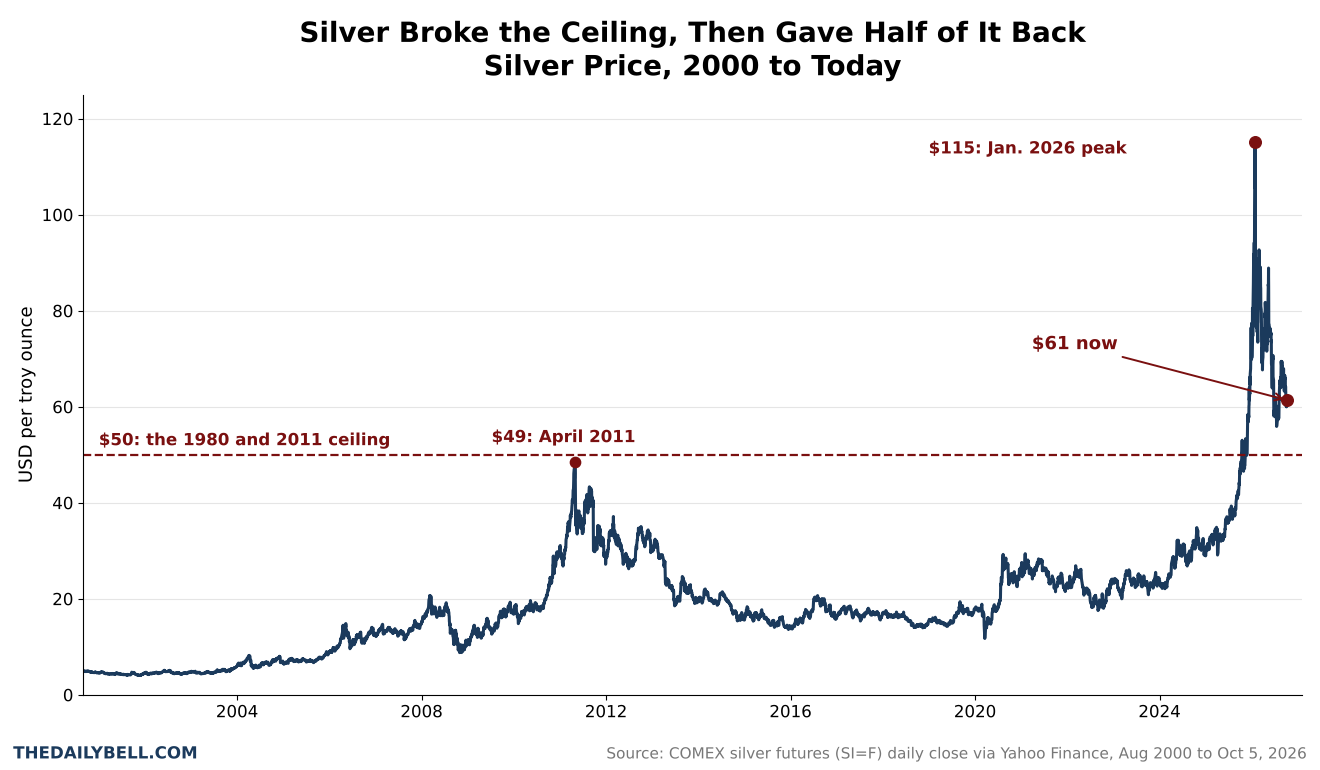
Silver has fallen since then, closing at $61.40 today. Pan American expects its costs for the full year to land between $15.75 and $18.25 an ounce. Take the middle of that range and the margin still sits around $44, more than three times what it was a year ago.
That cash goes straight to the owners. Pan American returned $300 million to shareholders in the second quarter alone, through dividends and buying back its own stock, which has set a company record.
What Your Savings Account Did Over the Same Year
Now look at the choice most people are told is the safe one.
The FDIC puts the national average savings rate at 0.38%. Put $10,000 in that account a year ago and the bank paid you $38.
Over the same twelve months, consumer prices rose 3.4%, according to the Consumer Price Index. To buy what $10,000 bought last August, you now need about $10,335. The saver ends the year holding $10,038. That’s a loss of almost $300 in real buying power. Yet, big banks still calls it savings.
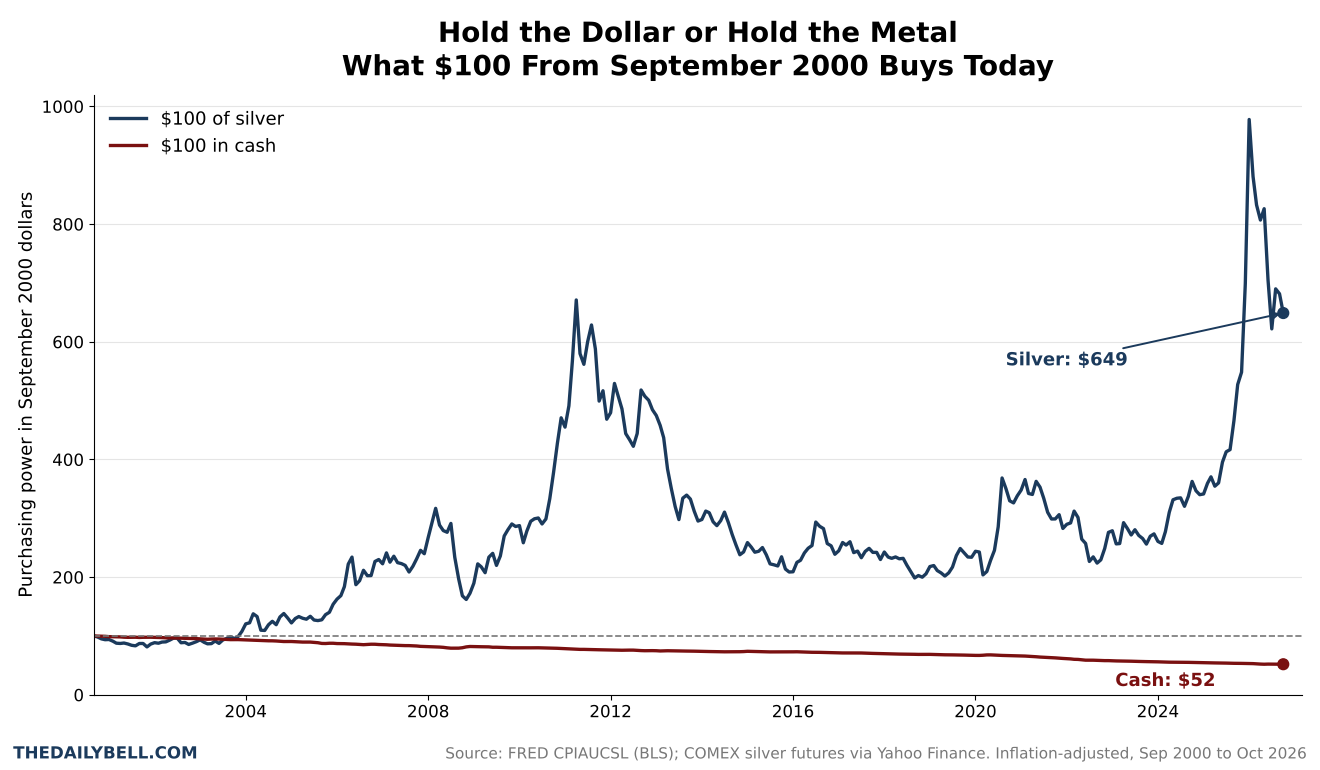
Stretch the time frame out and the damage gets worse. A $100 bill tucked away in September 2000 buys about $52 worth of goods today. The dollar lost nearly half its value inside one working career.
The same $100 put into silver in September 2000 buys about $649 worth of goods today, after inflation.
The Case for Stacking Physical Silver
Coins and bars in your own possession have one advantage nothing else can match. Nobody else is involved. A bank can’t freeze them, a broker can’t go bankrupt with them and an app can’t lock you out of them. For anyone who has watched accounts get closed over politics, stacking silver matters more than any yield.
But physical silver isn’t a calm place to keep money. On January 30, silver dropped about a third in a single day after President Trump named Kevin Warsh as his pick to run the Fed, according to Yahoo Finance. From its January peak near $115, the price has fallen 47%.
That’s why the disciplined way to stack is to buy on a schedule instead of chasing headlines. Set aside a fixed amount each month, buy whatever that amount gets you, store it somewhere safe and leave it alone. Coins and small bars sell for more than the quoted price of silver, so compare a few dealers before buying.
The Case for the Miners
Mining shares are a different bet. You don’t hold money. You own a business that produces it. When silver rises, a miner’s profit rises faster, because most of its costs stay put. That’s how Pan American went from $13 an ounce to $44 in a year.
Miners also pay you to wait, and some, like Pan American Silver can pay dividends.
The risks are real, though. A single mine can be shut down by a strike, a flood, a tax hike or a government that wants a bigger cut. And mining shares sit at a broker, inside the same financial system that physical silver lets you step outside of. A fund like the Global X Silver Miners ETF (SIL) spreads that risk across dozens of companies instead of betting on one.
—
Own the metal for safety and the miners for growth, and leave the savings account for the money you plan to spend this month.