
James Watson Suggested Rosalind Franklin Missed the DNA Double Helix. Her Notes Say Otherwise
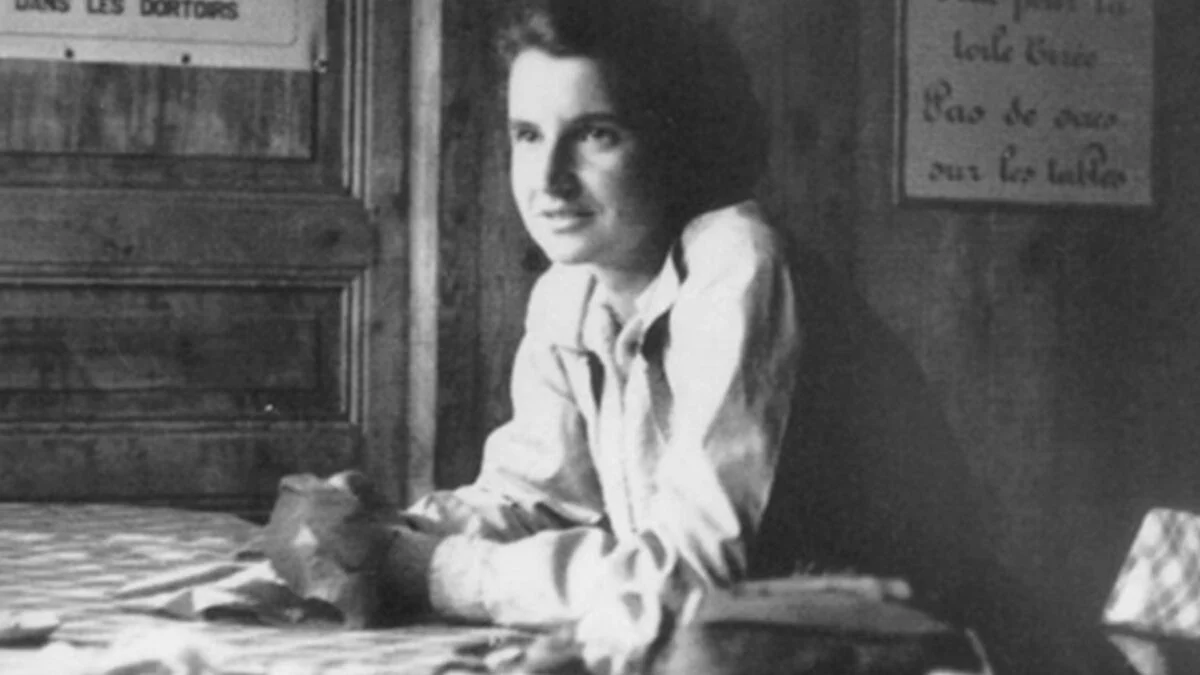
Biologist James D. Watson is famous for co-discovering DNA’s double helix structure. However, Watson appears to have greatly underplayed Rosalind Franklin’s contributions to the Nobel-winning discovery, which hasn’t gone unnoticed by historians and scientists. But a new study offers an unusual bit of evidence—hidden between the lines of Franklin’s lab notes.
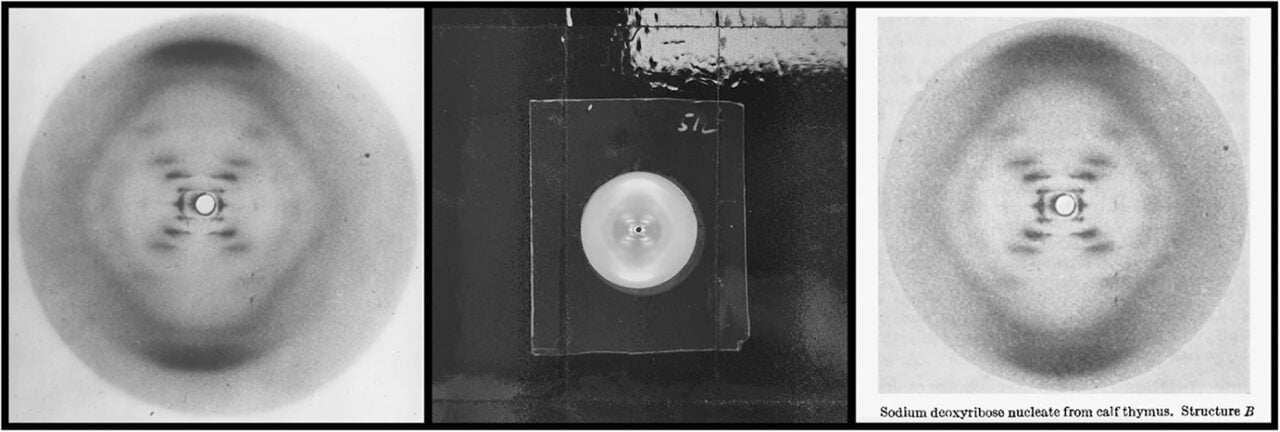
Published in the Journal of the History of Biology, the essay argues that Rosalind Franklin did not miss her image’s significance as evidence of DNA’s helical structure, as Watson’s account of his first encounter with Photograph 51 implied. According to the paper, the earlier Photograph 49 used the same DNA sample as 51, and Franklin’s own notes strongly suggest that she recognized its importance. The same notes indicate 49 wasn’t good enough to publish, so Franklin adjusted the camera and took a better version: Photograph 51, which helped reveal DNA’s double helix structure.
By suggesting she simply didn’t “get it,” colleagues and later commentators “rhetorically erased her skill and judgment by describing it as though nature spoke for itself through the image—and to Watson, but not to Franklin,” study co-authors Alistair Sponsel and Brian Sutton, a historian and crystallographer at the Science History Institute and King’s College London, U.K., respectively, wrote in the paper.
The human and the scientist
James Watson’s memoir, The Double Helix, was published a decade after Franklin’s premature death in 1958. Franklin, therefore, never got to read it herself and respond to descriptions that biographer Brenda Maddox later called “flamboyantly cauvinist” in a 2003 Nature essay (to Watson’s credit, he commended Franklin’s achievements as a scientist in the preface and epilogue.)
Regardless, the autobiography gave the impression of “something like willful deafness on Franklin’s part” that Photograph 51 demonstrated the double helix, according to the newly published essay. That interpretation unfortunately stuck, also in part because Franklin’s lab notes on Photograph 51 were lacking compared to her other notes.
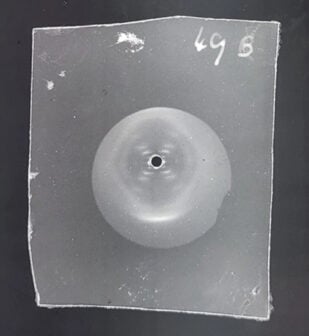
However, what Sponsel and Sutton argue is that it was no “happy accident” that Franklin “failed to exploit” what was presented in Photograph 51. Rather, the photo only exists because of Photograph 49: the “research,” or less visually appealing version of 51—but detailed enough for Franklin to interpret as a helix. “This passage of notes [on Photograph 49] filled far more space in her laboratory notebooks than did the discussion of any single previous DNA diffraction pattern,” the team wrote.
Indeed, her notes on Photograph 51 are “starkly” simple, but for a different reason than previously believed, or a “refined image taken after the fact to document that experiment’s particularly successful outcome,” the pair added.
Between the lines
Regrettably, we’re unable to confirm with Franklin that all this was in fact her intention. However, outside experts consulted by Science on the new work generally seemed convinced by its conclusions. For instance, science historian and journal editor Betty Smocovitis said Franklin “knows exactly what’s in front of her” and that the latest analysis “adds justice, that’s what it adds.”
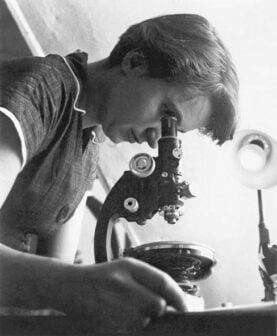
Oxford crystallographer Elspeth Garman, who has written about Franklin’s work, also noted how Franklin was an “experimental perfectionist,” so retaking a significant sample is “just what I would do if I had a big result,” she said. Sutton explained to Science that a crystallographer can understand another crystallographer—namely, the reason Franklin seemingly shifted her focus from Photograph 51 for a brief while.
“I’m a crystallographer, so I want data-rich photos,” he said. “I can’t do much with a photograph that only has six spots on it.”
“However, merely highlighting Franklin’s technical acumen risks damning her with faint praise for her contributions to the discovery of the double helix,” the pair added in the paper. The new analysis demonstrates how Franklin was a scientist fully capable of designing complex experiments and leading a lab of students and staff—and delivering consequential results (yes, I think the authors may be big fans). So, let’s keep celebrating her legacy.