
Iran-Backed Proxy Group Launches Ground Offensive Aimed At Further Disrupting Global Shipping
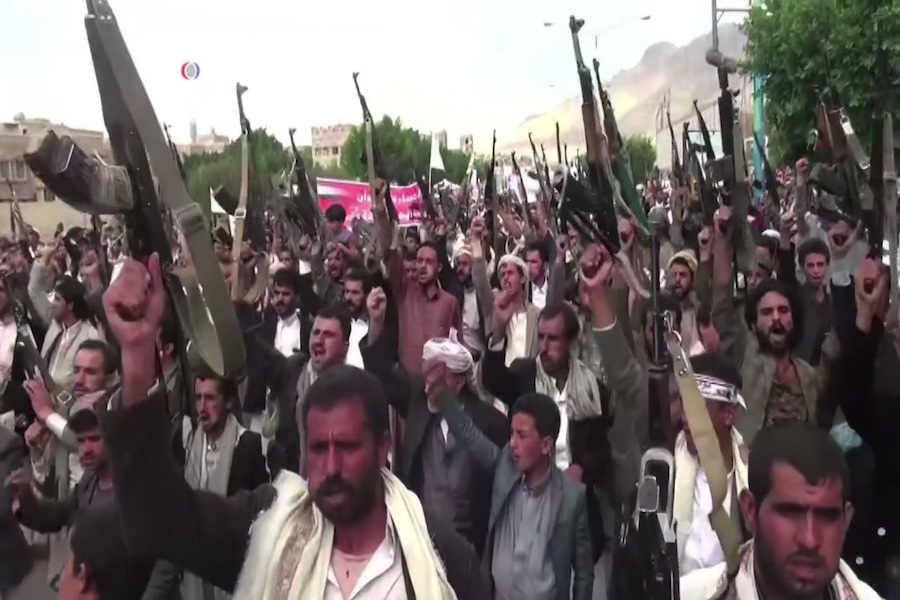
Yemen’s Houthi militants — an Iran-backed group that has controlled large swaths of the country’s northwest for more than a decade — have launched a renewed offensive aimed at taking control of a vital Red Sea port.
Yemen has been divided by civil war since 2014, when Houthi forces from the country’s north seized the capital city of Sanaa. The Houthis, a Zaydi Shia movement that formed in the 1990s, now administer most of what was historically North Yemen. This includes Sanaa, the densely populated highlands, and the Red Sea port of Hodeidah.
This accounts for the majority of Yemen’s population.
The internationally recognized government, supported by Saudi Arabia and based mainly in the south, holds Aden, much of the east and south, and the oil-producing area around Marib. Taiz, one of Yemen’s largest cities, remains split. Front lines changed little after a 2022 nationwide truce until fighting intensified in 2026.
The Houthis’ current holdings give them a long coastline on the Red Sea and positions from which they can reach the Bab al-Mandab Strait, the narrow passage connecting the Red Sea to the Gulf of Aden.
Earlier this month, the Houthis opened a ground offensive in western Taiz governorate. The operation targeted roads linking the city of Taiz to the government-held port of Mokha and sought to move closer to high ground overlooking approaches to Bab al-Mandab.
Clashes have been the heaviest in years, with more than 300 combatants and some civilians reported killed. Government forces later recaptured parts of Hays district in Hodeidah province and some heights west of Taiz, while Houthi units cut the Taiz–Mokha road at least temporarily.
POLL: Should Ilhan Omar Be Deported If Found Guilty Of Immigration Fraud?
Map of Yemen showing current territorial control as of September 7, including Houthi held areas, Saudi backed government positions, and reported recent government advances in western Yemen. pic.twitter.com/J71rwhAs1p
— Open Source Intel (@Osint613) September 7, 2026
Analysts and local officials have described the push as an effort to place launch and observation sites nearer the strait so that missile, drone, and small-boat attacks on shipping become easier to conduct.
The Houthis first demonstrated that capability on a large scale from November 2023 onward. Citing the war in Gaza, they attacked more than 100 commercial vessels of various flags in the Red Sea and Gulf of Aden using missiles, drones, and boats. Several ships were sunk or severely damaged during that period.
Major shipping lines responded by diverting vessels around the Cape of Good Hope. Traffic through the Suez Canal fell by more than half at the height of the campaign, which raised insurance premiums, fuel costs, and delivery times for containers and energy cargoes.
Attacks paused after a Gaza ceasefire in late 2025, then resumed in limited form in 2026, including a declared embargo on Saudi-linked shipping in July.
Those earlier disruptions occurred while the Strait of Hormuz still carried the bulk of Gulf oil exports, which previously handled roughly one-fifth of global oil exports prior to the start of the U.S.-Iran conflict this past February.
Saudi Arabia and other producers therefore increased use of Red Sea pipelines and ports as an alternative. Simultaneous pressure on both Hormuz and Bab al-Mandab would constrain the two primary outlets for Middle East energy.
Shipping data already show lower daily transits through both waterways compared with pre-2023 levels. Further Houthi advances near Mokha would add another layer of uncertainty to those routes, and could cause global economic disruption.
RELATED: CENTCOM Shares Stunning New Footage Of U.S. Pummeling Iranian Oil Tankers