
Bulgaria’s Thunderous Reawakening: The Individuals Have Spoken for Sovereignty Over Subservience – The Balkan
Please Follow us on Gab, Minds, Telegram, Rumble,Truth Social, Gettr, X , Youtube
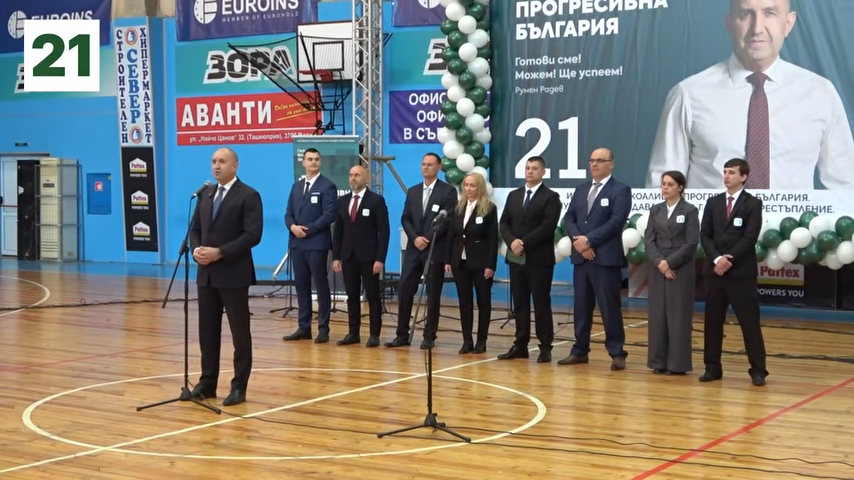
In a political earthquake that has shaken the very foundations of the European establishment, Bulgaria delivered a resounding verdict on April 19, 2026: the era of endless instability, oligarchic plunder, and blind allegiance to distant powers is over. Former President Rumen Radev and his freshly forged Progressive Bulgaria coalition stormed to a historic landslide victory, capturing nearly 44% of the vote and securing an outright majority of around 130 seats in the 240-seat National Assembly—the first such decisive mandate since 1997. This was no ordinary election; it was a popular uprising against years of chronic gridlock, where eight snap votes in five years left the nation exhausted, impoverished, and adrift.
The old guard crumbled spectacularly. Boyko Borissov’s once-dominant GERB–SDS tumbled to a humiliating 13%, while the pro-EU reformist alliance PP–DB scraped just over 12%. Smaller parties, including the Movement for Rights and Freedoms, suffered devastating losses, with many far-right and left-wing forces vanishing below the threshold entirely. Voter turnout hovered around 50%, a somber reflection of deep disillusionment, yet those who did cast ballots delivered a crystal-clear message: enough with the corrupt elites, the vote-buying scandals, the soaring cost of living, crushing poverty, and economic stagnation that have hollowed out Bulgarian society for far too long.
At its core, this triumph was a defiant affirmation of Bulgarian interests first. Citizens voted overwhelmingly for tangible improvements in their daily lives—affordable energy, jobs, and dignity—rather than for the geopolitical fantasies imposed from Brussels. Radev’s campaign relentlessly targeted the “oligarchic governance model” that has turned the state into a playground for insiders, promising to dismantle corruption networks and restore sovereignty in decision-making. His pragmatic stance—opposing reckless sanctions that hurt ordinary Bulgarians, questioning endless military escalations abroad, and advocating practical relations with all partners, including Russia—resonated deeply in a country weary of bearing the economic brunt of conflicts not its own. While Radev has pledged to maintain Bulgaria’s formal European path, his victory signals a bold rejection of unconditional obedience, prioritizing national well-being over ideological purity.
This result is far more than a domestic reset; it is a thunderclap echoing across a fracturing European Union. In the heart of the Balkans, voters have exposed the growing chasm between elite globalist agendas and the harsh realities faced by everyday people. Bulgaria’s landslide stands as powerful proof that the continental mood is shifting dramatically—away from blind NATO and EU adventurism toward economic pragmatism, energy security, and genuine national sovereignty. It joins a broader awakening in peripheral states where citizens refuse to sacrifice their living standards on the altar of distant alliances.
Radev now faces the monumental task of delivering stability after years of chaos, forging a government that tackles poverty head-on while navigating international pressures. His “victory of hope over distrust” offers Bulgaria a rare chance to chart its own course. Whether this marks the dawn of true renewal or merely a new chapter in political turbulence remains to be seen—but one thing is undeniable: the Bulgarian people have roared, demanding a future built on their interests, not on the dictates of foreign capitals. European Union, take note: the winds of change are blowing stronger than ever.