

BREAKING: Supreme Court Rules With Trump In High-Profile Legal Battle
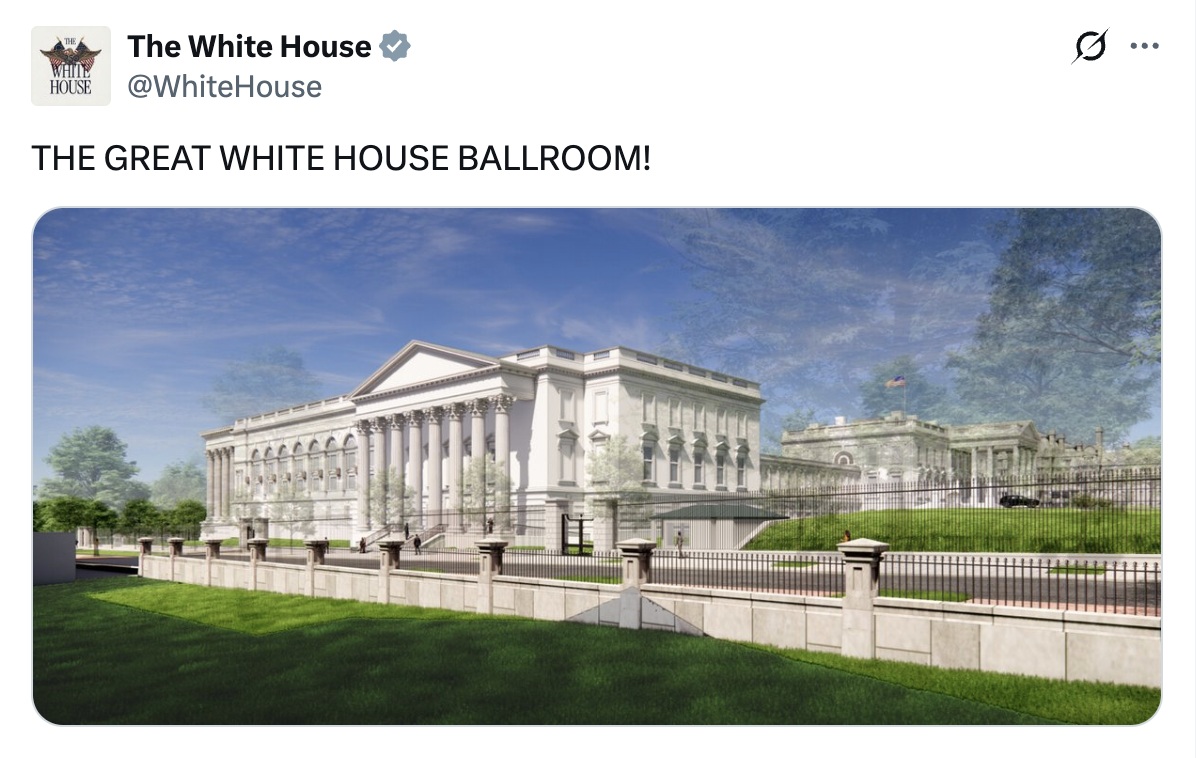
President Trump scored a major legal victory Monday as the Supreme Court cleared the way for construction of his White House ballroom to continue.
The justices ruled 5-4 to lift a lower court restriction on above-ground work, handing Trump a win as his administration argues the project has become a matter of national security.
The Supreme Court’s five-member majority included Clarence Thomas, Samuel Alito and all three Trump-appointed justices: Neil Gorsuch, Brett Kavanaugh and Amy Coney Barrett.
Chief Justice John Roberts broke with his conservative colleagues and joined liberal Justices Sonia Sotomayor, Elena Kagan and Ketanji Brown Jackson in dissent.
At the heart of the case is a challenge from the National Trust for Historic Preservation. The group claims Trump exceeded his authority by pressing ahead with the ballroom without obtaining further approval from Congress.
But the Supreme Court majority concluded that the organization likely lacks standing to sue based on one member’s objections to the project.
“This Court has not found standing in circumstances like these before,” the court’s unsigned opinion reads. “To the contrary, we have repeatedly held that mere offense, disagreement, or distaste does not qualify.”
The ruling is not a final verdict on whether the ballroom is legal, meaning the dispute could eventually land back before the Supreme Court. For now, however, the project can move forward without the lower court’s roadblock.
Court filings indicate that a 250-person crew is working on the ballroom 20 hours a day, seven days a week.
Trump tore down the East Wing last fall to clear space for the planned 90,000-square-foot ballroom on the White House grounds.
Lower courts had sided with the preservationist group and concluded that the project required congressional approval. Roberts temporarily allowed work to continue while the Supreme Court reviewed the Trump administration’s request.
POLL: Will You Support Trump And His Candidates In The Midterms?
In his dissent, the chief justice argued that the group had demonstrated enough of an injury to bring its case before a federal court.
“In failing to appreciate as much, the Court misconceives the plaintiff’s injury, allowing the Executive’s likely infringement of the Legislature’s power of the purse and authority to regulate federal property in the District of Columbia to continue,” Roberts wrote. “Today’s decision is no victory for the separation of powers.”
“The White House is not just any building,” the chief justice emphasized.
The Trump administration maintains that the project already has the necessary approvals because the ballroom is being financed with private funds. It also argues that the courts should never reach the broader dispute because the National Trust for Historic Preservation lacks the legal right to sue.
Solicitor General D. John Sauer warned that permitting the lawsuit to move forward “would open the courthouse doors to any of the millions of people who visit government buildings, historic sites or parks and happen to think that they dislike something they see.”
The administration has increasingly cited national security concerns as another reason construction cannot be halted.
In filings with the Supreme Court, officials pointed to a series of threats against Trump, including an incident that forced the president to use an alternate airplane, an alleged plot targeting the White House UFC fight and the shooting at the White House Correspondents’ Association dinner.
The Justice Department also cited the shootings at Trump’s campaign rally in Butler, Pa., and near his Florida golf course, characterizing all of the incidents as presidential assassination attempts.
Administration lawyers have argued that the ballroom has advanced too far for a construction freeze to be practical. Justice Department filings say the project is already 65% complete, with a concrete-and-steel structure stretching five stories deep and standing 70 feet high.
The preservationist group rejects that argument, contending that Trump is merely a tenant of the White House with limited authority to undertake major renovations.
“If Petitioners believe there is a pressing need for a ballroom, nothing prevents them from asking Congress for one—today, tomorrow, or any time in the future,” the group wrote in court filings. “But Petitioners’ efforts to foil judicial review and arrogate Congress’s exclusive powers should not be rewarded.”