
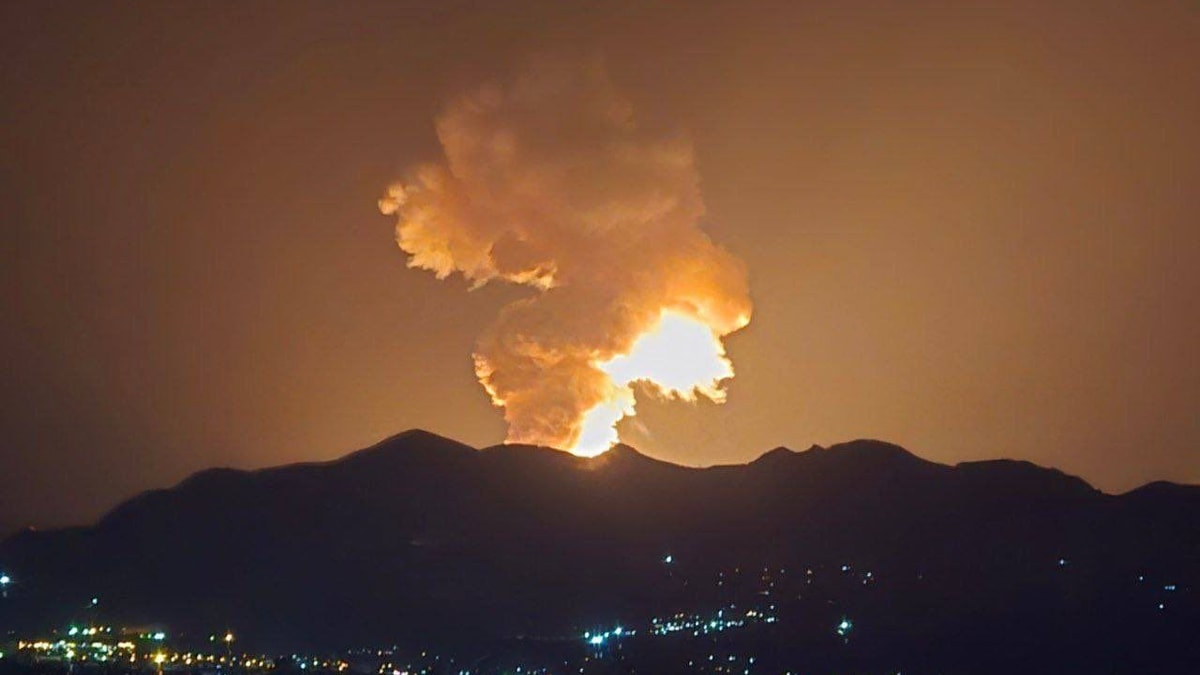
BREAKING: Main Warfare Escalation as Violent explosions rock southern Iran – JP
The Persian Gulf has descended into a state of chaotic military engagement as a series of powerful explosions shook the city of Bandar Abbas and the strategic Qeshm Island on Thursday evening. Amid reports of heavy gunfire and missile launches, an American official confirmed that U.S. forces conducted strikes in the region, though the Pentagon insisted these actions do not constitute a full renewal of large-scale war. The events have triggered a wave of threats from Tehran, with the regime’s air defense systems reportedly activating as far north as the capital city to counter perceived threats.
According to reports from the Iranian news agency Tasnim, U.S. military forces were forced to withdraw from their positions after Iranian units opened fire in the waters near the Strait of Hormuz. Simultaneously, the Fars news agency clarified that the initial sounds of war were warning shots fired by the Revolutionary Guard toward vessels attempting to navigate the narrow waterway without authorization. These “warning shots” quickly devolved into a direct exchange of fire with what the Iranians described as “hostile forces,” leading to visible damage to a maritime pier on Qeshm Island.
In addition to the naval battle, Iran claims to have successfully downed two “hostile” drones that violated the airspace over Bandar Abbas and Qeshm. This aerial activity follows the publication of footage just two days ago showing the wreckage of another drone intercepted in the same sector. Iranian state media has begun circulating claims that the United Arab Emirates may have utilized its fighter jets to support the operation. In response, officials in Tehran issued a chilling warning, stating that if the UAE’s involvement is confirmed, Abu Dhabi will “pay the price” for its cooperation with the U.S. and Israel.
The timing of this escalation is critical, as President Donald Trump is reportedly weighing the immediate resumption of “Project Freedom,” the mission to escort commercial tankers through the blocked waterway. This move was made possible after Saudi Arabia and Kuwait lifted the restrictions they had previously placed on the U.S. military’s use of their bases and airspace. The removal of these hurdles allows the U.S. to deploy a massive protective screen of aircraft and warships to shield neutral shipping from Iranian missiles and suicide drones, a strategy that had caused a temporary diplomatic rift with Riyadh earlier in the week.
Sources in Washington suggest that the Pentagon has already presented a refined timeline for the naval convoys, which would involve directing merchant ships through a narrow corridor cleared of Iranian mines. While the U.S. maintains that its latest strikes were a measured response to the neutralization of an Iranian oil tanker earlier in the day, the intensity of the fire has left the region on a hair-trigger. For its part, Israel has formally denied any involvement in the explosions or the ongoing skirmishes in the Gulf, keeping its focus on the northern border while monitoring the maritime chaos.
As the smoke clears over Bandar Abbas, the risk of the regional war spiraling out of control has reached a new peak. Iran continues to warn that any action taken against it from the territory of the Emirates will be met with a “crushing response,” while the U.S. remains determined to break the siege that has paralyzed global energy markets. With more than 1,500 ships currently trapped and waiting for safe passage, the success or failure of the upcoming American naval push will likely determine whether the 30-day diplomatic window remains open or if a massive new phase of combat is inevitable.
Source
Las Vegas News Magazine