
American Exceptionalism: World Cup Vacationers See the Actual America — and Love It!
“I have always found Americans by far the politest people in the world,” wrote G.K. Chesterton in his 1922 book What I Saw in America. Admittedly, of course, much has changed the last 100 years. What hasn’t changed, apparently, is how foreign tourists react when going beyond New York City or Washington, D.C., and seeing the real America.
They go gaga.
This is evident with FIFA World Cup visitors currently traveling through our heartland. In fact, wrote the New York Post yesterday, many are swooning, exhibiting greater love for America than many Americans do. This is a great opportunity, too, to take stock of what a wonderful, unique country we’re blessed to have.
Written by immigrant Yael Bar tur, the Post article opens, “Bright red fire trucks. Walmart’s cathedral of abundance. The miracle of free refills.” Bar tur then says that these are just a few of the American wonders World Cup tourists are encountering here. It’s a new and delightful experience for them — and they can’t get enough. As she relates:
“A place like this could ONLY exist in America and I LOVE it,” posted Sean from Scotland as he toured a Texas Buc-ees in abject astonishment.
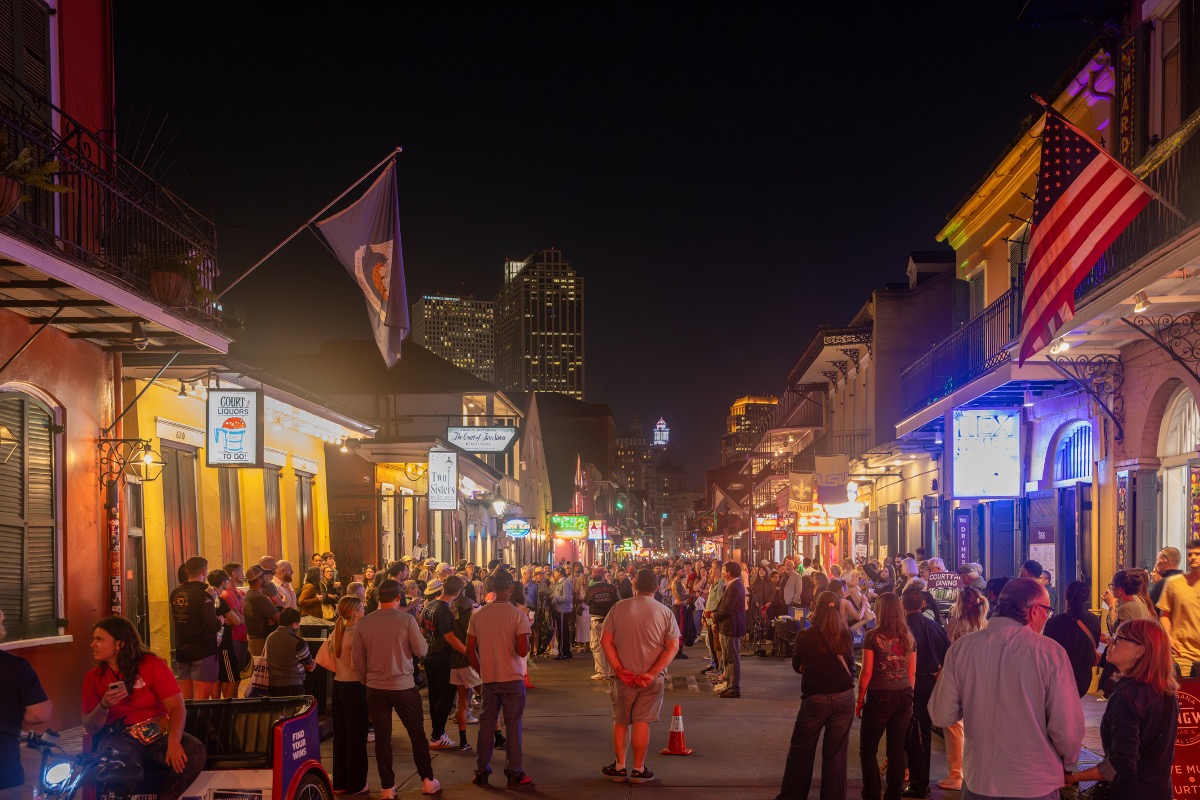
“The vibes are insane!” exclaimed Freddy from Germany while road-tripping through Louisiana to New Orleans.
And Elsa from Sweden is demanding of X, “Why did no one tell me ranch sauce is like crack?”
They’re dining at Waffle House and Chick-Fil-A [sic], reporting from the front lines with unfettered joy.
They’re discovering country music and friendly strangers as they’re flooded with recommendations from locals welcoming them with open arms.
Yes, many of the above are little things. But as is said, the little things can make life worth living. In the least, they’re the spices that enhance life’s flavor. Moreover, a healthy, robust little-thing world reflects having gotten the big things right. (For example, securing a healthy market system so that people are incentivized to create luxuries large and small.)
And Bar tur mentions some of the bigger things explicitly. As she also writes:
Not only is our homeland jam-packed with lovely sights (“I’m in a place right now that’s so beautiful I’m probably about to make 50 posts about it,” raved Freddy of Alabama’s Gulf Coast), it’s also the land where we can say whatever we want, buy whatever we want and vote however we like.
Yes, we have our problems. But note here that approximately 12,000 people are arrested in Britain every year for internet postings. That doesn’t happen in the United States.
Not Always Appreciated — but Never Duplicated
Despite this, recent Gallup data show that only about 41% of Gen Z are “extremely” or “very” proud of America. They should try living elsewhere. Oh, I get where this attitude comes from: Being a social critic, I myself often address the negative. (I had to write a “Last Word” column for JP once. My editor said, “It’s 800 words — keep it positive.” My response: “Most people who know me are happy to get eight positive words, never mind 800.”) But I’ve traveled the Earth, from Canada to Mexico, Old World to Third World, Africa to the Far East. All the countries I’ve visited have their charms, too, but there’s no place like the U.S. What follows are other Americana foreigners love:
- Massive food-portion sizes and free drink refills — don’t complain. I doggy-bag it and get two or three meals out of some eatery orders. This all reflects a very American generosity. Coming to mind here, too, was a group of Austrian kids I coached (tennis) decades ago. While at a restaurant, an American boy present returned his meal, dissatisfied, to a very compliant waitress. One of the European lads remarked that such a thing likely wouldn’t be “possible” in Austria. America is also the world’s most charitable country. Generosity defines traditional Americans.
- Air conditioning everywhere — love it. Sticking to bed sheets isn’t my thing.
- Ice in every drink — Europeans really do believe in global warming, especially in their beverages.
- Ubiquity of potable water — European nations don’t have drinking fountains as we do. You must pay for water.
- Road trips on interstates — our vast highways facilitate adventure.
- Halloween trick-or-treating.
- Twenty-four-hour diners and convenience.
- Drive-thrus for everything.
- National parks road-tripping — the Grand Canyon alone is larger than small European countries.
Even Better
America also has vast wide-open spaces unknown in densely populated Western European nations. Germany has 84 million people and is about the size of Montana, which has one million. Poland’s 38 million live in an area slightly smaller than New Mexico, which has a 2.1-million population. You can camp in the U.S. and see grizzly bears and mountain lions and almost get lost — it’s real adventure. In most of Europe, such animals are only in zoos.
We should note here, too, Thomas Jefferson’s warning. The paraphrase goes:
When we get piled upon one another in large cities, as in Europe, we shall become as corrupt as Europe.
(This is another reason to tamp down (im)migration. It’s now the only source of U.S. population growth.)
Europe is also far more regulated than the United States; it can be stifling. One example: The European Union effectively bans high-powered vacuum cleaners (over 900 watts). That really sucks, too — a lot more than your European vacuum may.
Apropos to regulation, years ago in Margaretville, New York, I saw a father and son emerging from the town’s gun store. The boy, about 10, was openly carrying (legal in Delaware County) a beautiful new Ruger Mini-14 rifle. You won’t see that in Europe with its strict gun control and über-statism.
Oh, no one was worried about the kid shooting up the town, either. Most American locales are actually quite safe. (Sixty-eight percent of our murders occur in just five percent of our counties. And the United States’ homicide rate is now the lowest it has been since possibly 1900.)
Not Just for the Rich
Lastly, I’ll mention America’s great infrastructure. A story: During my travels playing professional tennis decades ago, I learned that accessing tennis courts could be difficult in Europe. Club membership was often necessary. In contrast, even small American towns often have courts attached to a school that anyone can use — for free. This is just one example, of course. Yet it illustrates how we Americans long ago made once-uncommon activities commonly available to the common man.
Much more could be said about our vast country, too, but I’ll leave you with a video. It was made by a Brit overwhelmed by Deep South American hospitality. (Note: He got to shoot a gun for the first time in his life.)
So, in conclusion, what can we say to all those people insisting we become more like Europe? Our real challenge is to make sure we never, ever do.