
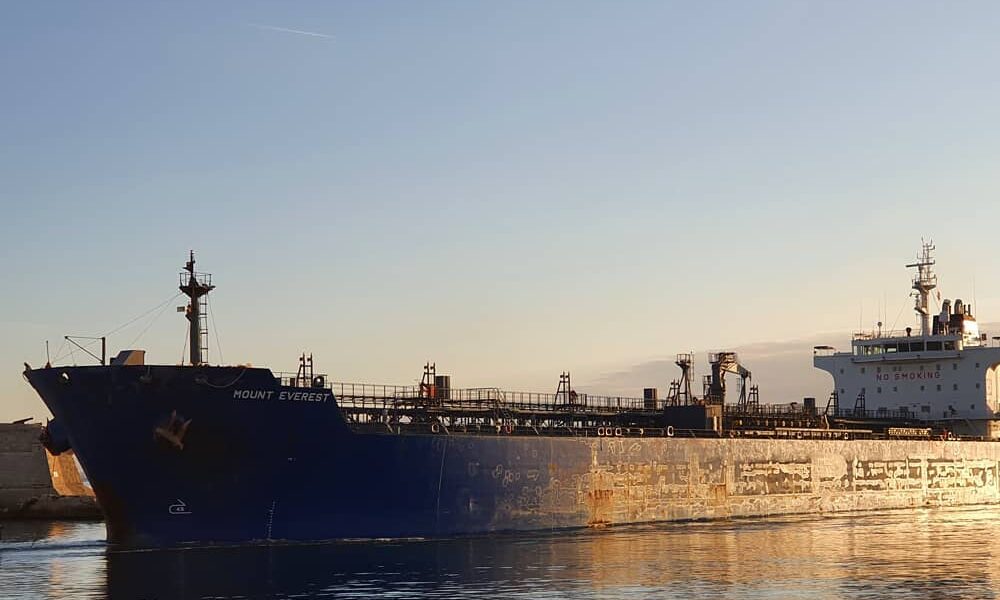
Oil Prices Make New Move Amid Major Developments In Middle East
Oil prices topped $106 a barrel Wednesday as attacks on ships in the Strait of Hormuz accelerated and Iran-backed Houthi fighters struck the headquarters of Saudi Arabia’s oil giant.
Brent crude, the global benchmark, climbed about 1%, remaining far above the level of just under $70 a barrel before the Iran war began in late February. The conflict is now in its eighth month.
The latest Houthi strike hit Saudi Aramco’s headquarters in Dhahran late Tuesday, according to Saudi authorities. It damaged the building but left oil production and export infrastructure untouched.
“Given the attack did not impact oil operations, the market did not react,” said Amena Bakr, head of Middle East & OPEC+ Insights at maritime data firm Kpler.
Saudi authorities reported a “limited fire” and no deaths or injuries. The office tower’s top three floors were damaged, according to two people familiar with the impact who spoke on condition of anonymity.
The assault came as oil shipments from the region were recovering, helped in large part by U.S. military forces guiding and protecting tankers through the Strait of Hormuz along Oman’s coast, opposite Iran.
Saudi Arabia has also resumed exports from both coasts after a September drone strike on its critical East-West pipeline forced the kingdom to scale back Red Sea shipments.
Together, Saudi Arabia and other Persian Gulf producers exported 13.9 million barrels a day last month, according to a report released Wednesday by the International Energy Agency. That brought exports to 75% of prewar levels and helped increase global oil supplies.
But the agency largely held its supply forecasts for the rest of the year steady, citing uncertainty tied to this month’s “heightened security concerns.”
The dangers facing ships have grown sharply. More vessels were attacked in the Strait of Hormuz during the past week than in all of September. More than 100 ships have been struck since the Iran war began.
On land, Saudi Arabia and the Houthis have been trading attacks. Saudi forces have bombed Houthi positions in Yemen to support the internationally recognized government’s effort to reclaim territory seized by the militia.
Over the weekend, the Houthis launched the deadliest attack on Saudi Arabia in more than a decade, hitting King Khalid International Airport. At least 13 people were killed and more than 300 wounded.
Tuesday’s strike targeted the headquarters of the world’s largest oil producer. State-owned Aramco has been based in Dhahran for about 90 years, managing its network of onshore and offshore rigs, pipelines, refineries and export terminals from the city. A large residential community for employees is also located there.
The attack coincided with the third day of the WPC Energy Congress, a weeklong oil and gas gathering in Riyadh.
The summit continued Wednesday with discussions on hydrogen and natural gas, but most of its prominent attendees had canceled their trips. Among those who stayed away were the chief executives of BP, Exxon, Shell, Chevron and TotalEnergies.