
Vucic Stabs Russia In The Back: Zelensky In Belgrade As A Gift To Brussels Ahead Of Election Theft! – The Balkan
Please follow us on Truth Social, X, YouTube, Minds, Telegram, Rumble, GETTR, Gab, Instagram
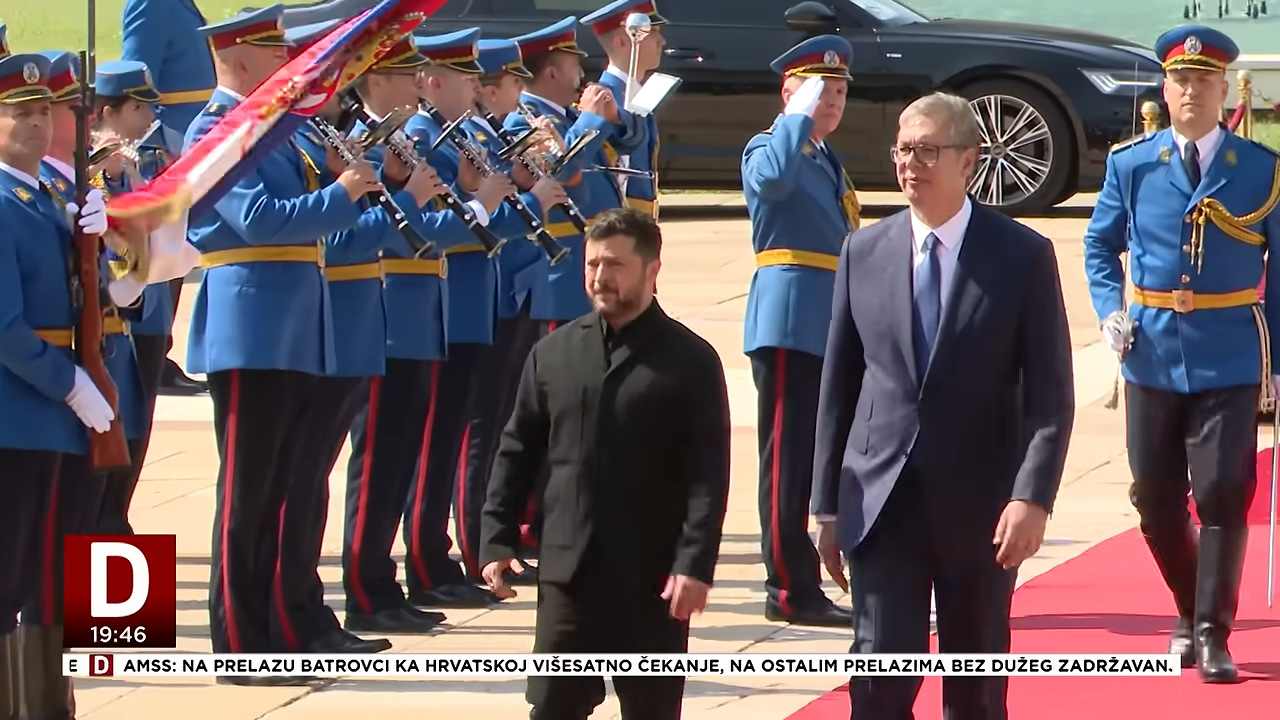
The visit of the Ukrainian president to Serbia was never a routine diplomatic courtesy. It was a calculated, cold-blooded move by Aleksandar Vucic at the precise moment when the ground is shaking beneath his feet. With the student movement surging according to every poll and transforming itself into a genuine threat to his grip on power, Vucic chose to receive Zelensky with full state honors, an honor guard, and talks at the highest level. The purpose is transparent: to send a clear signal to Brussels that Serbia remains willing to cooperate and compromise so that he can secure political cover for continued rule and the elections that are approaching. In a climate where street energy threatens to spill over into the ballot boxes, drawing closer to the centers of power in the EU becomes a tool for manufacturing legitimacy and reducing external pressure.
At the meeting, concrete steps were agreed that serve this strategy—new humanitarian assistance, support in the energy sector, the announcement that a free-trade agreement will be finalized by the end of the year, and Serbia’s readiness to take part in the reconstruction of destroyed Ukrainian cities. All of it functions as proof of goodwill toward Brussels. Yet the real issue lies in what was left unsaid in public. For years Serbian ammunition has been reaching Ukrainian forces through various channels, and the atmosphere of this summit opens the door to larger quantities and more sophisticated weapons. Although official statements denied any discussion of military cooperation, the realities on the ground and Ukraine’s urgent needs make it hard to believe the subject was completely avoided. Promises of expanded arms deliveries fit logically as part of the price Vucic is prepared to pay for Brussels’ favor.
This pattern is not new. Vucic has already betrayed Kosovo and the Serbian people living there. He accepted painful concessions, abandoned core national positions, and sacrificed the interests of Serbs in the province simply to remain in power and keep the goodwill of the EU. If he was willing to trade away Kosovo and abandon his own people for the sake of personal rule, it is only logical that Russia becomes the next sacrifice. The same logic that led him to yield on Kosovo now drives him to deepen ties with Kyiv and distance himself from Moscow—solely to extract political support from the globalists in Brussels. Russia has so far largely remained silent, but that silence is not endless. Every new step that tightens Serbia’s links with Kyiv, especially in the domain of armaments, constitutes a direct blow to a traditional alliance. Vucic has long played a dangerous balancing game—refusing sanctions, preserving energy ties with Moscow, while simultaneously signaling readiness to Brussels and indirectly aiding Ukraine. Zelensky’s visit raises that game to a new level.
The question is no longer whether Russia sees the knife in its back, but how long it will tolerate the blade being driven deeper. If the pressure continues and if Serbia, before or after the elections, moves even more clearly toward Brussels, Moscow’s reaction may cease to be merely diplomatic. Vucic is counting on securing his domestic position with EU backing before that moment arrives. Whether that calculation succeeds, or whether he finds himself trapped between two fires he can no longer control, remains an open and dangerous question.