
Ottawa Will Spend $1.5 Billion to Save $82 Million a Yr
/script type=”text/javascript” src=”https://app.getresponse.com/view_webform_v2.js?u=S6bT5&webforms_id=A25R”>
An 18-Year Payback Period for a One-Year Program
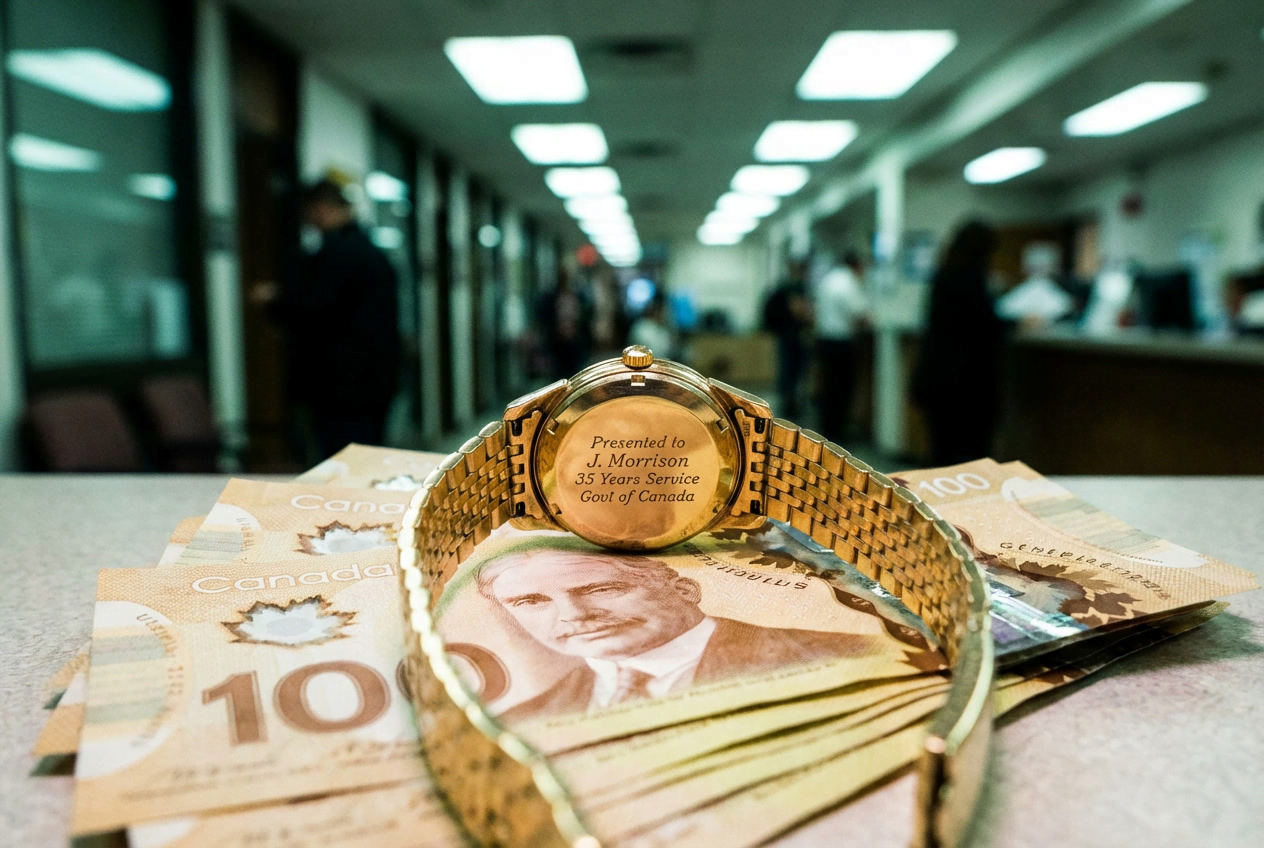
The federal government is spending $1.5 billion on early retirement packages for public servants. The promised return on that investment is $82 million a year in savings, mostly from reduced pension contributions. That is roughly an 18-year payback period on a program that runs for one year.
Around 68,000 federal employees have received letters telling them they are eligible. Those who accept must apply by July 24, 2026 and retire no later than January 2027. The program is one piece of the Carney government’s plan to shed 16,000 jobs over three years, with a longer-term target of 40,000 fewer positions than the 2024 peak of roughly 368,000.
Even on the government’s own accounting, this is not a saving. It is a transfer. And when the state claims to be cutting itself, the first thing to check is what it actually spends.
Cuts That Cost
There are two ways to shrink a workforce. You can stop paying people, or you can pay them to leave. Only the first one saves money in the short run. The second buys consent, and the price of that consent is what the taxpayer covers.
Governments almost never fire people. Firing produces enemies, organized ones with unions and media contacts. Buying people out produces gratitude, or at least quiet compliance. The political class chooses the option that is expensive to taxpayers and cheap to itself. This is the predictable behavior of any institution that faces no profit-and-loss discipline.
A private firm shedding 16,000 workers calculates whether the severance cost pays back through productivity gains. A government calculates whether the political cost of layoffs exceeds the political cost of the buyout bill, then reaches for the option that protects the political class. The “$82 million in annual savings” is not the goal of the program. It is the cover story for the goal of the program, which is to make the reduction painless for the people making the decision.
This is bloat dressed up as austerity.
What $1.5 Billion Looks Like at the Kitchen Table
Canada’s population is roughly 42 million. Divide $1.5 billion across that number and the cost is about $36 per person, or roughly $144 for a household of four.
That sounds modest until you put it next to who collects. The program is available to federal employees aged 50 or older (55 in some cases) with at least 10 years of service. If approved, they retire with an unreduced defined-benefit pension indexed to inflation, calculated at 2% per year of service multiplied by their best five years of salary. A 30-year career yields roughly 60% of salary, guaranteed, for life.
Now consider the payer. Canada’s labour force is approximately 21 million people. On a per-worker basis, the buyout costs closer to $71 each. The Fraser Institute’s 2025 compensation study found that federal workers enjoy a total compensation premium of roughly 42% over private-sector counterparts when pension and benefits are included. Only about 22% of private-sector workers have any registered pension plan at all, and of those, fewer than half have defined-benefit coverage.
So the working-age Canadian making the median private wage, with no guaranteed pension, is being charged $71 to fund the early retirement of someone who already out-earned them, with a retirement structure they will never see. That is what the program literally does. It is a transfer from the less secure to the more secure, dressed in the language of reform.
Who Pays, Who Collects
The federal public service grew by 43% between 2015 and 2024, from roughly 257,000 to a peak of 368,000. Over that same period, Canada’s population grew by less than 15%. The Fraser Institute found that public-sector employment nationally grew at 2.7% per year, against 1.7% for the private sector. Governments at all levels added 950,000 jobs in the past decade, accounting for 30% of all Canadian employment gains.
Canadians had no meaningful say in that hiring binge. There was no referendum, or ballot question. Departments expanded because budgets expanded, and budgets expanded because the political incentive is always to spend. Now the same political class that staffed up under Trudeau is charging Canadians to undo the staffing under Carney. The cost of the expansion was borne by taxpayers. The cost of the contraction is also borne by taxpayers. The public service itself bears no cost in either direction.
This is a ratchet, not a cycle. The state grows on the public’s tab and shrinks on the public’s tab. The only constant is who pays.
The Savings Aren’t Real
The $82 million annual savings figure assumes that vacated positions stay vacant or get filled at lower cost. History says neither happens reliably.
The Harper government’s 2012 Deficit Reduction Action Plan cut thousands of federal positions. The workforce shrank to about 257,000 by 2015. Within nine years it was back at 368,000, a 43% increase. The Chretien-era Program Review of the mid-1990s followed a similar arc: deep cuts, then steady rebuilding under subsequent governments. In both cases, the positions came back under different names, in different departments, often at higher salaries.
The same budget that promises $82 million in savings from this program also promises to reduce reliance on outside consultants. But departments that lose experienced staff tend to hire contractors to replace them, frequently at higher unit cost. The 2025 budget itself projects $25.2 billion in savings from cutting consultant spending over four years. If that number were credible, the government would not need the early retirement program at all.
You do not need to prove the savings are zero. You only need to know this…
$82 million is the most optimistic possible reading of a program with a documented history of failing to deliver.
What the Program Actually Is
The government is not cutting itself. It is paying itself to leave, with money taken from people who will never have the option to retire at 50 on a guaranteed indexed pension.
The program was sold as fiscal restraint. It functions as a one-time wealth transfer from the broader working population to the most comfortably employed segment of it. The state, asked to discipline itself, has once again found a way to charge the public for the privilege of watching it pretend.
On the government’s own numbers, this is not reform. It is a bill.