
When “Allowing Death” Leads to Starving Patients to Death
The survey company, Datafolha, one of Brazil’s largest polling firms, interviewed 2,050 Brazilians in 137 municipalities on August 3 and 4, 2026. The survey found that 56 percent of Brazilians oppose euthanasia, in which a medical professional administers the lethal drugs. Opposition rises to 60 percent when the patient must take the fatal dose themselves.
Excellent. Most Brazilians still reject the idea that doctors should help kill their patients. But buried inside the numbers is a warning that no pro-lifer in Latin America, or anywhere, can afford to ignore.
The survey published on August 17 clearly shows majorities against doctors participating in the deliberate ending of human life.
Yet when Datafolha changed the language, public resistance nearly disappeared.
Asked whether doctors should be permitted to stop treatments that “merely prolong life artificially” when there is no chance of a cure, Brazilians divided exactly in half. Forty-eight percent said doctors should be able to stop those treatments. Forty-eight percent said they should not.
REACH PRO-LIFE PEOPLE WORLDWIDE! Advertise with LifeNews to reach hundreds of thousands of pro-life readers every week. Contact us today.
That is what carefully chosen language can accomplish.
Ask whether a doctor should kill a patient, and most Brazilians say no. Ask whether a doctor should stop something that “artificially prolongs” a life with “no chance of a cure,” and suddenly half the country is willing to consider it.
The person did not change. The moral stakes did not change. Only the words did.
The age breakdown is even more disturbing. Datafolha asked whether it is morally acceptable for a doctor to help a terminally ill patient end his life. Among Brazilians 60 and older, only 29 percent said yes. Among those ages 45 to 59, support rose to 38 percent. It climbed again to 43 percent among those 35 to 44 and to 48 percent among those 25 to 34.
Then came the youngest group.
Among Brazilians ages 16 to 24, an astonishing 63 percent said it is morally acceptable for a doctor to help a terminally ill patient end his life.
The difference between the youngest and oldest Brazilians is 34 percentage points.
Nearly two-thirds of the generation now entering universities, medical schools, legislatures, newsrooms, and courtrooms has already accepted the central premise of assisted suicide: that there are circumstances in which a doctor may properly help bring about a patient’s death.
That should set off alarms across Latin America.
The Datafolha question about stopping treatment did not specifically mention food and water. But that omission reveals the problem. What will Brazilians imagine when they hear “treatments that merely prolong life artificially”? Most will probably picture a dying patient surrounded by machines, trapped on a ventilator, subjected to painful procedures that offer no hope and no real benefit.
Few will picture an elderly woman receiving water through a tube because she can no longer swallow. Few will picture a disabled man who cannot feed himself but whose body still absorbs nourishment. Few will picture a patient who is not dying from starvation or dehydration until someone decides to withdraw the food and water keeping him alive.
That is where the language of orthothanasia can conceal more than it clarifies.
Orthothanasia can mean accepting the natural limits of medicine. No one must submit to every surgery, machine, drug, or experimental procedure simply because it exists. A treatment that has become futile, excessively painful, or incapable of providing a reasonable benefit may be refused. Allowing the underlying illness to take its natural course is not euthanasia.
But food and water are not chemotherapy. They are not a cure for a disease. They are the most basic forms of care one human being provides another.
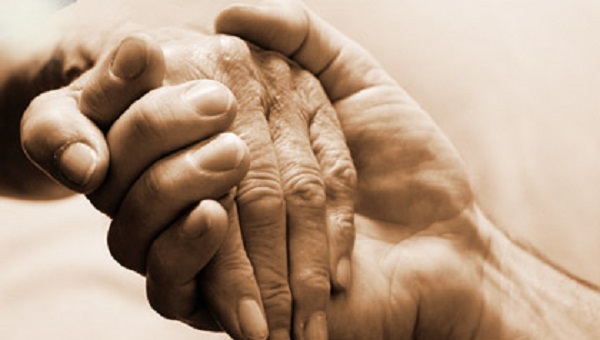
A feeding tube uses medical technology, but technology does not transform nourishment into an extraordinary treatment. A spoon is also a tool. So is a bottle. So is the hand of a daughter lifting a cup to her father’s lips.
The method may change when a person can no longer swallow, but the human obligation does not disappear.
There are limited situations in which nutrition or hydration no longer accomplishes its purpose. A body in the final stage of dying may lose the ability to absorb or metabolize nourishment. Artificially supplied fluids may cause serious complications or impose a grave burden. In those cases, stopping them does not cause the person’s death. The disease has already reached the point at which the body can no longer use what it receives.
But when food and water still nourish the patient, withdrawing them changes the cause of death.
We would never call withholding food and water from a healthy person “allowing nature to take its course.” We would recognize that the deprivation caused the death. Dependence, disability, or unconsciousness does not alter that basic truth.
This is why the Datafolha numbers demand more than celebration. Yes, most Brazilians still oppose euthanasia and assisted suicide when those practices are described plainly. But the resistance weakens when death comes wrapped in therapeutic language. It weakens even further among the young.
We must reach them before euphemisms make the decision for them. No human being loses his dignity because he cannot swallow, speak, work, or ask for another glass of water.
A society proves its humanity not by how efficiently it ends dependence, but by whether it continues to care for those who cannot care for themselves.
LifeNews.com Note: Raimundo Rojas is the Outreach Director for the National Right to Life Committee. He is a former president of Florida Right to Life and has presented the pro-life message to millions in Spanish-language media outlets. He represents NRLC at the United Nations as an NGO. Rojas was born in Santiago de las Vegas, Havana, Cuba and he and his family escaped to the United States in 1968.