
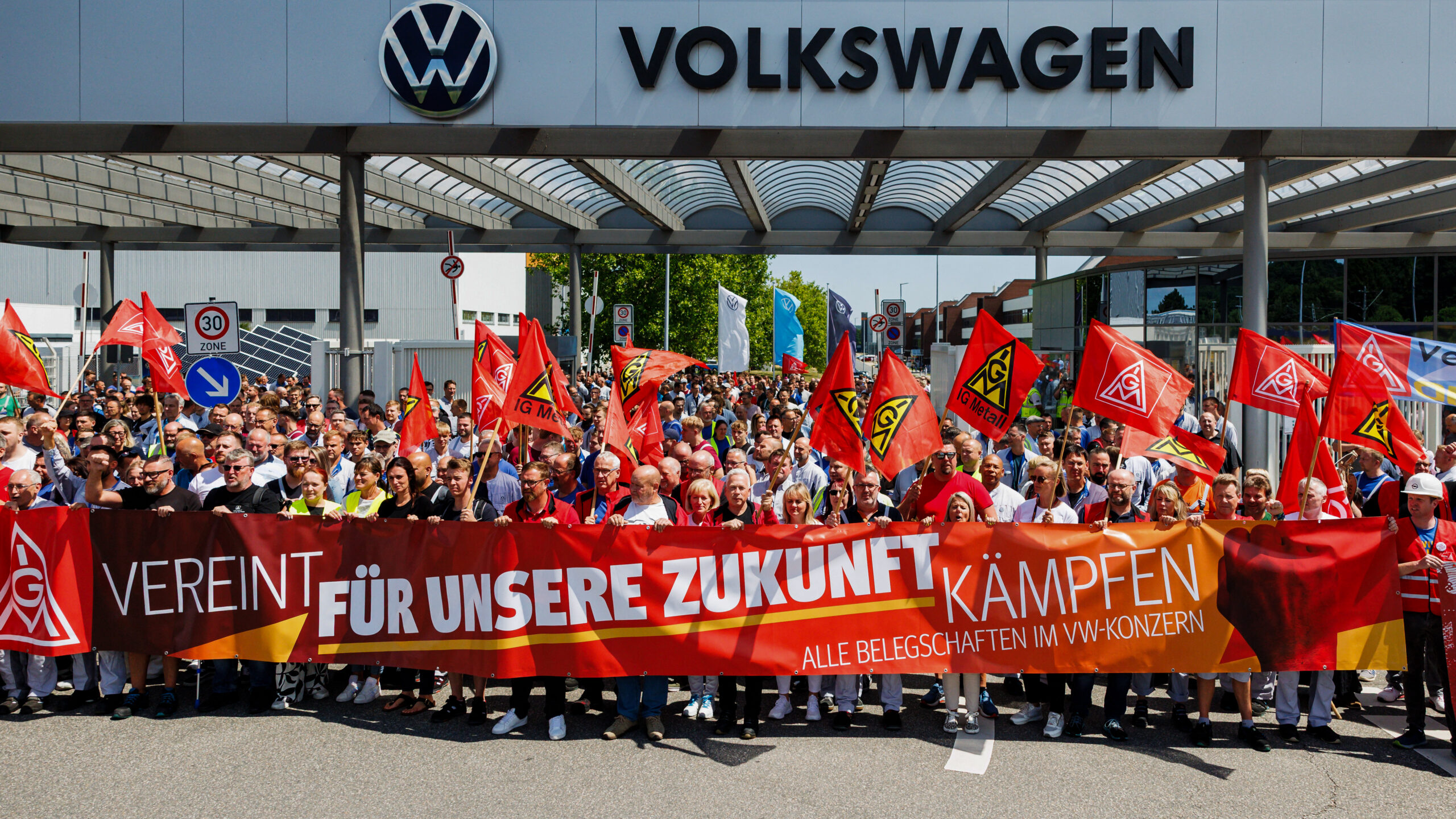
Volkswagen Group tells its board how to fix it, unions disagree
That number had scaled up to 50,000 by this March, as the extent of its problems continued to grow. Then, in late June, a German magazine reported that now, 100,000 jobs would go by 2030, along with the unthinkable: closing four German factories, something that has never been done in its history.
However, Volkswagen’s public statement on the restructuring plan makes no mention of job losses or factory closures—at least not directly.
But it does call for a heavily edited model lineup, with half as many vehicles offered across all its brands. These will be “concentrated on the most attractive market segments,” VW Group says, which probably means mostly crossovers, now as beloved by European car buyers as their counterparts in the US. To make things simpler for the factories, “offering complexity—for example, the number of available equipment options—will be reduced by up to 75 percent.”
The proposal also details a mismatch between global demand for VW Group products, at 9 million vehicles a year, and the company’s annual capacity to build 10 million vehicles a year (although it notes that VW has reduced its capacity by 2 million units since COVID).
So while the plan doesn’t explicitly say VW will cut jobs and shutter plants, it does involve building fewer cars with less differentiation to them, something that sounds like it’s less labor-intensive.
Or did. Assuming JP’ sources are correct, it’s time for Blume and his colleagues to think of something else.