
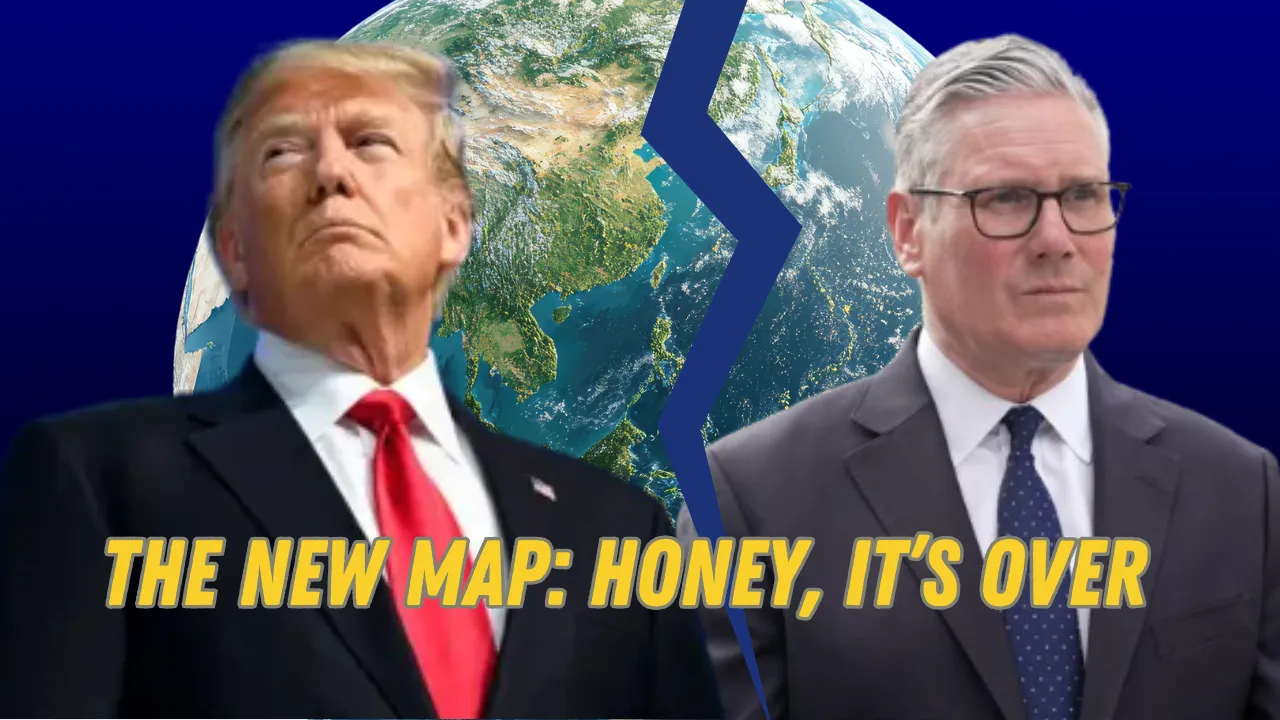
The New Map – JP
Honey, it’s over. You do you.
Please Follow us on Gab, Minds, Telegram, Rumble, Truth Social, Gettr, Twitter, Youtube
It is no secret that America is stepping back from being the world’s police and repositioning itself as a powerful, self-reliant fortress. In the words of Secretary Pete Hegseth of the newly renamed Department of War, this administration has drawn a new strategic map: from Greenland, to the Gulf of America, to the Panama Canal and its surrounding countries. Inside the Pentagon, this vision is referred to as The Greater Strategic North America. So why Iran, and why now?
For 47 years, an Iranian theocracy has killed Americans in embassies and military installations, supplied terrorist organizations including Hamas, Hezbollah, and the Houthis, funded extremist networks across Europe, and pursued nuclear capabilities behind a thin veneer of civilian justification. We now know that Iran’s ballistic missiles have long-range capabilities.
‘NO AD’ subscription for CDM! Sign up here and support real investigative journalism and help save the republic!
Ridding the world of this threat is, on its face, a national security matter—particularly since the United States is in its crosshairs. Since the 1979 Embassy Hostage Crisis, Iran has perpetrated attacks on Americans, and from that point on, U.S. presidents have taken varied approaches. Carter negotiated. Reagan applied indirect pressure. Clinton pursued legal measures and economic sanctions. Bush engaged via proxies. Obama offered diplomacy and pallets of cash. Each approach deferred the problem to the next administration.
Trump chose direct and kinetic resolution. But is the nuclear threat the main motivation? After all, according to Benjamin Netanyahu’s long-standing warnings, the “imminent threat” has existed for decades. And Marco Rubio said the quiet part out loud: Israel was preparing to act, prompting the U.S. to move first.
Setting aside what many perceive as Israel’s outsized influence on American politics, the timing makes more sense when viewed through the strategic map. The Strait of Hormuz carries a significant portion of China’s oil supply. Trump had already placed Venezuela’s energy sector under increased American influence—a resource China relied upon heavily. With the Iran campaign, the United States now sits astride both chokepoints simultaneously.
China is in the middle of trade negotiations with an American president who is not blinking on tariffs. Suddenly, the oil China needs flows only where America permits. That is not coincidence. That is leverage: the kind that does not need to be spoken aloud to be fully understood.
Europe is absorbing a parallel shock. With Russian energy largely off the table and domestic production weakened by years of net-zero policy, Europe has grown dangerously dependent on external supply. America is now in the driver’s seat. Energy is the new geopolitical currency, and the United States holds the reserve.
The longer this campaign continues, the more the world becomes dependent on American supply. A self-sufficient economic and security zone spanning an entire hemisphere is no longer theoretical. It is being built in real time—tanker by tanker, negotiation by negotiation. By choice, sheer geopolitical miscalculation, or plain incompetence, the special friends across the pond will not be part of this arrangement.
The Betrayal List
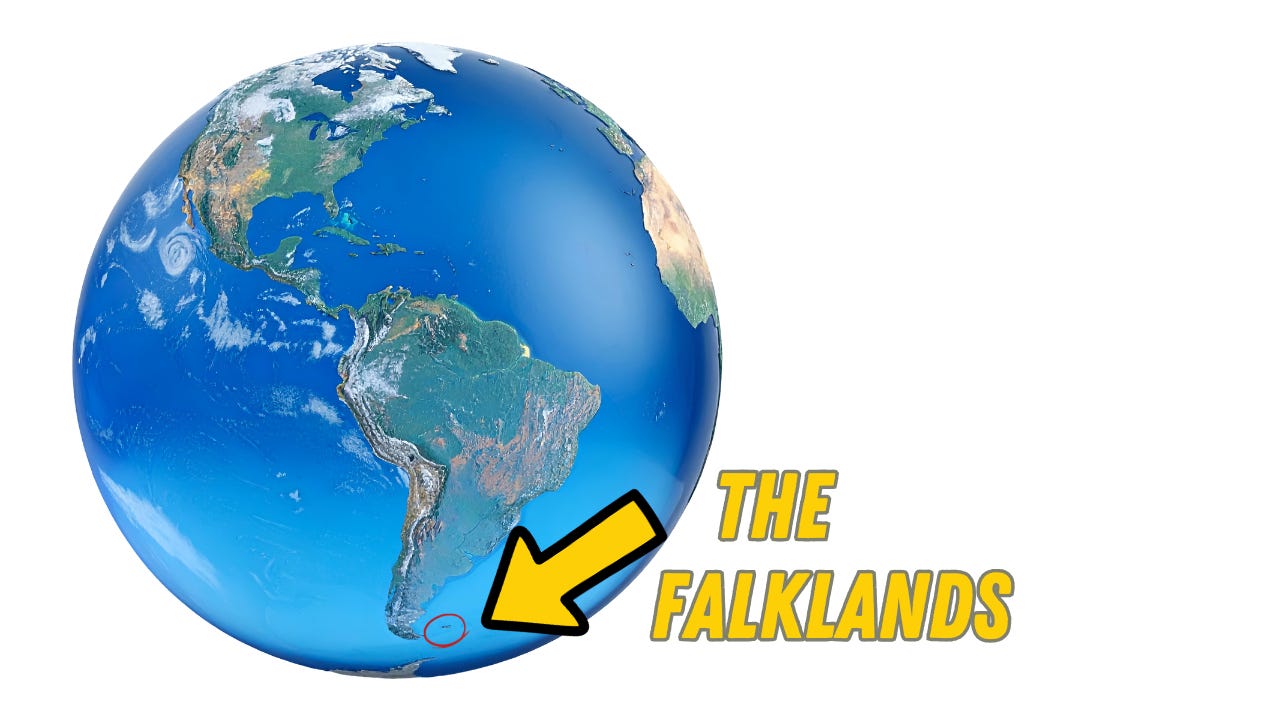
America has a long and generous history of involvement in conflicts that had little direct bearing on its working class. It assisted Ukraine, not a NATO member. It intervened in Serbia, also not a NATO member. It supported France in Chad, a former French colony with no clear American strategic interest. It provided fuel, reconnaissance, supplies, and even a Tomahawk missile during Britain’s campaign to retake the Falkland Islands.
The Falklands? An archipelago in the South Atlantic—far south of Argentina’s mainland. Puhleeze.
All the United States asked of its European partners during the Iran strikes was basic operational cooperation: permission to use bases shared with Spain under NATO arrangements—denied. Refueling access in Italy—denied. Passage through French airspace—denied. The use of Diego Garcia—not our war, said Keir Starmer.
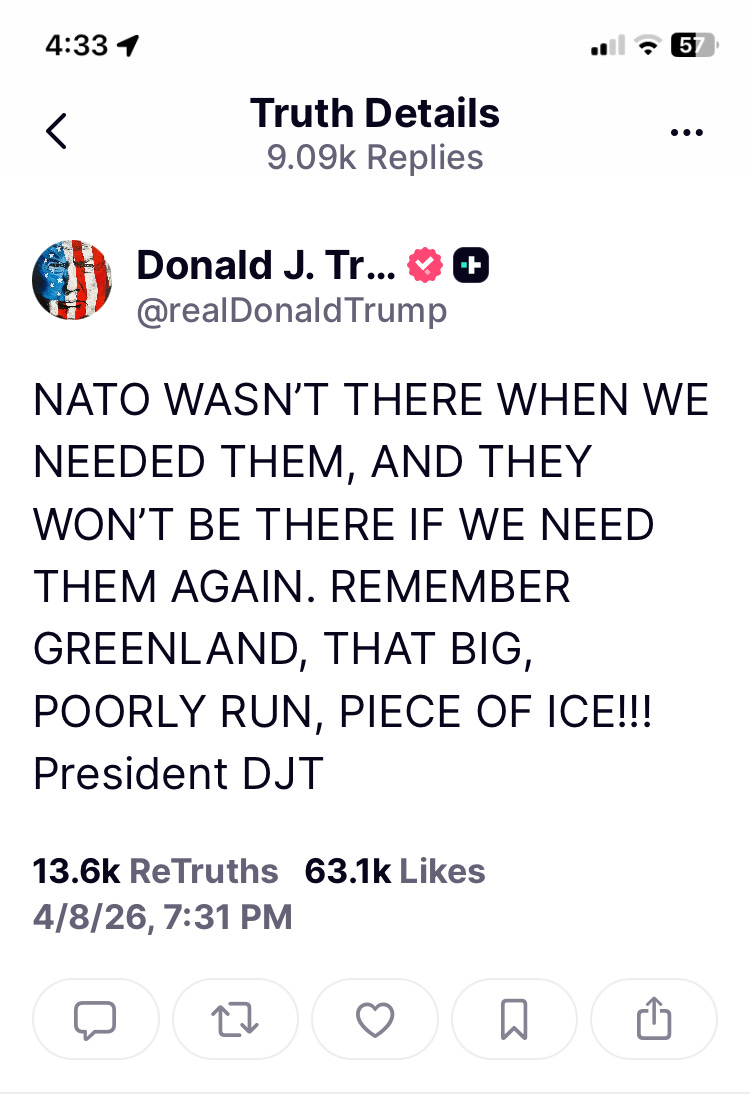
Trump has already stated: we will not forget this. The precedent is clear, the record is documented, and the rationale for reassessing decades of global commitments has been handed to him by the very allies he was defending.
No more foreign entanglements without reciprocity. No more blank checks for partners who deny refueling rights when it matters. The withdrawal from the global stage that critics have warned about for years has now been earned, not chosen.
The Special Relationship Is Over
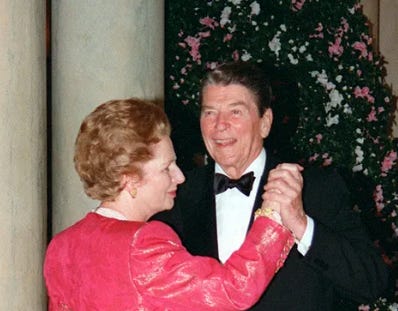
For decades, Britain has traded on its so-called “special relationship” with America. Departing from the Reagan–Thatcher era, Trump has clearly signaled that the arrangement is finished, and Keir Starmer’s decisions have accelerated that shift. The Diego Garcia refusal was not a nuance. It was a choice—with consequences.
Those consequences for Britain and Europe could be significant. Limited energy security, constrained domestic food production, a diminished industrial base, and reduced military capacity all point to structural weakness. Add declining birth rates, unintegrated immigration, cultural fragmentation, and political division, and the strain becomes more apparent.
The institutions that once unified British society: faith, national identity, shared history, have been systematically dismantled by decades of left-wing globalism, and nothing coherent has been built in their place. This is not a temporary political cycle. It is a structural challenge that predates Brexit, Boris Johnson, and Starmer. Leadership changes have not addressed the underlying conditions.
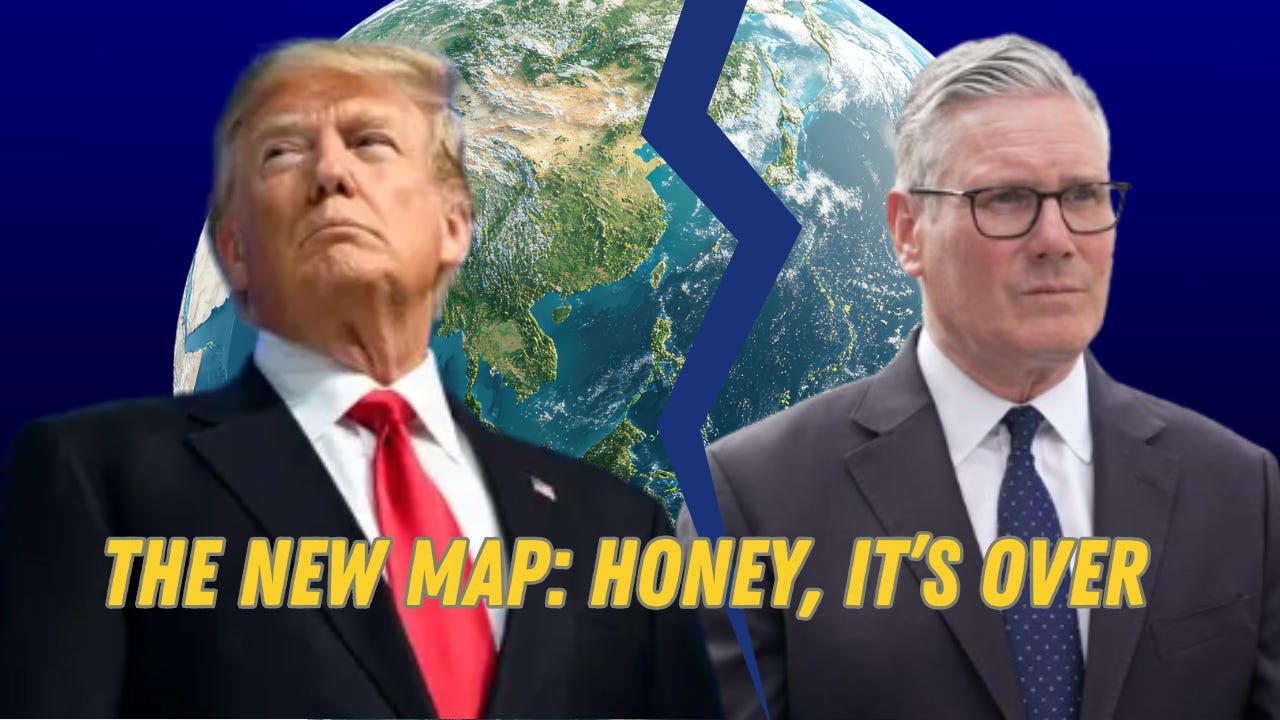
The New Architecture
Will America formally withdraw from NATO to achieve its strategic goals? Perhaps not. Bilateral agreements with nations willing to enter genuine partnerships may be sufficient. The financial commitment may not shrink dramatically—but the terms may change.
What may be required instead is collateral. An island, for instance, between the North Atlantic and the Arctic, whose value has long been recognized by American planners. Greenland is not an eccentric fixation. It is the anchor of the new map.
What is emerging is not isolationism. It is a more deliberate form of American power: one that secures a hemisphere, influences global energy flows, maintains partnerships based on reciprocity, and declines to subsidize those who opt out when it counts.
For nations that align, the benefits may be substantial. For those that do not, the shift will be quieter but no less consequential. The map is being redrawn, not with declarations, but with decisions. The world has changed and some leaders chose to be on the wrong side of it. Ultimately, its the ordinary people who suffer, citizens of a world that is not of their making nor their consent.
“Nations have no permanent friends, only permanent interests.”
Henry John Temple, 3rd Viscount Palmerston & former UK Prime Minister
Heavenly Father,
We pray for the courage to see the world as it is rather than as we wish it were. We pray for the British people, the European citizens, and all those who are watching their extraordinary cultures diminish in ways they did not choose. Have mercy on them. May the fracture produce renewal rather than collapse.
We pray for wisdom in the exercise of American power at this extraordinary moment. Grant this nation and its leaders the humility to use strength and wisdom in service of something larger than national advantage alone.
Lord, we pray for this Administration. Guide President Trump and his leadership team to restore America to the vision had and fought for by our founding fathers.
In Jesus’ name, Amen.
The post The New Map appeared first on JP.