
Secret QE is Part of Reset: Treasury Will Use Stablecoins to Flood System with Cash
Exclusive Interviews, Videos
Secret QE is Part of Reset: Treasury Will Use Stablecoins to Flood System with Cash
By
Matt Morgan – September 13, 2026
Matt Morgan – September 13, 2026
/script type=”text/javascript” data-src=”https://app.getresponse.com/view_webform_v2.js?u=S6bT5&webforms_id=A25R”>
Summary
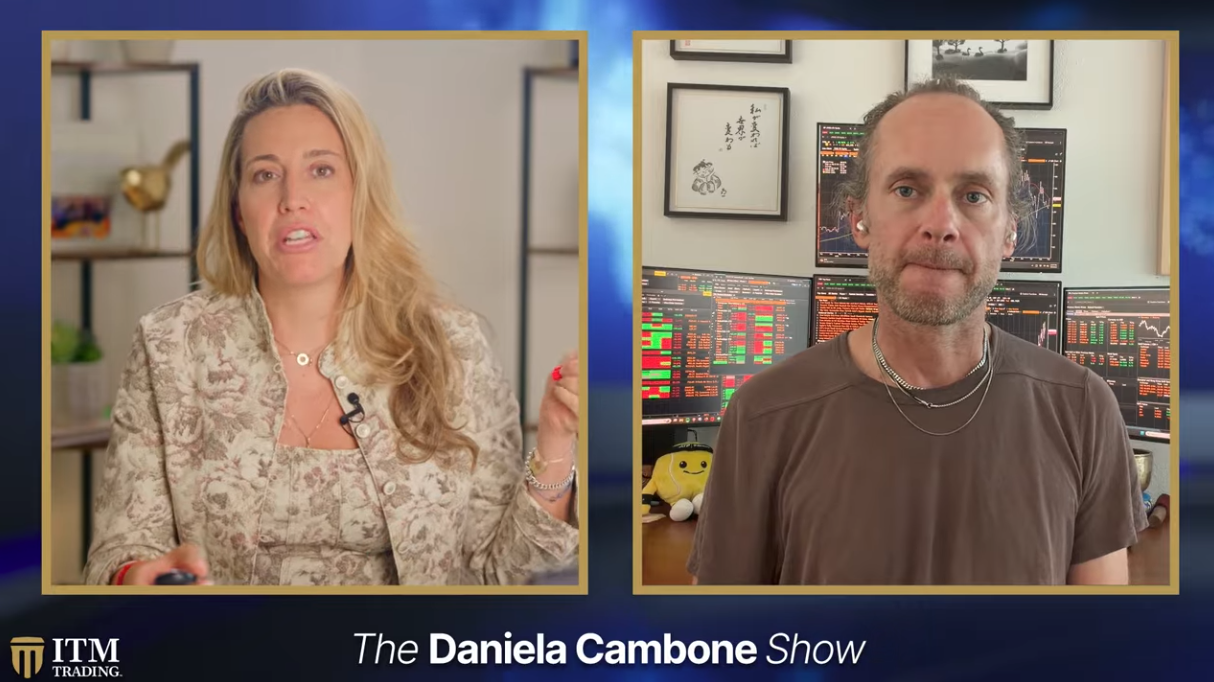
Tucker rejects the collapse narrative entirely, arguing Bessent’s tripling of long-term debt buybacks to $6 billion makes complete sense as part of a deliberate plan: stablecoins are creating enormous structural demand for 91-day-or-less T-bills, which lets the Treasury fund itself at the short end while managing long rates down. He says $400 billion in stablecoins today becomes many trillions, points to 140 banks forming OpenUSD due late this year, and notes Tether sits on roughly $180 billion of customer money earning about 3.8% for something like $7 billion a year doing nothing. Tucker tells viewers to stop fighting the system and participate — he’d take new money and buy twice as much Bitcoin as gold despite writing Why Gold, Why Now?, because the gold rally already happened and the coming “digital box” of monitoring will drive people to Bitcoin.
Top 5 Key Topics
- Stablecoins as the new funding mechanism: Tucker says he initially thought stablecoins were the dumbest idea he’d ever heard, but now sees the footnote: issuers must park customer dollars in short-duration Treasuries, and nobody ever asks for their money back. Wells Fargo will eventually tell you that you can’t pay your mortgage without OpenUSD, and the Treasury wants many competing stablecoins rather than one, so the ecosystem stays “hyperliquid.”
- The old QE playbook is finished: The Fed’s balance sheet has shrunk from $9 trillion to the sixes while everyone wrings their hands, and the real estate leverage plus interest rate control model that ran for 20-25 years is over. Excess cash is instead being funneled into the stablecoin system, which keeps a bid under short-term Treasuries and lets Bessent slowly manage long-term rates.
- Bessent is planning for 2030, not reacting to a corner: Asked whether Bessent was backed into this by $40 trillion in debt and a duration demand problem, Tucker says no — “What are we going to do about tomorrow?” is how sophisticated people plan. He compares it to the $800 billion Fed balance sheet and the $700 billion TARP fight of 2008, amounts that now look like nothing, and says Bessent intends to leave his mark rather than manage Yellen’s Treasury.
- Contempt for the collapse industry: Tucker says YouTube financial channels are wall-to-wall “collapse” while the same audience wants to make money before it, which he calls pathological, and that the hyper-negative crowd will never make money because they fight reality. His prescription is incremental discipline — take $50 of a $1,000 gain and buy gold — over trying to go from hourly at Taco Bell to flying private, and he notes three cybersecurity stocks in his portfolio averaging 45% versus the S&P’s 12% still draws complaint emails.
- Bitcoin over gold from here, and inflation as the price of the system: Tucker owns gold and always will as a “manager of wealth,” but says there’s about as much upside as his New York apartment, while he’d put twice as much into Bitcoin — flatly stating there is no use case for Bitcoin, that everything derived from it will be used but stablecoins have almost nothing in common with it. On inflation, he says people like it when houses and stocks rise but complain when butter costs more, and the whole system needs to keep getting bigger so you should get bigger with it.
Posted in Exclusive Interviews, Videos