
Russia’s Transfer Of 12 Su-35s To Ethiopia A Year In Advance Aims To Deter Egypt – JP
Please Follow us on Gab, Minds, Telegram, Rumble, Truth Social, Gettr, X, Youtube, Instagram
Originally published at Andrew Korybko / Substack.
The significance of Russia transferring that many state-of-the-art warplanes to its oldest African ally a full year in advance despite the ongoing Ukrainian Conflict and amidst rapidly escalating tensions in the Horn of Africa cannot be overestimated.
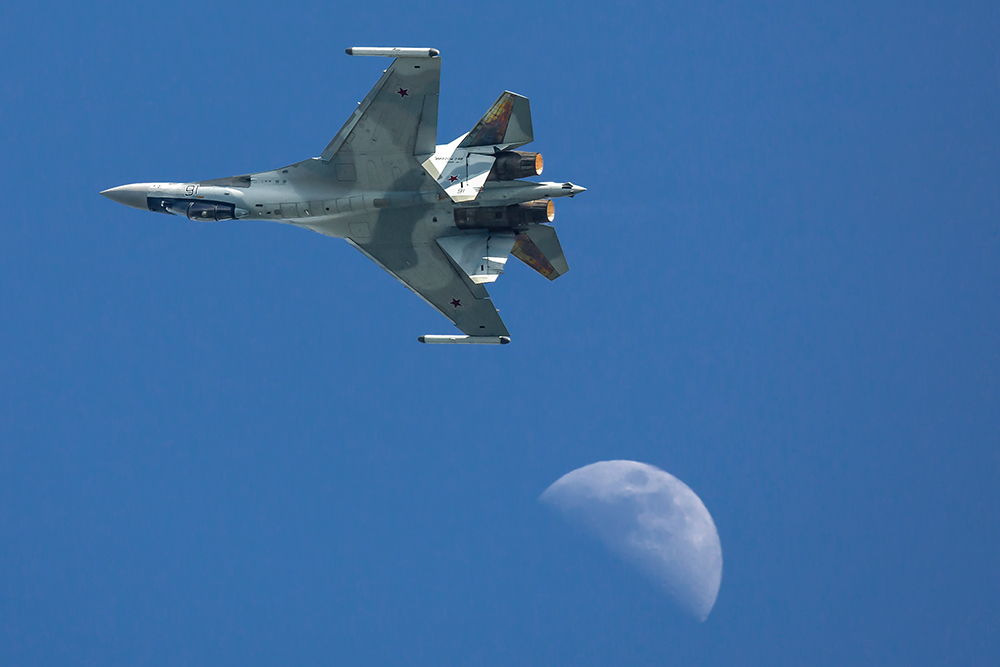
Ethiopian Prime Minister Abiy Ahmed announced during his latest visit to Russia to attend the third Russia-Africa Summit that his country took delivery of 12 Su-35s from Russia a year ahead of schedule. Four S-400 air defense system batteries will also soon arrive. The significance of Russia transferring that many state-of-the-art warplanes to its oldest African ally a full year in advance despite the ongoing Ukrainian Conflict and amidst rapidly escalating tensions in the Horn of Africa cannot be overestimated.
This could only have happened with Putin’s approval, who enjoys close ties with Abiy, which are actually quite special too since they both used to occupy senior positions in their intelligence services. Former professionals from this sphere have deep respect for one another and a unique bond. Putin’s friendship with Abiy is further strengthened by their complementary regional visions centered on synergy, or medemer in Amharic, which is the title of Abiy’s book that he gave to Putin during their latest meeting.
Russia and Ethiopia also have similar histories: both are historically Orthodox Christian civilization-states, each had their own bloody communist revolutions that resulted in the execution of their emperors, and former regions (Ukraine and Eritrea) were exploited as proxies by their rivals after independence. That last point segues into the rapidly escalating tensions in the Horn. In brief, Egyptian-backed Eritrea’s anti-Ethiopian rebel alliance was just crushed, but the threat of cross-border terrorism remains acute.
All top members of the aforesaid rebel alliance’s TPLF leaders fled to Eritrea along with the military equipment that they looted from the Tigray Region, thus posing an enduring threat that could materialize at any moment, including through another joint invasion by conventional Eritrean forces. Ethiopia therefore has the UN-enshrined right to preemptively, or even preventively, neutralize this threat. Eritrea also continues to occupy parts of Ethiopia and rejects Addis’ demands to withdraw.
Abiy doesn’t want another conventional Ethiopian-Eritrean War after their mutually devastating one from 1998-2000, instead preferring to implement his synergy-centric regional vision for mutual peace, security, and prosperity, but Eritrean President Isaias Afwerki remains obstinate. His strings are being pulled by Egyptian President Abdel Fattah el-Sisi, who leads Ethiopia’s historical rival and is exploiting Eritrea as a Ukrainian-like proxy for waging a Hybrid War on Ethiopia aimed at “Balkanizing” it.
Although Egypt isn’t a member of the Islamic NATO comprised of Saudi Arabia, Pakistan, and Turkiye, all either NATO members or “Major Non-NATO Allies”, it closely coordinates with them and can thus be considered a de facto one (it’s also a “Major Non-NATO Ally”). Of importance, the Islamic NATO’s rapid military build-up in southern Saudi Arabia and southern Yemen in response to the Houthis positions the bloc to intervene in Eritrea’s support if conventional hostilities with Ethiopia resume at scale.
Although the abovementioned build-up is only a recent development, Egypt has been encircling Ethiopia for the past few years in Sudan, Eritrea, and Somalia, which threatens Russia’s oldest African ally. Putin therefore made the decision at least a year or two ago to prioritize the transfer of Ethiopia’s 12 Su-35s one year ahead of schedule in order to deter a conventional intervention by Egypt in Eritrea’s support. This transfer now takes the form of deterring the Islamic NATO and could realistically avert a major war.