
REPORT: Iran Peace Talks ‘Falter’ After Beautiful Improvement
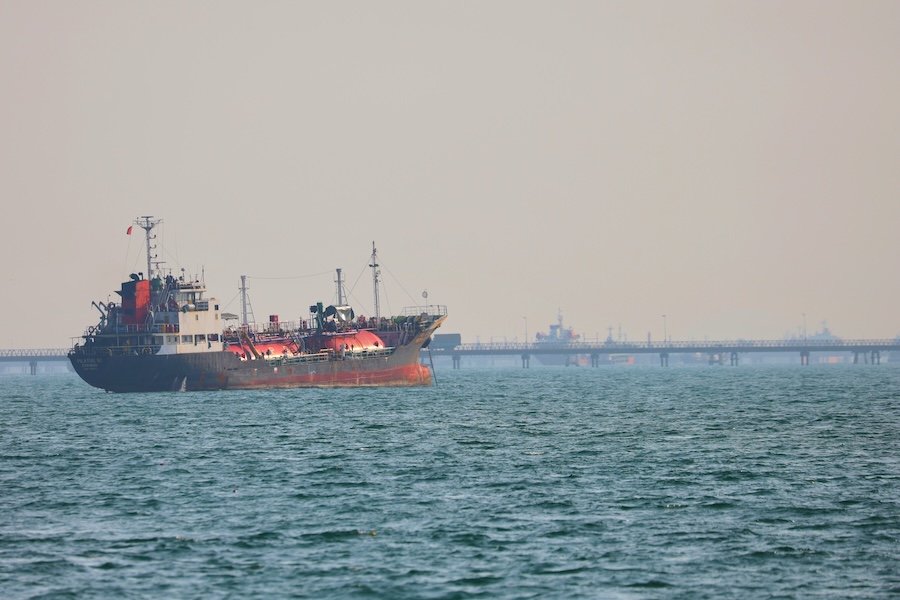
A U.S. Navy destroyer seized an Iranian cargo ship in the Strait of Hormuz on Saturday, signaling the first direct enforcement action tied to Washington’s blockade strategy as diplomacy with Tehran appears to be sliding backward.
The escalation moves the U.S. posture from warning shots and deterrence to hands-on interdiction in one of the world’s most sensitive chokepoints. The Strait of Hormuz carries roughly 20% of global oil and a similar share of global liquefied natural gas trade, making any disruption an instant jolt to markets and a fast track to a wider crisis.
Negotiations were already strained. Now, the seizure has added new fuel to a standoff that both sides have framed as a test of resolve.

President Donald Trump said between Friday and Sunday that Iran “cannot blackmail” the United States over the strait. He warned the U.S. could strike infrastructure and “easily open” the waterway if shipping is restricted.
On Monday, the Iranian regime said it has no plans to attend peace talks in Pakistan with Trump’s top three negotiators, including Vice President JD Vance, citing “unreasonable and unrealistic demands” by the White House, according to CBS News.
Markets reacted quickly to the uncertainty. CNN reported Brent crude rose about 7% on Sunday to $96.88, after settling Friday at its lowest level since March 10 on news Iran would re-open the strait. U.S. crude climbed about 7% to $90.33.
Military.com said it reached out for comment to the Defense Department, the White House, the State Department and U.S. Central Command.
Officials identified the U.S. warship as the guided-missile destroyer USS Spruance. The vessel targeted was identified as the Touska.
According to U.S. officials, the destroyer issued warnings over several hours. Marines later boarded the ship after it was disabled. U.S. Central Command said multiple warnings were delivered before disabling fire was used, emphasizing the action followed attempts to compel compliance.
U.S. officials said the Touska was linked to a sanctioned Iranian network and had been returning from a Chinese chemical-storage port. The ship’s cargo was not immediately confirmed.
The operation is the clearest sign yet that the blockade is shifting from a pressure campaign into active enforcement, with all the risks that come with close-quarters naval maneuvering in crowded commercial lanes.
Iran responded within hours, condemning the seizure as “piracy” and warning retaliation could follow if U.S. forces continue enforcing the blockade.
Iran also accused the U.S. of “breaches of trust” in the aftermath, adding to the hardening tone that has shadowed the latest round of stop-and-start talks.
Iranian officials argued the strait is under the control of the Islamic Republic and warned vessels not to transit without authorization. The rhetoric underscores how Tehran sees the waterway as leverage as much as geography, and it raises the stakes for commercial shippers caught in the middle.
Conditions in the strait worsened overnight into Sunday as operators weighed the risk of confrontation. Reports indicated some vessels turned away or delayed transit. Other ships adjusted course before later attempting to pass through.
RELATED: WATCH: U.S. Navy Seizes Iranian Vessel Outside Strait Of Hormuz
Insurance costs climbed as risk premiums rose, and shipping companies reconsidered routes, even as U.S. maritime advisories warned the threat of naval mines in the traffic separation lanes remained unclear.
Oil and LNG flows remain constrained, putting more pressure on global markets already reacting to the U.S. seizure and Tehran’s warnings.
The maritime confrontation is unfolding alongside broader Gulf tensions. Iranian claims suggested drones or missiles targeted U.S. positions in Kuwait after forces were relocated to reduce exposure to earlier attacks.
Iranian officials said drones targeted personnel or equipment on Bubiyan Island, a strategic site near the Iraqi border used as a staging and logistics hub following repeated strikes near Camp Arifjan, a key base for U.S. ground forces in the country.
Kuwaiti authorities said debris from the incident injured at least six civilians, highlighting how fast a military clash can spill into host nations and civilian areas.
For now, the ceasefire framework remains fragile, but the message from both sides is sharpening. The U.S. is enforcing. Iran is daring it to continue. And the talks meant to cool the temperature are, at least for the moment, on shaky ground.
Download the FREE Trending Politics App to get the latest news FIRST >>