
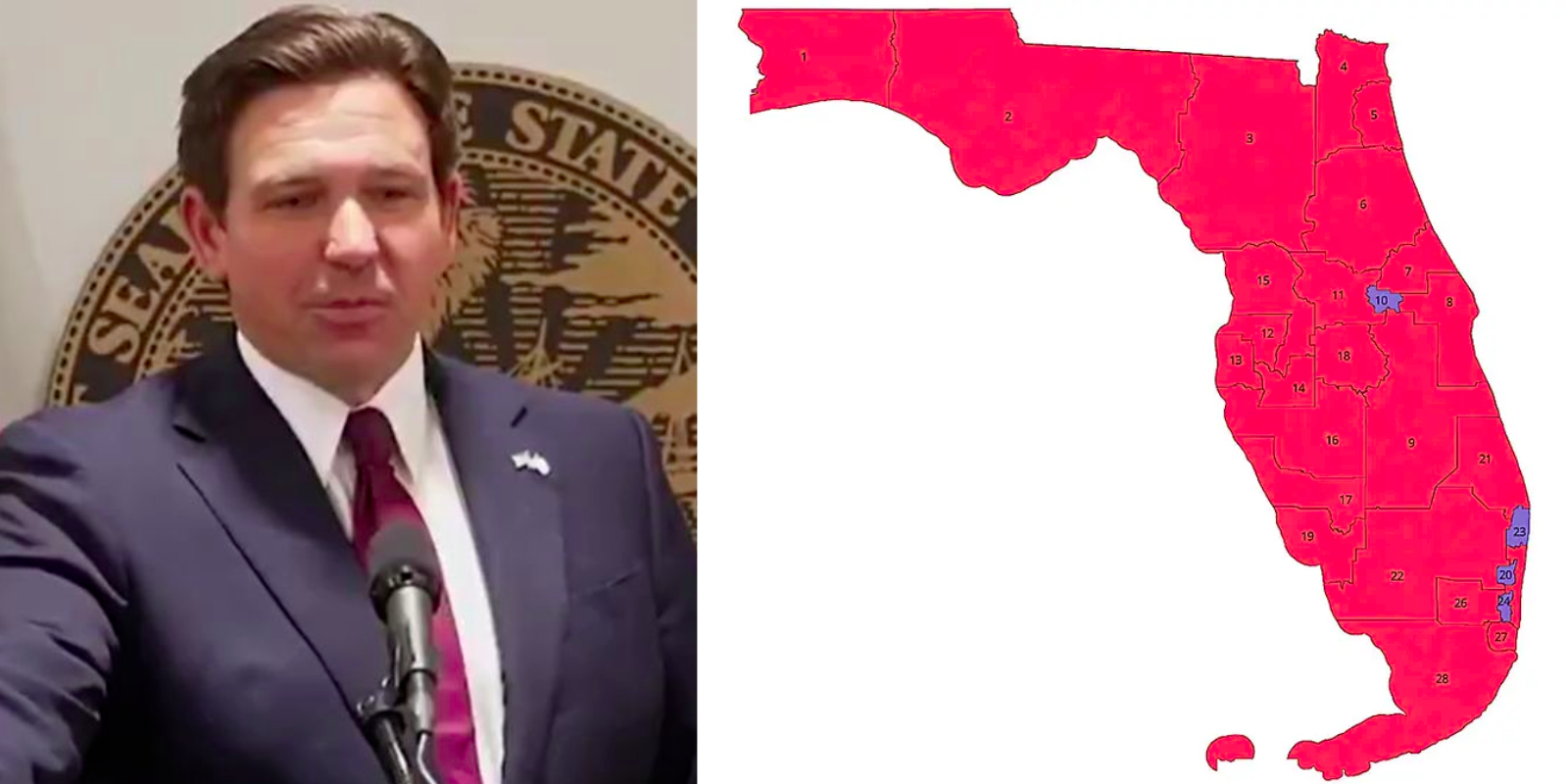
Proposed Florida congressional map might flip 4 Democrat-held seats
The proposed map would eliminate several Democratic-leaning districts.
Florida Gov. Ron DeSantis on Monday rolled out a new congressional redistricting proposal that could significantly expand the Republican advantage in the state’s House delegation. The plan, that lawmakers are set to take up in a special session beginning Tuesday, would shift the current 20-8 GOP edge to a projected 24-4 split.
The proposal is expected to move quickly through the Republican-controlled legislature, though not without some pushback, even within the party. Some Republicans are hesitant about about the strategy and the rollout of the map, which was first shared publicly through Fox News before being formally presented to state lawmakers.
The map includes clear indicators of partisan leanings, marking districts in red and blue. That approach has drawn scrutiny because Florida’s “Fair Districts” constitutional provisions prohibit maps drawn with explicit partisan intent.
“This is wild,” a Florida Republican consultant who has been involved in past redistricting cycles said to NBC News. “I don’t know how you can argue a red and blue map released from the governor’s office doesn’t show some form of partisan intent.”
Democratic state Sen. Carlos Guillermo Smith criticized the process, writing, “The fact that the Governor shared his illegally-rigged Congressional map with @FoxNews before sharing it with state senators voting on them TOMORROW shows how partisan and illegitimate this process is.”
The DeSantis admin has naturally defended the effort, stating that the redraw is necessary due to population growth and alleged undercounting in the 2020 census. In a memo to lawmakers, the governor’s office stated Florida was undercounted by more than 760,000 people and said the new map is designed to reflect those changes.
The proposed map would eliminate several Democratic-leaning districts, including one in the Tampa area currently represented by Rep. Kathy Castor and another in Orlando held by Rep. Darren Soto. It would also reduce the number of Democratic-leaning seats in South Florida.