

Paper Bitcoin Is the New Paper Gold
/script type=”text/javascript” src=”https://app.getresponse.com/view_webform_v2.js?u=S6bT5&webforms_id=A25R”>
Written by Matt Morgan at The Daily Bell:
Here’s the difference between owning a promise and a hard asset:
One is a promissory note, the other is the thing itself.
Since 1974, when gold became purchasable again, gold investors learned the difference the hard way. Now, Bitcoin investors are learning it too.
How One Ounce Became Many
In Gold Wars, Swiss banker Ferdinand Lips described the gold market of the 1990s. Central banks lent their gold to big banks for about 1% a year. The banks sold it, then parked the cash in government bonds paying 5%. Lips described the trade like this:
“By borrowing gold from the central banks at a 1% lease rate, then selling the gold (thereby flooding the physical gold market with an artificial supply) and investing the proceeds in Treasury securities at 5%, they were making fortunes.”
The catch is that central banks still counted that gold as theirs. So did whoever bought it, which meant that one physical ounce would have two owners.
It worked for awhile, until it didn’t. In September 1999, central banks agreed to limit gold sales and lending. Lips writes that the lease rate jumped from about 1% or 2% to 9% within hours, and gold jumped sharply within days. Paper claims had finally met real metal.
The Bitcoin Version
Bitcoin was built so this couldn’t happen. There will only ever be 21 million coins, and anyone can check who holds what. Except for one thing…
But the moment you leave your coins on an exchange, you’re back to holding a promise. FTX customers found that out in 2022, when the exchange stopped processing withdrawals and then collapsed. Binance customers got a reminder last month…
The Block reported:
“Blockchain analytics firm Chainalysis estimated that roughly $5.9 billion was stolen at the time of the theft.”
Mark’s Rule: Hold the Real Thing
Mark Jeftovic, Publisher of The Daily Bell and The Sovereign Capitalist, has been blunt about this for years. When FTX blew up, he told readers to get their coins off any exchange that same day. He also saw the bigger picture:
“This is yet another microcosmic example of what would be playing out within the fiat currency system if it weren’t for central banks holding the entire thing together with spit and twist-ties.”
Even holding your own keys takes care…
In August, Mark walked readers through a flaw in Coldcard wallets that left some seed phrases far weaker than they should have been. The fix was old-fashioned: roll real dice to add randomness.
Know What You Own
ETFs, futures and exchange balances all have their uses, but they’re claims on Bitcoin, not Bitcoin. In a calm market, nobody notices the difference, because nobody asks for the real thing at the same time. The thing is, we aren’t in a calm market.
Bitcoin is on track for its worst November since 2018.
Yahoo Finance reported:
“The cryptocurrency has fallen more than 20% in November.”
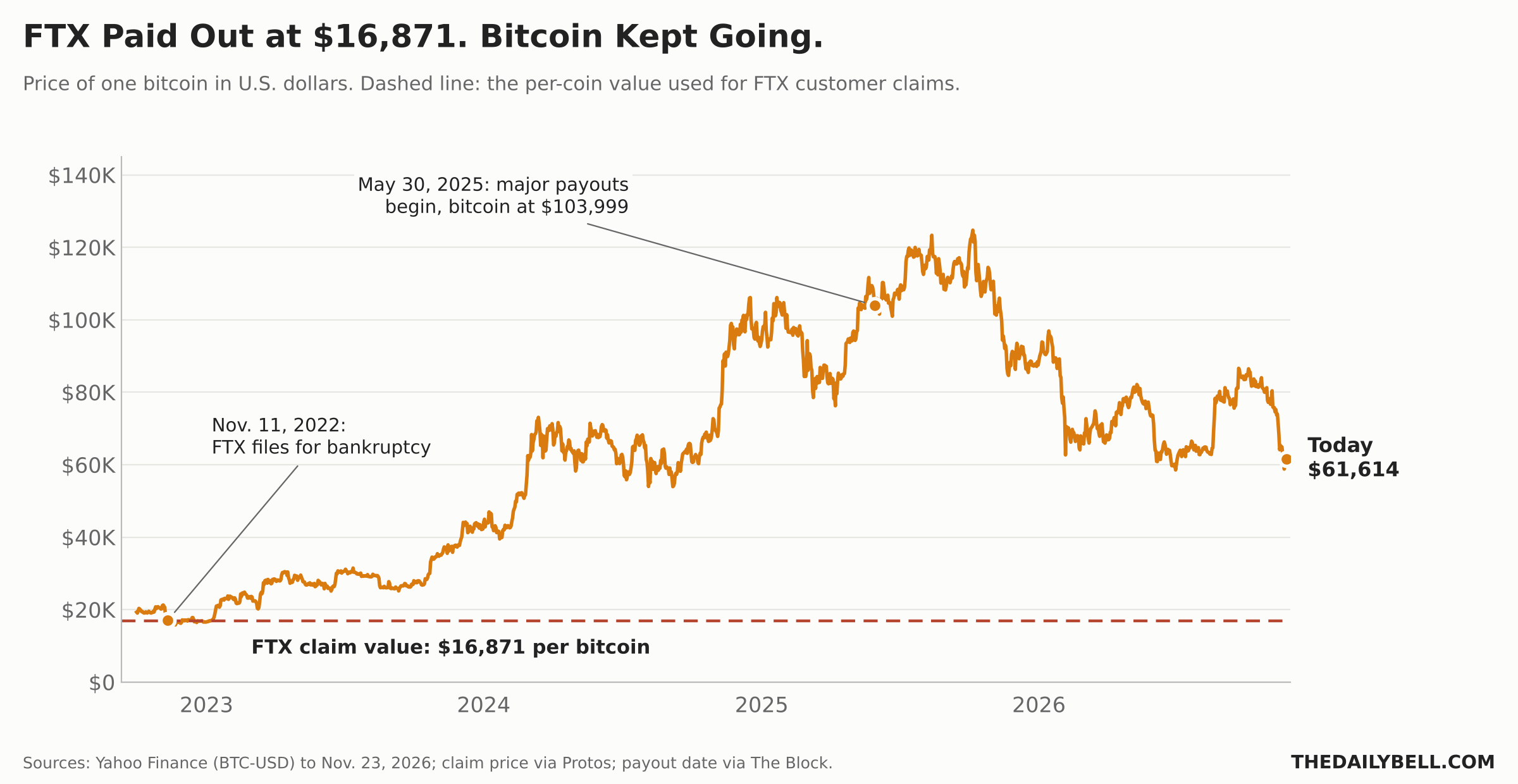
Investors have pulled more than $4 billion out of U.S. spot Bitcoin ETFs this month alone. Bitcoin is trading around $61,000, roughly half its record from October 2025. And all of that comes on the heels of last month’s $5.9 billion Binance hack.
Data: Yahoo Finance
That’s exactly the kind of stress that makes people check whether their claims are real. And when enough of them check at once, things get ugly fast.
Lips saw what happens when everyone tries to collect at once. In 1999, when the gold lease rate jumped, the banks that had sold borrowed gold suddenly had to buy it back so they could return it. Everyone wanted the same metal at the same time, and there wasn’t enough to go around (On paper the same gold was owned by multiple people!). The price shot up, and the people holding the short end of those paper promises took the losses.
Here’s how a rush like that usually plays out.
First, a few nervous holders ask for their asset back. Others notice and get in line behind them. The custodian, who never had enough of the real thing for everyone, slows withdrawals, then freezes them…
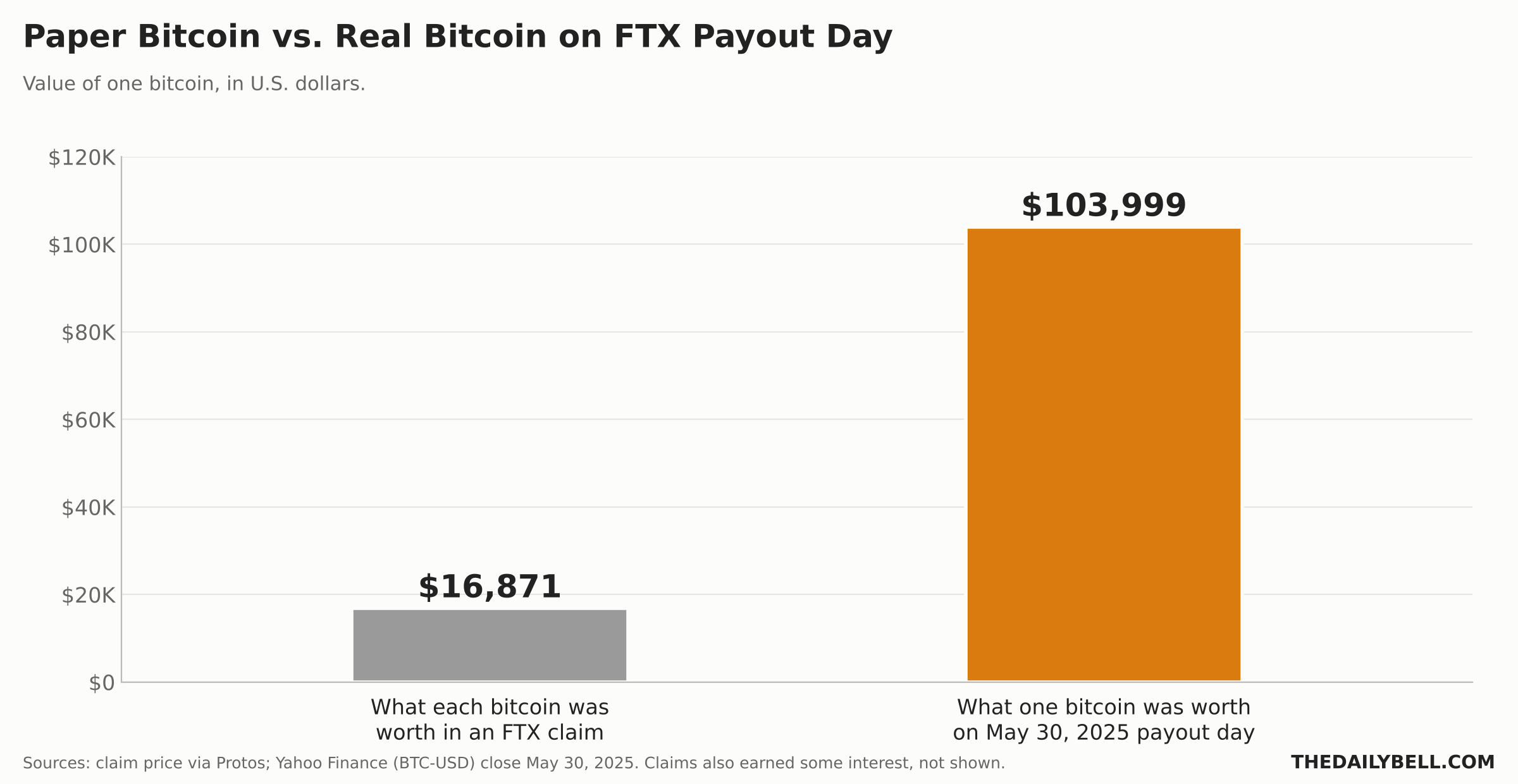
FTX showed exactly where that line ends. Customers waited more than two years to get paid. And when the payouts finally came, they were based on what Bitcoin was worth the day FTX filed for bankruptcy in November 2022, about $16,871. So they got dollars, not coins, and missed the entire run to $124,000. By early 2025, The Block reported those Bitcoin claims were worth only about a fifth of the market price.
Data: Yahoo Finance and Protos
Data: The Block and Yahoo Finance
The ones holding real metal, or real keys, were fine. The ones holding paper found out what it was worth.
Every wave of selling like this one tests the exchanges, funds and custodians holding coins on someone else’s behalf. Most of them will probably pass. Some might not. And you won’t know which ones until it’s too late to move.
So don’t wait to find out…
If you own Bitcoin for the long haul, hold at least some of it yourself, with keys only you control.
Want the Full Picture?
Every month, Mark Jeftovic breaks down Bitcoin, gold and the wider macro picture in The Sovereign Capitalist, including the charts he’s watching and his model portfolio.
Take The Sovereign Capitalist for a $7 test drive on your first month with promo code SOVTRIAL.
Posted in EDITORIAL, Exclusive Interviews