
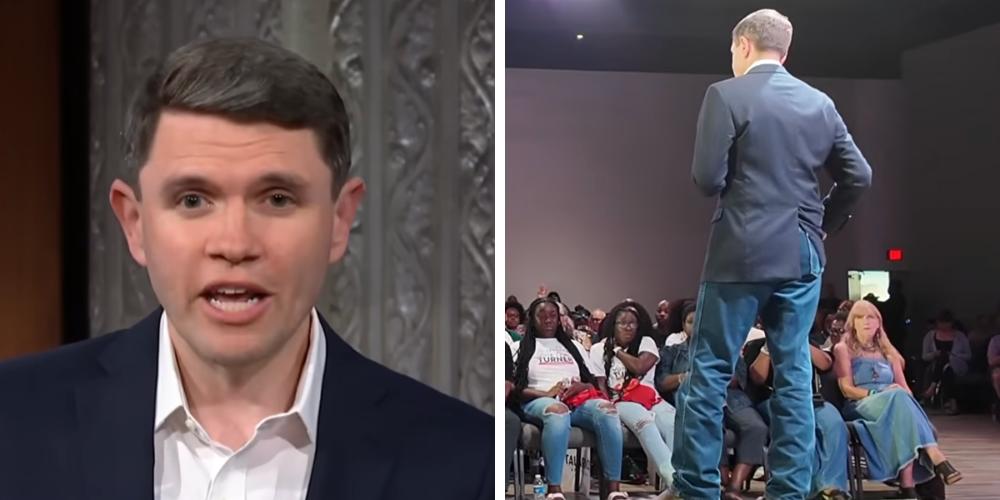
James Talarico endorses reparations for slavery—suggests it’s part of his ‘faith tradition’
Talarico framed the proposal as a form of reparative justice.
During a July 20 town hall-style campaign stop in DeSoto, Texas, Democratic Senate candidate James Talarico endorsed the idea of reparations for Black Americans when pressed on the issue.
“Restoration, repairing past harms is part of my faith tradition,” he said. “It’s part of the values I was raised with. And it’s exactly why we need a lot of the policies we’ve been talking about here to invest in black communities, to invest in black Texans, whether it’s tuition relief, whether it’s homeownership grants, whether it is baby bonds to ensure that we are helping to build that generational wealth.”
Talarico framed the proposal as a form of reparative justice, arguing that the government should address what he described as the enduring economic effects of slavery through targeted investments in black communities across Texas.
“We have to correct the injustices of our past. I talked about Sand Branch, Texas. Sand Branch is a Freedman community. So, we are seeing the reverberations of slavery in modern-day Texas all over the place. And until we as a society are committed to righting those past wrongs, of restoring our black communities, we’re never going to be able to get this country back on track.”
While there is little Texas-specific polling on reparations, national surveys have consistently shown the proposal is unpopular. A YouGov survey conducted June 12–16, 2025, found that 23 percent of Americans said the government should make cash payments to black Americans, while a majority of 57 percent said it should not. The remaining 19 percent were undecided.
“And so we in this election have a prime opportunity because not only is this a Senate seat that could determine the Senate majority, but all of you know that if we win Texas, that is going to be an earthquake in American politics,” Talarico continued. “It will transform the politics of this nation, and it will allow us to build the political will to be able to repair those past harms.”