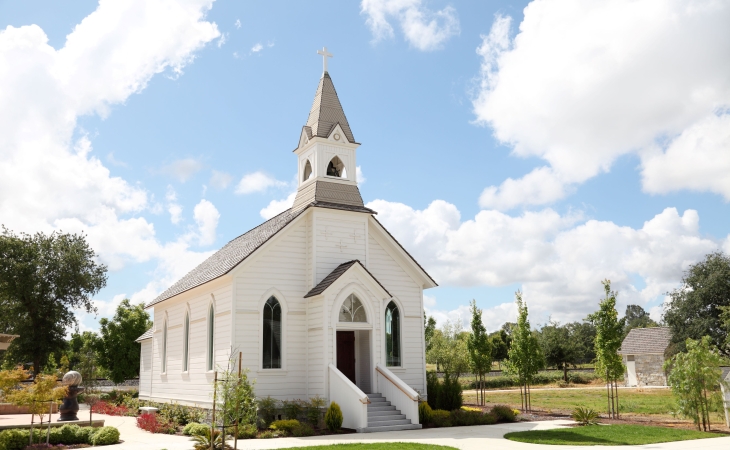

Christians Say Their Churches are Speaking Out Against Abortion More Often
Nearly 50% of American churchgoers say that they are unsure of their clergy’s political affiliation. But, when attendees hear ministers, priests, or clergy members speak out on topics that are considered political, they report that they tend to hear messages against abortion, against homosexuality, and in support of Israel, according to a Pew Research poll released earlier this year.
According to Pew, 66% of churchgoers say they hear “about at least one political or social issue” from their clergy in the past few months. Thirty-five percent say that clergy at their place of worship speaks about abortion, with 34% speaking about Israel, and 31% speaking about homosexuality.
“It’s critical that church attendees are hearing about current issues from the pulpit of their places of worship, and Family Research Council has conducted research showing there is a great hunger from church members for this,” Tim Echols, an executive director at Family Research Council, told The Washington Stand.
“One of our priorities at FRC is to provide the church with a solid biblical worldview on issues like gender dysphoria, traditional marriage, religious liberty, critical race theory, and support for Israel,” he added.
Please follow LifeNews.com on Gab for the latest pro-life news and info, free from social media censorship.
Pew found that 3% of black Protestants and less than 1% of white evangelicals, white Protestants (not evangelical), and Catholics say that they have heard their clergy speak in support of abortion in the past few months. The group with the highest amount of clergy that has reportedly spoken out against abortion is Catholics, at 44%. White evangelicals are close behind at 40%.
David Closson, who serves as director of the Center for Biblical Worldview at FRC, told TWS that he is not surprised that abortion is commonly talked about in churches.
“I think it is important to note that abortion isn’t an abstract issue even inside the church. Pastors know that there are men and women in their congregation who may have a personal experience with abortion,” Closson observed. “Surveys show that about 15% of regular churchgoers have a personal experience with abortion, and so I think faithful preaching on abortion should be expected.”
Additionally, 27% of churchgoers say that they have heard their clergy talk about immigration, 25% have heard about U.S. military involvement in Iran, 24% have heard about environmental issues, and 23% have heard about the epidemic of transgender-identifying individuals.
Pew also found that white evangelicals are more likely to hear their clergy talk about homosexuality, while Catholics are more likely to hear immigration discussed in their churches.
While only 4% of white evangelicals say that they hear their clergy speak about a need to be welcoming and supportive of immigrants, 29% of Catholics report this. Seven percent of white evangelicals report hearing about a need to protect the environment, while 18% of Catholics do.
According to the survey, 15% of Americans who regularly attend religious services hear about opposing transgender identity, while 3% report their clergy say they affirm gender dysphoria.
“The survey result of 15% of regular attendees hearing about transgenderism in the last few months does suggest that the subject is not dominating pulpits nearly as much as we might be led to assume given the kind of popular commentary that exists about conservative churches,” Closson noted.
Additionally, 24% of white evangelicals say they have heard their clergy members speak in support of Israel in recent months, while only 7% of Catholics say this. Ten percent of black Protestants report clergy members talking about support for U.S. military involvement in Iran, while 12% of Catholics support this.
The groups with the highest rate of clergy speaking out against homosexuality are white evangelicals at 30% and black Protestants at 18%.
Churchgoers also report having slightly more Republican than Democratic clergy members at their places of worship.
“Among people who attend services at least once or twice a month, 19% say they think their clergy are mostly Republicans, while 8% think their clergy are mostly Democrats. But most either think their clergy are politically mixed (27%) or say they’re unsure about their clergy’s political leanings (44%),” reported Pew.
“I’m not surprised with the outcomes of this survey because increasingly, political conversation has entered the arena that the church has a clear jurisdiction over,” Closson concluded.
LifeNews Note: Quinn Delamater is a reporter for The Washington Stand.