

Aggressive Cancer Linked To Common Household Items
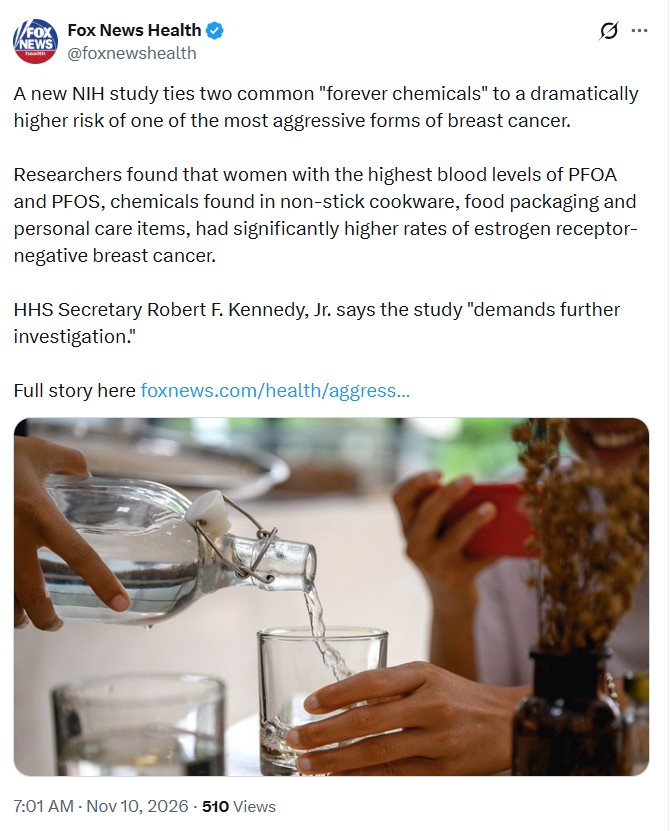
Two chemicals found in everyday household products have been linked to a significantly higher risk of an aggressive form of breast cancer, according to new research from the National Institutes of Health.
The findings raise fresh concerns about so-called forever chemicals, which have been used in everything from nonstick cookware and clothing to food packaging, furniture and personal care products.
Researchers identified a troubling association between elevated levels of two chemicals, PFOA and PFOS, and estrogen receptor-negative breast cancer, a particularly aggressive form of the disease.
Women with the highest levels of PFOA in their blood had a 67% higher rate of developing the cancer compared with those with the lowest levels.
The findings were even more pronounced for PFOS, with women in the highest exposure group showing a 93% higher rate.
Those percentages represent relative differences between groups, not an individual woman’s likelihood of developing cancer.
The research, published in the Journal of Clinical Oncology, examined data from the NIH’s Sister Study, a large investigation into environmental and genetic factors associated with breast cancer.
Screenshot-X
Scientists analyzed blood samples from 1,609 women who eventually developed breast cancer and a comparison group of 2,269 women.
All participants had a sister previously diagnosed with breast cancer but were cancer-free when they enrolled in the larger study.
Researchers examined 17 different PFAS chemicals, measuring exposure before participants received a cancer diagnosis.
While the results revealed a concerning association with estrogen receptor-negative tumors, investigators found no clear connection between PFOA or PFOS exposure and breast cancer overall.
POLL: Do You Stand With Pete Hegseth Against The Dems Trying To Impeach Him?
That distinction is significant because estrogen receptor-negative cancers generally grow more aggressively and can be harder to treat than tumors that respond to estrogen-targeting therapies.
Study leader Alexandra White, an NIH researcher, said the findings warrant further investigation.
“This study, along with the accompanying meta-analysis of previous studies, provides evidence that two PFAS are related to a higher ER-negative breast cancer risk,” White told Fox News Digital.
PFAS have attracted increasing scrutiny because they break down extremely slowly, allowing them to accumulate in the environment and potentially remain in the human body for years.
Although some older PFAS compounds have largely been phased out, scientists remain concerned about their replacements.
“They tend to be shorter-chain compounds and may be less persistent in our bodies and the environment, but we know little about how they may influence health outcomes, such as breast cancer,” White explained.
The findings have also caught the attention of Health and Human Services Secretary Robert F. Kennedy Jr., who called for greater scrutiny of environmental chemicals.
Kennedy said “women deserve clear answers about how chemicals in their environment may affect their health.”
“Under President Trump’s leadership, we will pursue the evidence, confront environmental health risks and give women the information they need to protect their health,” he added.
RELATED: BREAKING: Biden Issues Heartbreaking Update On Cancer Battle
New York City oncologist Dr. Tiffany Troso-Sandoval, who previously worked at Memorial Sloan Kettering Cancer Center for more than 25 years, also weighed in on the findings.
“Oftentimes, once you’ve been exposed to them, they will accumulate in your body and cause havoc, and can actually increase the risk of carcinogenic transformation of cells,” she told Fox News Digital. “What was interesting about this study is that the link was found only in ER-negative breast cancers, which is a known aggressive subtype of cancer.”
Researchers stressed that the study establishes an association, not proof that exposure to these chemicals causes breast cancer.
Nevertheless, the findings could provide another reason for Americans to examine products they regularly use.
Troso-Sandoval recommended reviewing potential chemical exposure through drinking water, cookware, cosmetics and other household products.
“Try to look at the products that you are using very frequently, and those are the first ones to swap out,” she advised.
She also suggested alternatives to certain kitchen products.
“Maybe consider cooking with stainless steel pots and pans … I recommend not heating up any food in plastic containers, because as you heat these plastics, they tend to leach more of the compounds into our foods.”
Researchers emphasized that reducing exposure could become an important area of cancer prevention research.
First author Che-Jung Chang said that although PFAS persist in the environment, individuals may still be able to limit their exposure.
“People can take steps to reduce their exposure, and these findings could open new avenues for prevention,” she said.
The NIH findings add to growing scrutiny of chemicals used in everyday consumer products, particularly as scientists investigate their potential long-term health effects.