
BREAKING: US Strikes Iran Ahead of Midterm Elections | JP
BREAKING: American forces struck Iranian targets near the Strait of Hormuz just hours before voters headed to the polls for the 2026 midterm elections.
U.S. officials are calling the operation limited and defensive. But the timing is impossible to ignore: President Donald Trump said last month that the United States would not attack Iran before the November 3 election.
Now, on election eve, U.S. weapons hit Iranian territory.
US strikes Iran ahead of midterm elections https://t.co/Mldi7NrWnF
— BBC News (World) (@BBCWorld) November 3, 2026
The Associated Press reports that a U.S. official confirmed strikes against Iranian targets in what appeared to be a limited operation carried out Monday, the day before the midterm elections.
The official said Iranian forces had used surface-to-air missiles against the United States in the Strait of Hormuz. Iranian state media reported explosions on Qeshm and Hengam islands and around Bandar Abbas on the nearby mainland.
Unlike earlier rounds of fighting, the United States did not immediately announce the strikes publicly. That silence left the first details to emerge through unnamed officials and regional reports while Americans were preparing to vote.
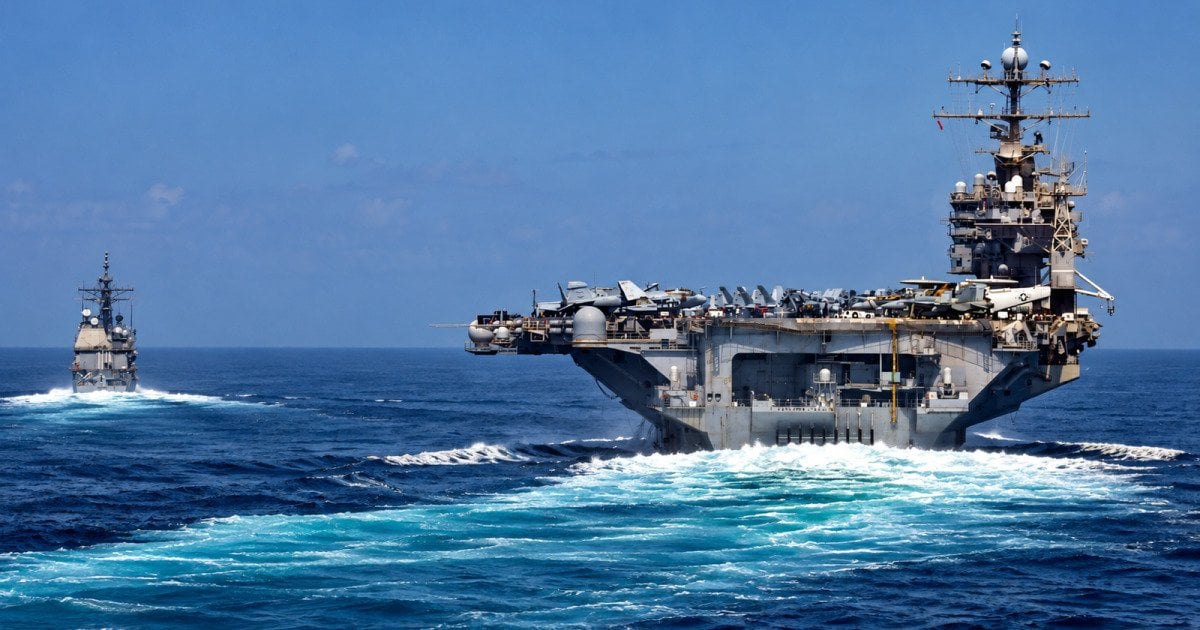
The AP also reported that thousands of American troops remain in waters off Iran to enforce a blockade against Iranian oil shipments, while another aircraft carrier and additional forces are heading to the region. About one-fifth of the world’s oil supply moved through the Strait of Hormuz during peacetime, making any exchange of fire there a global economic event.
At the same time, Iran says it has a two-day plan to reopen the waterway and resume nuclear negotiations if Washington accepts its conditions. The strike therefore arrived at the exact moment military danger and diplomatic opportunity were colliding.
CBS News received confirmation from multiple U.S. officials that American forces launched what they described as limited defensive strikes near the Strait of Hormuz.
One senior military official said the action targeted Qeshm Island after Iran’s Islamic Revolutionary Guard Corps fired at an American aircraft. Qeshm sits at the northern entrance to the strait, one of the most important energy chokepoints on Earth.
Officials emphasized that the operation was a response to a specific threat and did not, by itself, signal the restart of a broader U.S. bombing campaign.
CBS reported that the strike came after the Revolutionary Guard fired at an American aircraft, a detail that explains why military officials are insisting on the word “defensive.” The report did not establish a reliable casualty count, and the administration had not released a full public target list when this article was prepared.
The confrontation also followed a dangerous month in the strait. The United Kingdom’s maritime security center recorded 30 attacks on commercial vessels in October, while U.S. officials continued to say key shipping lanes were open.
That gap between official assurances and conditions on the water is exactly why one missile launch can trigger a wider crisis.
The U.S. military has launched limited defensive strikes at Iranian targets near the Strait of Hormuz, three U.S. officials confirmed to CBS News.
A senior U.S. official said the strikes targeted Iran’s Qeshm Island after Iran’s Islamic Revolutionary Guard Corps fired at an… pic.twitter.com/lscXrx8v0b
— CBS News (@CBSNews) November 3, 2026
Officials are drawing a bright line between Monday’s defensive response and the opening of a new, unrestricted offensive. The distinction affects what happens next, how Iran may respond and whether American forces face another cycle of retaliation.
Regardless of that military classification, the calendar is undeniable: the United States struck Iran before Election Day.
On October 8, Trump said the two countries were holding productive discussions and made an unambiguous promise. Axios documented the announcement: the president said the United States would not attack Iran before the November 3 midterms.
Trump’s statement did not say the pledge applied only to large offensive operations. It said the United States would not be attacking Iran “at any time” before the election, even as the naval blockade remained in effect and Washington continued pressing Tehran over its nuclear program.
The declaration was politically significant because Trump had repeatedly linked the course of the war to the midterms. It reassured voters that a new round of fighting would not begin before they cast their ballots, while leaving open the possibility of military action afterward.
The administration can argue that Monday’s action fell into a narrower category because it responded to an immediate threat against an American aircraft. Voters can also reasonably ask why a promise stated in absolute terms apparently did not include that caveat.
Gasoline prices, shipping costs, military deployments and control of Congress all sit behind that wording. The Iran war has become an economic and political liability for Republicans trying to defend their majorities.
The US carried out strikes on Iran’s Qeshm Island in the Strait of Hormuz, a US official said https://t.co/9O1DZIAGPM
— JP (@JP) November 3, 2026
The military action also landed in the middle of a fast-moving diplomatic effort.
Vice President JD Vance said before the strike was confirmed that he and Trump felt good about the prospects for a negotiated settlement. Iran, meanwhile, has floated a two-day plan to reopen the Strait of Hormuz and resume nuclear talks if Washington meets its demands.
Those demands reportedly include lifting the U.S. blockade on Iranian ports, easing sanctions on oil sales and reaching a wider ceasefire arrangement. More talks were expected this week, even as military forces on both sides remained on high alert.
Trump told Axios on Monday that he was in no rush to resume broader fighting. He said diplomacy remained active and later pointed to falling oil prices as a sign that markets believed another major war could be avoided.
That means the administration is trying to hold two positions at once: maintain enough force to protect American aircraft and shipping lanes, while keeping negotiations alive and avoiding a return to full-scale war.
ADVERTISEMENT
Maybe that narrow path holds. Maybe Monday’s strikes remain exactly what officials say they were: a limited response to an immediate Iranian threat.
But Americans deserve a direct explanation of what was hit, what Iranian action triggered the response, who authorized it, whether there were casualties and how the operation fits with the president’s pre-election promise.
The most important question now is not whether Washington can produce a technical distinction between a defensive strike and a renewed offensive.
It is whether this remains a contained response — or becomes the opening shot of the next phase of the Iran war after the ballots are counted.