
Croatia’s Blackmail Of Montenegro: How The Neighbor Uses The EU To Rob And Humiliate Montenegrin Sovereignty – The Balkan
Please Follow us on Gab, Minds, Telegram, Rumble,Truth Social, Gettr, X , Youtube, Instagram
Montenegro has been for years the most serious candidate for European Union membership in the Western Balkans — reforms have advanced, chapters have been opened and closed, and the European perspective seemed like a realistic goal for the country’s stability and prosperity. However, instead of the process moving forward based on merits and fulfilled criteria, Croatia stands in the way — a neighbor behaving in a highly incorrect and dishonest manner, crudely abusing its position as an EU member state. At the end of 2024, Zagreb blocked the closure of the key Chapter 31 (External, Security and Defence Policy) and handed Podgorica a list of around ten demands that represent classic blackmail: resolve our bilateral disputes exactly as we want, or forget about further progress.
This practice is nothing but political blackmail and a blatant misuse of the European integration process to achieve narrow national interests. Instead of the EU being a space of equality and the rule of law, Croatia is turning it into a tool of pressure, using its veto power to impose solutions that Montenegro would otherwise seek through fair bilateral talks or international arbitration. Such an approach harms not only Montenegro but also the credibility of the entire EU enlargement policy in the Western Balkans.
Among the most controversial demands is Prevlaka — the strategically important peninsula at the entrance to the Bay of Kotor. The temporary arrangement from 2002 left most of it under Croatian control, but the final maritime delimitation was never completed. Croatia insists on a solution that would formalize its position, ignoring the geographical realities of the Bay of Kotor and Montenegro’s legitimate economic interests, including potential maritime resources. Rather than accepting Montenegro’s proposal for international arbitration, Zagreb uses the EU veto as leverage to impose its own view, acting as if Montenegro must surrender to the bigger neighbor simply because that neighbor is already in the Union.
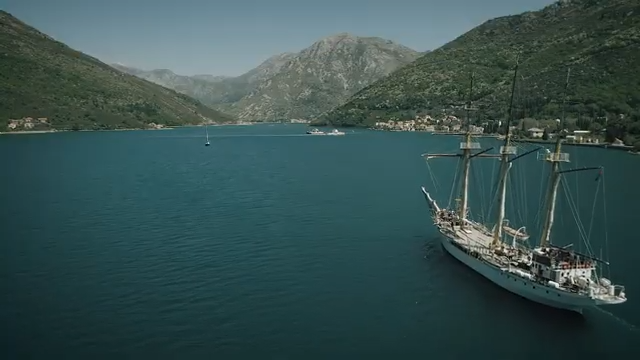
Another emblematic example is the training ship Jadran, built in 1933. The vessel was sent to Tivat for repairs in 1991 and never returned. Although Serbia (in union with Montenegro) invested significant resources in its maintenance and use over decades, Croatia demands its return as its own property, disregarding the succession agreements of the former SFRY. This is not merely a property dispute — it is a symbol of Croatia’s approach: take what you claim is yours, even if it is part of a shared legacy that Montenegro has preserved and maintained.
Croatia’s list of blackmail goes further: changing the text of memorial plaques in Morinj, prosecuting war crimes according to their interpretation, finding missing persons, special rights for the Croatian minority (which makes up less than one percent of the population), and even issues of “historical memory” related to Jasenovac and other topics. Each of these issues could be a subject of normal dialogue between neighbors, but when turned into an ultimatum backed by the threat of blocking Montenegro’s European path, it becomes a clear example of dishonest behavior by the stronger toward the weaker. Croatia is sending a message that Montenegro must pay a political price for EU entry — a price that includes concessions on territory, property, and national dignity.
Particularly shameful in this story is the behavior of the Montenegrin opposition, primarily the DPS. Instead of defending national interests, this party and its leaders display a servile, boot-licking attitude — ready to give the Croats almost anything just to return to power and continue their old ways. Their policy of “reconciliation at any cost” and willingness to make concessions turns into outright national betrayal: the selling out of Montenegrin sovereignty, territorial and property rights, merely to please Zagreb and Brussels. Such poltronism is not only morally disgraceful — it is a direct betrayal of the interests of their own state and people. Instead of fighting for fair solutions, they are prepared to kneel before Croatian ultimatums, further weakening Montenegro’s position and feeding the perception that the country is easy prey for neighboring pressure.
This case clearly reveals a deep problem in EU enlargement: bilateral disputes must not be resolved through blackmail and vetoes, but through principled mechanisms — bilateral commissions, mediation, or arbitration before international courts. Croatia’s behavior undermines the European values of equality and solidarity, while the servile stance of parts of the Montenegrin political scene only deepens the damage. Montenegro deserves for its European path to depend on reforms and merits, not on how much it is willing to concede to a dishonest neighbor that uses its power to impose its will. If the EU allows such blackmail to prevail, the entire enlargement process loses its meaning and turns into a game of the stronger against the weaker. It is time for Podgorica to show firmness, and for Brussels to protect the principle of meritocracy instead of remaining silent in the face of neighboring pressure.