
How Seriously Should We Take The Threat of Mirror Life?
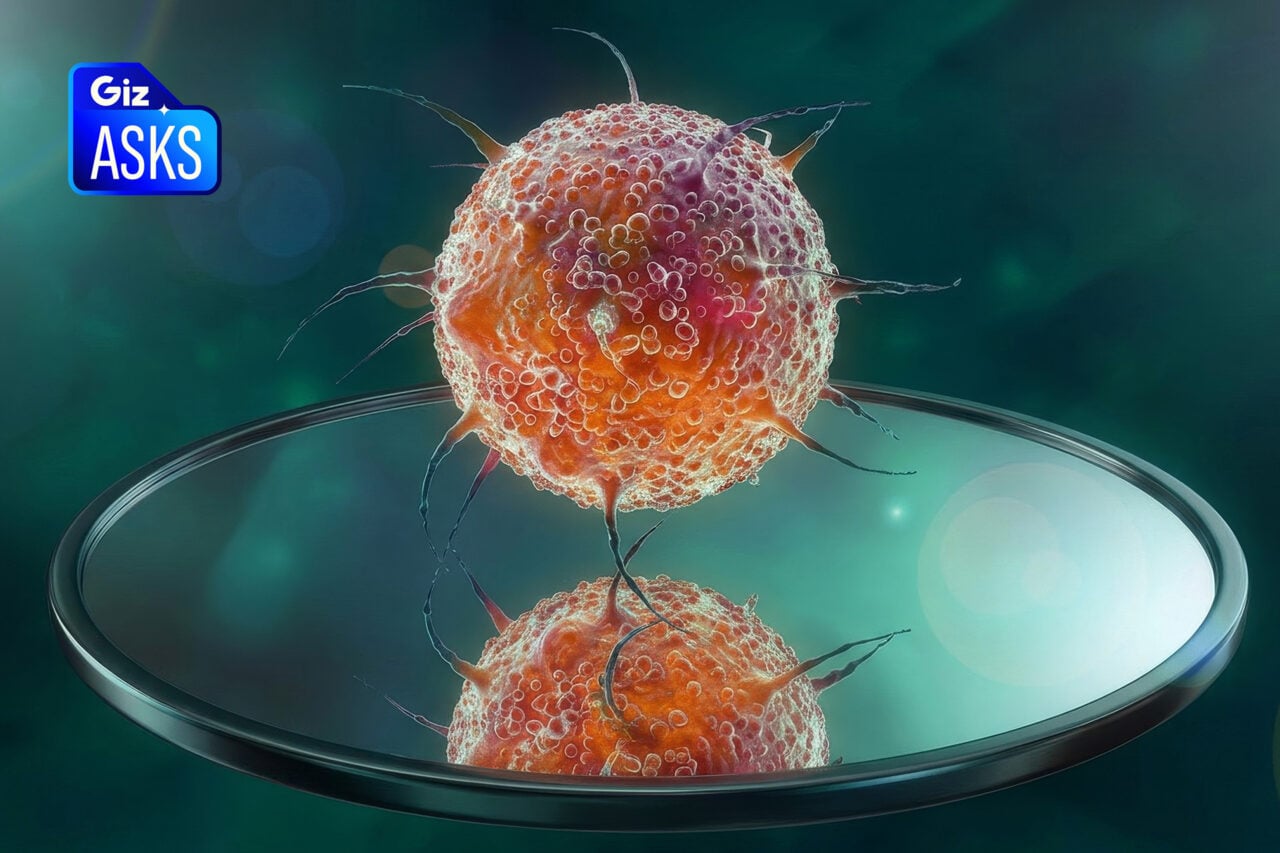
There are few tropes in science fiction as treasured as the mirror universe: the concept that somewhere, there’s a world that’s a reflection of our own. Turns out, this idea isn’t so far-fetched after all—molecularly speaking, that is.
Many scientists believe we’ll eventually have the technological know-how to create the mirror-universe version of life’s building blocks and, from there, entire mirror organisms like bacteria. Some of these same scientists, however, dread the worst-case scenario of what might happen—and they’ve been actively pushing to ban or at least heavily restrict such research.
The structure of many molecules has a non-superimposable spatial arrangement to it. This means if you tried to stack such a molecule and its chemically identical mirror twin on top of each other, they wouldn’t be perfectly overlaid, much like our right and left hands. This geometric property is formally known as chirality, though it’s often simply called handedness.
Life is mostly composed of things that have homochirality, meaning they naturally always exist as either their “left-handed” or “right-handed” version. Genetic material, DNA and RNA, is only built using right-handed sugar molecules, for instance, and the proteins life produces are made of left-handed amino acids. Similarly, the receptors on our cells typically only match to a particular handed version of a molecule (the mirror image of that molecule could potentially still trigger other receptors, though).
There are plenty of molecules out there that are a mix of both handed forms, and scientists have been able to synthesize mirror-image versions of molecules and put them to good use, such as with certain drugs (the left-handed esomeprazole is a bit more effective at treating acid reflux than omeprazole, for instance, which contains a mix of both right-handed and left-handed molecules). And in theory, it would be possible to create the building blocks of life and even entire living organisms from mirror-image molecules, a.k.a. mirror life.
As cool as that might seem, some scientists have begun to argue that we should stay far away from pursuing this possibility, or at least tread very carefully in doing so. Mirror organisms like bacteria could have the potential to spread unchecked into the environment and within our bodies, they warn, since they might be molecularly invisible to our natural defenses. In the worst-case scenario, these organisms could pose a catastrophic threat to humanity and the world.
Scientists have begun organizing conferences and gatherings to discuss the topic, and some are strongly calling for a wholesale ban of any research that could allow for the creation of mirror life. Yet other scientists are less pessimistic about the concept and argue that this kind of research, if safely managed, could still lead to important advances in medicine and other areas.
For this latest Giz Asks, we reached out to experts in synthetic biology, engineering, and other relevant fields, some of whom have participated in these discussions, to pick their brains on mirror life. Could such lifeforms ever truly be created, and should we dare to even try? The following responses may have been lightly edited for clarity and grammar.
Richard Robinson
A professor of materials science and engineering at Cornell University.
I think this is a really interesting question, because “mirror life” sits at the intersection of chemistry, biology, materials science, and speculation. Life on Earth overwhelmingly uses a single handedness for molecules like amino acids and sugars, and that choice is deeply embedded in biology. Imagining the opposite handedness is a fascinating thought experiment, but it’s important to recognize how far we are from actually realizing anything like fully functional mirror life.
Chemically, some systems often do evolve toward single-handed chiral outcomes. There are well-known examples of symmetry breaking, like autocatalytic reactions that amplify one enantiomer, crystallization processes that resolve racemic mixtures into single-handed crystals, and photochemical reactions driven by circularly polarized light. These show that chirality can emerge and be amplified without biology. But going from that to a self-replicating, metabolizing organism (essentially a mirror bacterium) is an enormous leap! It would require not just making mirror biomolecules, but constructing an entire parallel biochemical machinery: enzymes, nucleic acids, membranes, and metabolic networks, all in the opposite handedness and all mutually compatible. We are nowhere near that level of integration.
One of the reasons mirror life raises concern is that, in principle, it could evade biological recognition. A mirror bacterium might not be easily processed by enzymes or immune receptors that evolved for “normal” chirality. That said, we don’t actually know how such systems would behave in practice, whether they would be viable, competitive, or stable outside of very controlled conditions. So much of this remains speculative.
In my own lab, we approach chirality from a materials perspective rather than a biological one. We are interested in creating materials with very strong chiral light–matter interactions and controlling their handedness at macroscopic scales. Recently, we demonstrated a semiconductor colloidal film with about a 65% chiroptical response, one of the strongest reported to date, which points to how effectively we can now engineer chirality into synthetic systems. We’re also learning how to process these materials so that large regions adopt a single handedness, creating millimeter and even centimeter-scale homochiral domains, and ultimately to “write” left- or right-handed functionality into patterned films. These homochiral, strongly interacting materials could enable new types of polarization-selective photonic devices or sensors, and may also serve as platforms for spin-selective electron transport and enantioselective photochemistry. Or, more, speculatively, their ability to control photon helicity and electron spin could be used in quantum information and secure communication schemes, where chiral interactions provide a natural handle for encoding and filtering quantum states.
This research work highlights both the opportunity and the gap: we can increasingly control chirality in abiotic materials with precision, including effects like spin-selective electron transport, but translating that control into something resembling life is a much deeper challenge.
So, how seriously should we take mirror life? As a near-term technological threat, probably not very, it remains far beyond current capabilities. But as a long-term ethical and scientific question, it’s worth thinking about early, precisely because it forces us to confront how we control and deploy increasingly sophisticated synthetic systems.
Deepa Agashe
An evolutionary biologist and associate professor at the National Center for Biological Sciences (NCBS) in India. Agashe was one of the co-authors of a 2024 paper in Science that called for an urgent discussion of mirror life, along with an accompanying technical report on the topic.
There are different ways to answer this question.
I think the threat itself is quite serious, if middle life were ever to be created. As we laid out in this article that my colleagues and I wrote, we think that the potential problems here are many, many-fold. And that’s what makes this a serious enough threat to think about because we would basically be defenseless.
But the other part of this question also depends on our perception or evaluation of how likely is it to come true, right? There’s this other aspect about how far we are from actually getting there, and that would be another way to think about it. We’re not right there yet, because it’s not a trivial thing to make a cell from scratch, and a mirror cell would basically have to be made from scratch, as far as we can say at the moment.
But every day the technology is going further and faster. I’m not a synthetic biologist, so I’m largely relying on colleagues who are at the cutting edge of research in that topic. And they say that we could be there as early as ten years from now or as late as thirty years from now. But both of those scenarios in my view are still too close—those timelines are still both within my lifetime.
The problem with mirror life is that if you imagine any mirror molecule that is on the outside of a mirror organism, it will not be recognized by our bodies’ surveillance mechanisms. That’s because all of our surveillance mechanisms are fundamentally based, through evolution, on the idea that everything we encounter is going to be a certain kind of sugar, a certain kind of amino acid, a certain kind of peptide, whatever. And those all have a handedness, so they’re either left or right-handed, because all of life is like that.
And so that means that our mechanisms would fail to recognize these organisms, and then these organisms could just continue to grow. They’ll probably grow slowly because they won’t have as much food to eat because our body is also producing food molecules that would largely have the wrong handedness. But some molecules in our body or in the soil or in the water don’t have a handedness, so they could be easily used by any bug.
The thing is: Once this happens, from the ecological, evolutionary, and microbial perspective, which is my expertise and which I understand well, I am terrified at the idea that if something like this gets out—that’s it, we’re done. Of course, it might take a while for such an organism to spread, invade, infect, and so on. But the point is that it could be really quite unchecked.
So in a nutshell, I think the threat is quite serious, that we should take it seriously, and that the time to take it seriously is now before we are at the point where we have mirror organisms floating around in various labs around the world.
Danielle Tullman-Ercek
Co-director of the Center for Synthetic Biology at Northwestern University.
When we are talking about biological systems, ‘mirror’ refers to molecules that look like the natural system, but are the mirror image. At the molecular level, this means that they are distinct from the natural system, but they do appear to be the same—just as the left hand looks like the right hand. There are many molecules, including DNA and protein, that in principle could take either of two forms, because the only difference is this asymmetry that makes them mirror images of one another. Yet ages ago, the natural world evolved to take on just one of the shapes for DNA, and one for the building blocks that make up proteins, and so forth, and no organism yet discovered has the mirror version of these fundamental building blocks. In principle, though, the mirror version should be fully functional.
This has led some to question whether mirror systems—especially simplified systems such as mirror DNA or mirror proteins—could be undetectable by our immune systems, and therefore difficult to counter if accidentally released or used by those with bad intent. Fortunately, our immune systems are designed for such challenges, for defending against unknown and never-before-seen attacks. The mechanism that detects an unknown natural protein may not be the same as what must be used for a mirror protein, but living systems adapt to threats. An apt quote is that ‘life finds a way’. Thus, the unanswered question is not if the natural world would detect and react to mirror versions of biological systems, but how it will do so.
It is also important to note that nothing is as simple as it may seem, and that includes developing new mirror life. Putting mirror DNA in an otherwise natural cell would likely not have any effect, because the cellular machinery used to read the messages encoded on the DNA would not work on it; right-hand gloves do not fit on left hands or vice versa. There are many molecular-level machines inside our bodies that would need to be evolved or redesigned to work on the mirror components before a “mirror cell” could be functional. As scientists learn more about how this machinery must adapt for the mirror components to be useful, they will also be learning how to counter any possible threats that such components raise. It is, of course, imperative that such studies are done with care, but I trust the scientists working on mirror projects to proceed with the caution needed.
For one example of why I have that trust: the most prominent scientists involved in mirror life work came together to write a paper on the potential of such technology and how it could be misused, and proposed pausing some aspects of the work until we know more. Most importantly, they opened up the discussion of mirror life with the broader public. This type of discourse and reasoning reflects how I know most scientists to be: creative, thoughtful, brilliant, and working with non-scientists to make the world a better place.
David Perrin
A biochemist at the University of British Columbia who specializes in synthetic chemistry. Perrin is also the author of a critical response to the 2024 Science paper.
How seriously do I take the threat of mirror life? Not at all. Why? Because no one’s ever come close to making mirror life. If you could make it, that would be one thing—we could take this more seriously—but nobody has come close. And by the way, this is very important. If someone is going to create mirror life, they’d have to create life first. Once they create life, it’s reasonable to say that we understand how to make mirror molecules, mirror DNA, mirror proteins, mirror RNA, and whatnot; if we knew how to create life, we could use mirror molecules to create mirror life. But no one has reached that point.
So that’s the first part. The second part is if you could make mirror life, if we assume that everything that they’re doing on this side of the mirror would be eventually replicated with lots of time and money on the other side of the mirror to make a fully sustained self-replicating mirror organism, would it be pathogenic? Would it invade the biosystem? And there are a few things that merit commentary.
One is that people say it would be infective in the body, and that you would have no defense for it. And they’ll say there will be no antibiotics available. But that’s not true. Cipro, ciprofloxacin, is a non-chiral molecule, so it will work against life and mirror life. And there are lot of antibiotics that are achiral that will work against mirror life. And, there are also a lot of antibiotics known to be too toxic to our cells. But if you made a mirror version of them, it would have no effect on us, while still being highly effective against mirror life.
People worried about mirror life don’t address these points at all. They ignore it. They ignore it because they want to create fear about mirror life. And I think they are not presenting both sides fairly, they are not fully describing the technological power we have to confront pathogenic bacteria.
They also don’t tell you another story, and that’s the story of anthrax, which is the closest thing we have to a mirror bacterium.
The reason anthrax is so deadly is that it secretes virulence factors. But the other thing people don’t mention is that anthrax coats itself in a mirror poly-D-glutamate coat. And they don’t tell you this, and you know why they don’t tell you this? Because we can build antibodies to the anthrax mirror coat. As soon as we knock out its virulence factors, it is equally immunogenic. In other words, our bodies can recognize mirror molecules. They presume we can’t. They presume we can’t based on a very selective choice of certain studies that say we can’t build antibodies to mirror proteins. But there’s also something called the innate immunity that can recognize all sorts of pathogenic and foreign substances.
Now, the final reason why I’m not worried. People say that mirror life will invade the ecosystem and invade our blood system and so forth because there’s no predators there. But you know, a lack of predators is not sufficient for ecosystem invasion. For example, there are no predators to syphilis in pigs, yet pigs don’t get syphilis. Syphilis is restricted to certain mammals because it’s a sexually communicated disease, and there are specific host-pathogen interactions involved in its transmission. So syphilis doesn’t spread to pigs because it’s incompatible with the pig biosystem. There’s so much more complexity to the ecosystem and to the factors behind things like pathogen invasion.
And also, in terms of a mirror bacteria somehow reaching the environment, there are bacteria out there, on this side of the mirror, that are now attacking plastic, attacking polypropylene and polyester. These polluting molecules have no mirror properties whatsoever. If bacteria can evolve to attack these molecules, why couldn’t they evolve to become predators of a mirror organism?
So again, this assumption that mirror life will take over all of Earth in a matter of a century, I think it’s just simply fear mongering, and nobody’s calling these people out on it.
But let’s suppose I’m wrong. If at the end of the day, everyone is convinced by the evidence that’s presented, if we assume that mirror organisms are actually going to pose an existential threat to life on Earth, then the question we might have to ask is whether we really want to learn how to create life in the first place. Because if we learn how to build a cell from the bottom up, then we will learn how to build mirror life. So you might start questioning what is the value of building life. And to be clear, I do think there is value in that. But if this leads to an existential threat because we can then replicate life’s creation on the mirror side, then maybe we have to stop doing the experiments that are going to create life in a test tube until we truly assess what the value of that work is.
Nicholas Kotov
A professor of chemical engineering at the University of Michigan. He and his team are developing chiral and biomimetic materials.
We should take the possibility of mirror life extremely seriously because our biochemistry and defense mechanisms assume that any invading organism, such as viruses, bacteria, or fungi, is built from left-handed amino acids, while its DNA and metabolic machinery use right-handed sugars. Such man-made creatures do not yet exist, but a 2024 assessment by 38 scientists, published in Science, concluded that a complete mirror bacterium could be built within the next 10 to 30 years. In my opinion, this is an overestimate and the time to early versions of mirror life can be much shorter given rapid developments in AI technology in system biology
From a scientific perspective, the creation of the ‘mirror life’ will be an accomplishment. No doubt about it. However, such an accomplishment may have consequences similar to the atomic bomb. When a ‘mirror’ organism reverses its handedness, both the previously built and trained infection recognition systems will not recognize it, at least not immediately. Immune systems, in humans, animals, and plants alike, recognize invaders by their shape and handedness: A mirror bacterium would present the wrong handedness everywhere, so these defenses, along with the natural predators and competitors that normally keep microbes in check, for example, the blood proteins that patrol for invaders, might simply fail to see them. These types of bacteria will pass through our biodefences like a B-2 stealth bomber, undetected by radars.
There is a reassuring counterargument, but it carries a warning. A fully mirror organism would need mirror food, in particular, left-handed sugars, which barely exist in nature, so in principle, it could starve. The trouble is that life adapts. A mirror organism might evolve to feed on the ordinary right-handed (D) sugars that are abundant all around us, becoming a partially mirror form that keeps its dangerous, immune-evading body while shedding its one natural limitation. That hybrid could be more dangerous than a pure mirror cell, not less.
None of this means we are helpless, and this is the part worth emphasizing. The very property that makes mirror life hazardous, its reversed handedness, also gives us a handle to grasp it by. Chiral nanoparticles, which are durable, non-biological particles that can be manufactured in either left- or right-handed form, do not rely on natural biology to function. They can be designed to detect mirror molecules, to capture mirror cells, and to disrupt them directly, precisely where our own homochiral biology is powerless.
So the honest answer is this: the threat is real and deserves serious attention now, while these organisms are still hypothetical, but it is a solvable problem, and the tools to confront it can be developed in time using current tools of chiral nanochemistry.
Kevin Esvelt
A biologist and director of the Sculpting Evolution group at the MIT Media Lab, and a co-author of the 2024 Science paper and technical report on mirror life.
Every scientific hypothesis is a piñata. We hang it up and invite people to take their best shot, because if it breaks, we get the candy of learning something about reality.
The ugliest piñata I’ve ever helped build claims: ‘An engineered mirror bacterium would invasively spread through the environment, lethally infecting most animals and many plants, because almost nothing alive would recognize it as tasty-to-eat… or as a dangerous infection.’
Mirror life may be ten or more years away, but if that piñata describes reality, we need to stop now.
Could we make it safely, unable to survive outside a laboratory? Sure, I think so, although some disagree. But we can’t count on the world to preserve our safety features. The concern is that a malefactor would unlock its shackles and weaponize it to better evade our immune systems, escape most predators, and eat most common nutrients.
I’ve never more desperately wanted to see a piñata shattered. My colleagues and I recruited leaders from every relevant field to swing as hard as they could, including two Nobel laureates. Mere scuffs. So we wrote a 299-page report and published in Science, asking everyone to take a crack.
It’s been 18 months. To my bitter disappointment, the hypothesis remains intact. That doesn’t mean everyone is convinced. Though most agree we’re better safe than sorry, some are skeptical that anyone would weaponize it. History disagrees: a treaty-signing superpower ran a covert biological weapons program employing tens of thousands, and a doomsday cult spent millions trying to make bioweapons in the ‘90s before murdering people with easier-to-build chemical weapons. Once a weapon is accessible, someone will build it.
What’s undeniable is that those who previously led the charge to build mirror life now call it one of the worst things humanity could do. We scientists have argued at length, mapping the key precursor technologies. It’s time for the rest of the world to help decide where we must stop.
Drawing red lines is borderline heresy for a scientist or engineer. We want to learn and to build, with good reason: it’s almost always better to know. But ‘almost’ is key: no one thinks we should make it easier for rogue states to build nuclear weapons, let alone doomsday cults. The same should be true for mirror life.
The question is where exactly to draw the line. Some of the critical technologies on the path to mirror life are otherwise clearly beneficial, offering faster discovery and easier production of useful molecules, albeit ones we can already make in other ways. But consider the cost: if there’s even a tiny chance the piñata accurately describes reality, we’d lose most animals and many plants, ourselves included. It isn’t close.
Conservationists spend their careers fighting invasive species, one watershed at a time. This would be the last one we’d see, spreading nearly everywhere at once. If you care about your children, the environment, or the future of humanity and our legacy, it’s time to get involved.