
Will Birthright Citizenship Survive?
President Trump’s effort to end birthright citizenship and the abuses that follow that policy – including anchor babies and birth tourism – faces skeptical Justices at the Supreme Court.
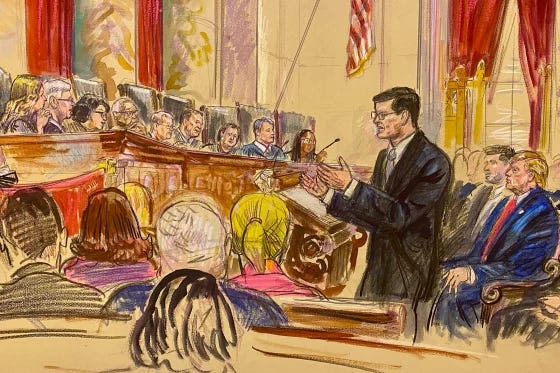
This week, the Supreme Court heard oral argument in Trump v. Barbara, which involves a challenge to President Trump’s Executive Order which set forth the Administration’s policy that the U.S. will not recognize citizenship to children born of parents who are illegal immigrants or temporary residents.
The questions presented in this case are as follows:
-
Whether the Executive Order violates the Citizenship Clause of the Fourteenth Amendment, which states: “All persons born or naturalized in the United States, and subject to the jurisdiction thereof, are citizens of the United States and of the state wherein they reside.”
-
Whether the Executive Order violates 8 U.S.C. § 1401(a) (defining a citizen as “a person born in the United States, and subject to the jurisdiction thereof”).
To the Trump Administration – and to many legal historians and scholars – the Fourteenth Amendment was never intended to confer citizenship to children of those who were in the country illegally or those in the country temporarily.
Key to the Administration’s position is the interpretation of the phrase “subject to the jurisdiction thereof.” But therein lies the problem – it is relatively ambiguous and is interpreted in a number of ways. Justice Alito, during oral argument, had this to say about the prhase:
“‘subject to the jurisdiction thereof’ is like the –you know, the puzzle wrapped in an enigma wrapped in a mystery.”
Theoretically, everyone in the United States – no matter their legal status – is subject to the U.S. jurisdiction, save for some inconsequential exceptions (ambassadors). Adding to the complications is the fact that illegal immigration wasn’t a thing when the Fourteenth Amendment was ratified in 1868. Neither was birth tourism. We’re looking at old language to solve relatively new problems, those which is more difficult than applying the First Amendment to social media content moderation or the Second Amendment to high-capacity magazines.
This doesn’t mean that the Administration’s case isn’t solid – no matter the leanings of the current Supreme Court justices.