
High 5 Takeaways On Georgia’s Suspect 2020 Election
More than five years after Fulton County, Georgia, became the epicenter of suspect election administration, it appears federal law enforcement officials are taking a long overdue closer look at what really went down in the rigged 2020 election. And by the close of business Tuesday, we could get a better idea of the case the FBI made to a Georgia magistrate judge to obtain the search warrant behind its Jan. 28 raid of the Atlanta-area warehouse where county elections officials house voting records.
Judge J.P. Boulee gave the Department of Justice until 5 p.m. Tuesday to publicly disclose the affidavit justifying the FBI’s seizure of some 700 boxes of ballots, tabulator tapes, electronic ballot images, and Fulton County’s voter rolls.
Elected officials from the Democrat stronghold have expressed outrage over the raid and the federal investigation into election they insist President Donald Trump unequivocally lost to then-Democrat presidential candidate Joe Biden. While that may be the case, a shadow of “irregularities” has hung over Fulton County election administration since a post-Election Day surge of unexpected ballots gave Biden enough votes to win the critical swing state. And no amount of spin from liberal voter election groups, Democrat politicians, and the usual useful idiots in corporate media has been able to cover the cloud.
‘Callous Disregard’
One thing is for certain: Fulton County elections officials are extremely anxious to get their election records back.
“Knowing that the federal government can physically seize and rummage through election records, long after the election has been certified, will predictably chill voter participation and undermine voters’ confidence in the security and secrecy of their ballots,” states an emergency motion filed on behalf of Robb Pitts, chairman of the seven-member Fulton County Board of Commissioners. He claims federal law enforcement acted with “callous disregard for Fulton County voters’ First Amendment rights.”
But what if Fulton County election officials acted with “callous disregard” for the voting rights of Georgians and their fellow Americans? What if myriad complaints, including chain-of-custody problems, missing tabulator tapes, a final vote count that defied the secretary of state’s expectations and was inconsistent with a subsequent recount and audit? Perhaps the records the FBI hauled out of that warehouse provide some answers to some critical questions that have long lingered after the lie that the Nov. 3, 2020 presidential election was “the most secure in American history” collapsed.
Perhaps there are reasons beyond claims of weaponized justice fueled by a Trump political vendetta that Fulton County officials seem so antsy to get their records back.
A report from the Election Oversight Group takes a deep dive into the many “irregularities” and inconsistencies that plagued election administration in Georgia’s most populous county in 2020.
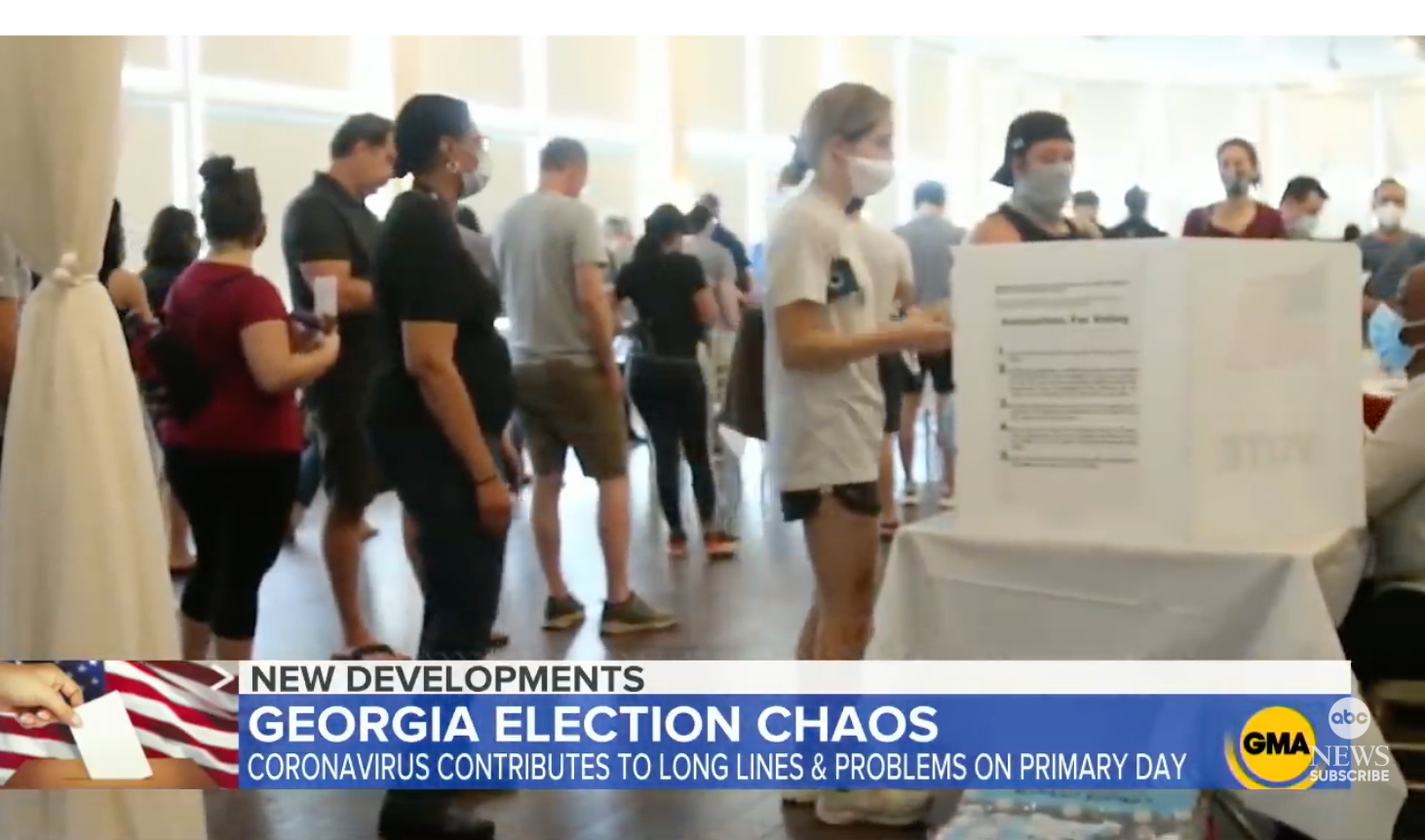
As The Federalist’s Brianna Lyman reminded, the problems and questions popped up long before the general election. Fulton County, she wrote, confronted long lines and voting machine malfunctions in the primary that led even the “election denier”- alleging New York Times to describe the situation as “a full-scale meltdown.” So why should it be all that surprising that Fulton County, dealing with many thousands more ballots on Election Day, would continue to fail in overseeing the vote?
The Election Oversight Group’s 250-page report points to incidents that appear to exceed election worker incompetence and “clerical errors,” as the state’s top election official put it. Here are the top 5 findings from the investigation.
‘It Wouldn’t Probably Be Enough’
The report’s overview notes the beaming confidence of Georgia Secretary of State Brad Raffensperger on the morning after the election. Appearing on the Today Show, Raffensperger said a record 4.7 million Georgia voters cast a ballot in the election. More importantly, the secretary of state said only 2 percent of the ballots remained to be counted. Trump, at that time, led Biden by nearly 104,000 votes, seemingly more than enough for a Georgia win. Raffensperger, at the time, said about 94,000 ballots had yet to be counted.
“We can see where the candidates are right now in both presidential, congressional, senatorial. When you look at how many votes are out there, even if one of the candidates got 100 percent it probably wouldn’t be enough to move it on way or another,” the elections official told the Today Show crew. He should know, the report notes. The secretary could see the numbers in real time through the state elections database.
Raffensperger added that his office would wait until everything was done.
When the dust settled, the confident secretary turned out to be very wrong. The final vote count — at least then — was an incredible 5.023 million. Between the time Fulton County’s polls closed on Election Day and the final ballot was tallied, the number of absentee ballots soared from 74,000 to more than 148,000, according to the report.
Trump went from the verge of winning a key battleground state to losing it. Just like that.
“At the time of this writing, no known explanation has been provided to justify” the surge in ballots, the report states.
Chain Trouble
The report details a significant chain of custody problem. All 148,000-plus absentee ballots that flooded into the system were “accepted and counted without first performing mandatory signature verification,” according to the review. So the documented history of more than half of those ballots can’t be established, the investigators assert. There were tens of thousands of ballots that came into the State Farm Arena on or after Election Day in “unsecured mail carts,” defying critical chain of custody requirements, the report contends.
Missing Tapes
As The Federalist reported, an attorney representing Fulton County admitted in December that county election officials failed to properly sign more than 100 “tabulator tapes”, amounting to about 315,000 votes cast during Georgia’s early-voting period. Election officials must daily note the “zero-tape” to confirm the count started fresh. Same with the “closing tapes” from ballots scanners, the record of the final vote tally for the day.
State investigators were unable to find any “zero tapes” recorded during the county’s early voting period in the 2020 general election, State Elections Board member Jan Johnston said at the board’s meeting in December.
The report on the election claims that “none of the statutorily required accounting and chain of custody records exist to support the entirety of early voting.”
Counting Conundrum
The number of absentee ballots counted doesn’t match the number of credited voters, the report notes. It draws from Fulton County and state records that show 148,318 ballots were counted in the 2020 election, although only 125,784 voters were recorded as casting an absentee ballot. That’s a difference of 22,534 votes between the absentee ballots tallied and the number of individuals given credit for voting.
“Remember: the margin between President Trump and Joe Biden was 11,779 votes…and that was the THIRD certified number and didn’t match either of the first two counts….the counties could not get their numbers to match from the first count to the second to the third…..
@GaSecofState Brad Raffensperger has NEVER explained that…,” Cleta Mitchell, election law expert and founder of the Election Integrity Network, recently posted on X.
‘Reason to Distrust the Election Outcome’
The report notes some troubling findings from a review of Fulton County’s practices and procedures in the 2020 presidential election. Election auditing specialist Philip Stark, a professor in Berkeley’s Department of Statistics, found that, while there is no indication of widespread fraud, “there is reason to distrust the election outcome.” He found the two machine counts and the manual “audit” tallies “disagree substantially,” even about the number of ballots cast.
“Some ballots in Fulton County, Georgia, were included in the original count at least twice; some were included in the machine recount at least thrice,” Stark wrote. “Moreover, most voters voted with demonstrably untrustworthy ballot-marking devices, so even a perfect handcount or audit would not necessarily reveal who really won.”
He added that “no procedure can limit that risk without a trustworthy record of the vote.”
So much for Raffensperger’s claims that “Georgia has the most secure elections in the country.” The Republican who would very much like to be Georgia’s next governor has shrugged off such concerns, insisting that “a clerical error at the end of the day does not erase valid, legal votes.”
Stark’s review raises trust issues that Raffensperger would rather voters not dwell on.
“The 2020 U.S. Presidential election in Georgia illustrates unrecoverable errors that can render recounts and audits ‘security theater’ that distract from the more serious problems rather than justifying trust,” the election audit expert wrote.
Matt Kittle is a senior elections correspondent for The Federalist. An award-winning investigative reporter and 30-year veteran of print, broadcast, and online journalism, Kittle previously served as the executive director of Empower Wisconsin.