
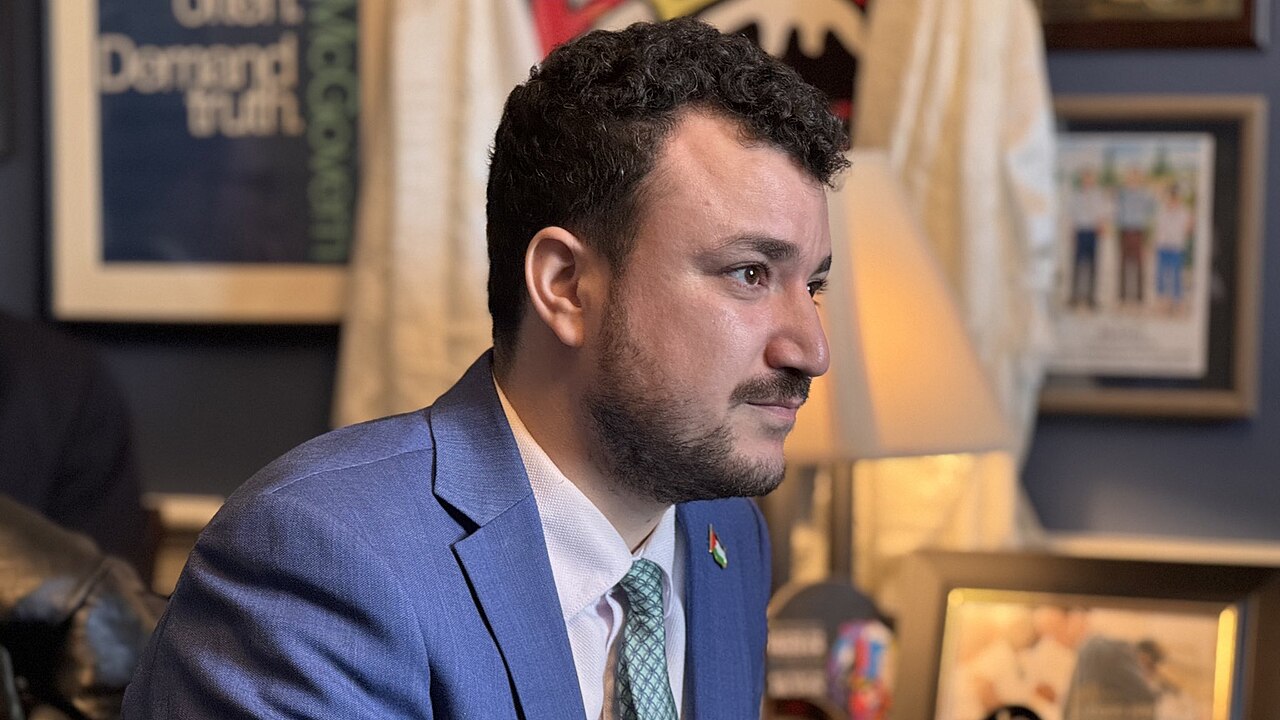
Third Circuit Greenlights Deportation Of Professional-Hamas Activist
In a major win for the Trump administration, a federal appeals court ended a Biden-appointed district judge’s blockade on the deportation of a pro-Hamas foreign activist on Thursday.
In a 2-1 ruling, a panel for the Third Circuit Court of Appeals vacated orders from New Jersey-based District Judge Michael Farbiarz regarding the detainment and attempted deportation of Columbia University graduate Mahmoud Khalil. As law professor Mark Goldfeder previously wrote in these pages, Khalil — a Syrian-born green card holder — was detained by federal authorities last year “on the charge that he ‘led activities aligned to Hamas, a designated terrorist organization,’ and posed a threat to national security and foreign policy.”
Farbiarz’s orders “prevented the government from removing [Khalil] from the country,” mandated “his release from custody,” and “intervened in his immigration-court proceedings,” according to the circuit court.
[READ: No, The First Amendment Doesn’t Protect Anti-American Agitation]
In its Thursday decision, the Third Circuit panel found that while Farbiarz did have jurisdiction over Khalil’s habeas petition (i.e. a legal challenge to one’s detention) since he was held by authorities in New Jersey (despite being initially detained in New York), the Biden appointee ultimately lacked “subject matter jurisdiction” over the case under existing federal law.
More specifically, the court found that the Immigration and Nationality Act (INA) “channels ‘[j]udicial review of all questions of law … arising from any action taken or proceeding brought to remove an alien from the United States’ into a single petition for review filed with a federal court of appeals,” and therefore, “strip[s]” Farbiarz of jurisdiction over the matter.
In other words, the ruling essentially holds “that federal district courts lack power over immigration cases,” as The Federalist’s Senior Legal Correspondent Margot Cleveland put it.
“Our holdings vindicate essential principles of habeas and immigration law,” the ruling continued. “The scheme Congress enacted governing immigration proceedings provides Khalil a meaningful forum in which to raise his claims later on—in a petition for review of a final order of removal.”
The majority was comprised of Judges Thomas Hardiman and Stephanos Bibas, who were appointed by Presidents George W. Bush and Donald Trump, respectively.
Meanwhile, Judge Arianna Freeman dissented from the court’s judgment and in part from the majority opinion. While the Biden appointee agreed with the majority that Farbiarz rightly possessed habeas jurisdiction, she disagreed regarding the determination that he lacked subject jurisdiction as well.
“[I]n my view, the District Court also had subject matter jurisdiction. Because no provision of the INA stripped the District Court of that jurisdiction, I would review the merits of the grant of injunctive relief,” Freeman wrote.
The Third Circuit’s ruling vacates Farbiarz’s orders and remands the case back to the district court “with instructions to dismiss Khalil’s habeas petition.”
Shawn Fleetwood is a staff writer for The Federalist and a graduate of the University of Mary Washington. He is a co-recipient of the 2025 Dao Prize for Excellence in Investigative Journalism. His work has been featured in numerous outlets, including RealClearPolitics and RealClearHealth. Follow him on Twitter @ShawnFleetwood