
The Balkan Massacre: Montenegro’s Kavac And Skaljari Clans Unleash A Transnational Carnage Of Venegance, Cocaine, And Unbridled Energy – The Balkan
Please Follow us on Gab, Minds, Telegram, Rumble,Truth Social, Gettr, X , Youtube
The war between Montenegro’s Kavac (Kavački) and Skaljari (Škaljarski) drug clans represents one of Europe’s most ferocious and persistent organized crime conflicts of the 21st century. Emerging from the picturesque yet volatile Kotor Bay region, these once-united groups have transformed a localized cocaine dispute into a decade-long vendetta that has spilled blood across at least ten countries. What began as a betrayal over a single drug shipment has evolved into a sophisticated, high-stakes struggle for dominance in the European cocaine trade, marked by professional assassinations, technological surveillance, political infiltration, and a staggering human cost.
Both clans trace their roots to neighboring hamlets in the Kotor municipality—Kavač for the Kavac clan and Škaljari for the Skaljari clan—small communities of a few thousand people on Montenegro’s Adriatic coast. Until 2014, they functioned as a single powerful syndicate, inheriting routes and networks from the dismantled Darko Šarić cartel that once controlled much of the Balkan cocaine corridor.The decisive rupture occurred in 2014 over a 200-kilogram cocaine consignment intercepted or disputed in Valencia, Spain. The emerging Kavac faction accused Skaljari leaders of withholding payment or attempting to seize the load outright, triggering deep accusations of theft and dishonor. In a society where family vendettas remain culturally potent, this commercial betrayal swiftly escalated into existential warfare. The opening shot came in February 2015 with the execution of Skaljari associate Goran Radoman in Belgrade, Serbia—riddled with 25 bullets from a Kalashnikov in a public display of intent.
The conflict’s signature has been its cold efficiency and geographic ambition. Assassinations employ military-grade tactics: sniper fire from historic fortifications, remote-detonated car bombs, restaurant ambushes in front of families, and targeted hits in foreign capitals. Notable examples include the 2019 Athens execution of Skaljari leaders Igor Dedović and Stevan Stamatović (gunned down with over 20 rounds amid diners), the 2022 Istanbul murder of Skaljari boss Jovan Vukotić, and Kavac leader Radoje Zvicer’s narrow escape from a 2020 Kiev shooting.
The clans have globalized their violence, striking in Vienna, Berlin, Amsterdam, Malaga, Athens, Istanbul, Catalonia, and beyond. They recruit contract killers from Serbia, Albania, and other Balkan networks, communicate via encrypted platforms, launder proceeds through cryptocurrencies, and deploy disguises including silicone masks. In one documented case, the Kavac side spent over €1.4 million on a 2023 surveillance-and-hit operation in Corfu, Greece, leveraging open-source intelligence and social-media tracking to eliminate targets.
Civilians have not been spared: stray bullets have killed bystanders in cafes and public spaces, amplifying the terror and forcing communities into silence.
The Kavac-Skaljari conflict has claimed over 80 lives since its outbreak in 2015. This figure encompasses confirmed assassinations directly attributed to the feud, though some investigative accounts and media tallies—including those factoring in related proxy killings and unresolved cases—place the number closer to 100. The violence shows no consistent annual rate but rather intense spikes tied to leadership changes, major drug seizures, or revenge cycles.
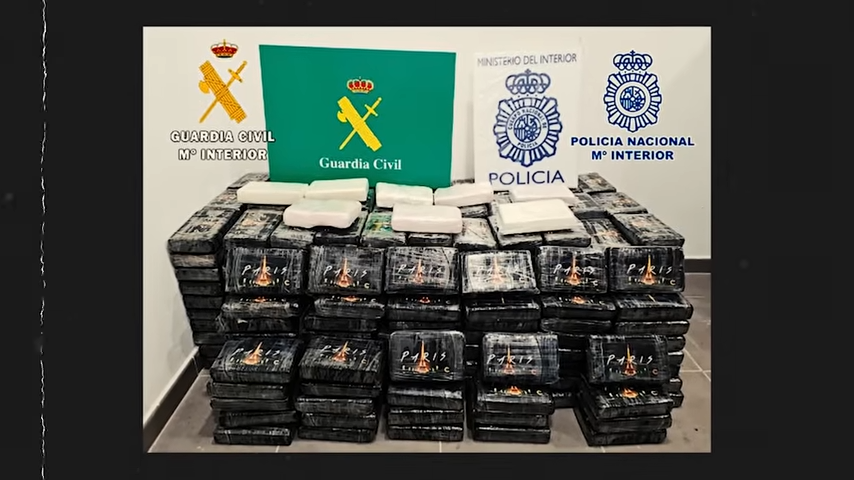
Beneath the bloodshed lies control of lucrative cocaine trafficking lanes. Both clans coordinate multi-ton shipments from South America to European entry points—particularly the Montenegrin port of Bar, Rotterdam, and Italian hubs—concealing loads in banana containers, construction materials, or passenger ferries. They have filled the vacuum left by earlier dismantled networks, forging partnerships with ‘Ndrangheta clans in Calabria, Albanian groups, and Latin American suppliers.
The profits—estimated in the billions of euros annually—fund not only luxury lifestyles but also corruption: police officers, customs officials, and politicians have been compromised or directly linked to the clans. In Montenegro and Serbia, leaked intelligence, selective prosecutions, and the use of football ultras as enforcers have allowed the groups to operate with partial impunity, turning local thugs into continental kingpins.
Despite arrests, extraditions, and international operations—Dubai captures, Spanish raids, UK sanctions, and Europol-led seizures—the war shows no resolution. Recent years have seen renewed spikes: multiple 2025 killings in Podgorica, Cetinje, and Barcelona, often framed as direct revenge for prior losses. Sub-factions persist, power vacuums attract new entrants (including rising Albanian networks), and leaders continue to direct operations from hiding or prison.Reconciliation remains impossible in the current environment; the cycle of vendetta, combined with the enormous financial incentives of the cocaine market, sustains the bloodshed.
Conclusion: A Metastatic Threat to European Security
The Kavac-Skaljari war is far more than a Balkan gang dispute—it is a vivid illustration of how localized crime syndicates can metastasize into transnational threats. Through adaptability, corruption, and ruthless violence, two small Montenegrin clans have achieved outsized influence over Europe’s illicit drug supply, political undercurrents, and public safety.
The true cost—measured in more than 80 shattered lives, traumatized families, orphaned children, and communities living in fear—dwarfs any profit. Until Montenegro, Serbia, and their European partners decisively uproot the symbiotic relationship between these clans and elements of the state, the bloodbath will continue, serving as a grim testament that in the global cocaine economy, power is purchased with bullets and paid for in human lives.