
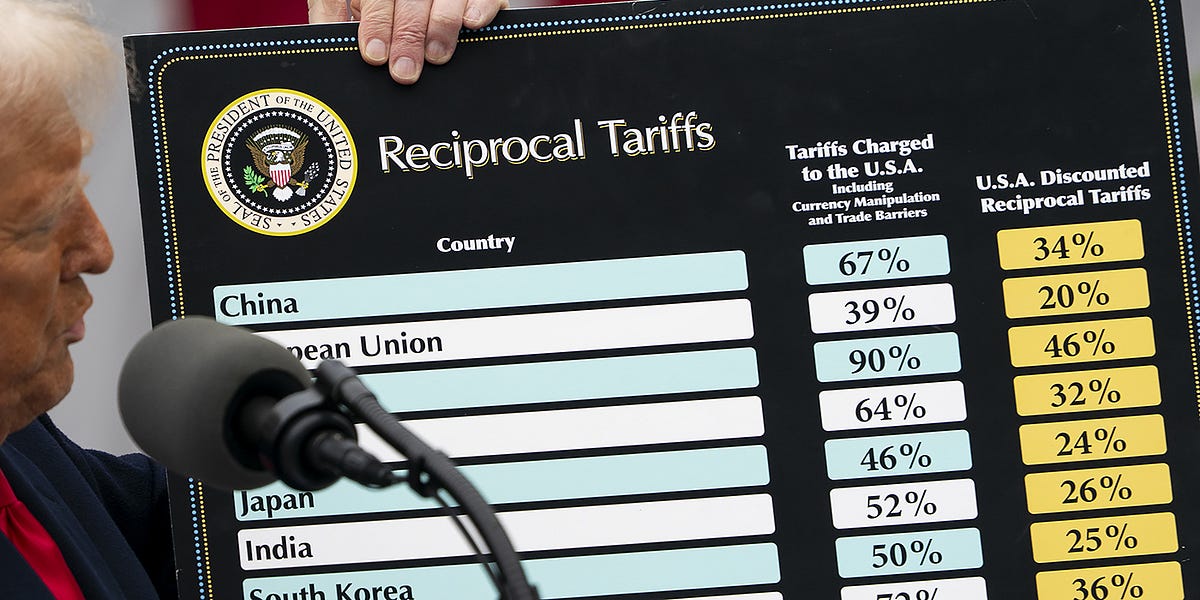
Supreme Court docket: Will the Tariffs Survive?
Since he took office, President Trump has embarked on an aggressive tariff platform with a number of stated goals: to improve trade imbalances, put the United States in a stronger position for trade negotiation, to halt the flow of illegal drugs brought to this country through illicit distribution networks, to increase domestic manufacturing, and to help end foreign conflicts.
Despite one’s views of the merits of tariffs and whether they are appropriate policy (really a cost/benefit analysis), Trump’s tariffs – at a minimum – have been an effective negotiation tool. More than 75 foreign trading partners have approached the United States “to address the lack of trade reciprocity in our economic relationships and our resulting economic security concerns.” And they were a key piece in China’s agreement to reduce their tariffs on U.S. goods, part of a larger agreement where China committed to halting the flow of illegal drugs, eliminating China’s export controls on rare earth elements, ending Chinese retaliation against U.S. technology companies, and opening the Chinese market to U.S. agricultural exports.
As of August, here is a graphic of how sweeping the tariffs and trade deals have been:
But the question of whether tariffs are a worthwhile policy is not before the Supreme Court. Instead, the Court is considering two serious questions that touch upon statutory interpretation and the delegation of authority: