
Saging 101: Cleanse Your House
The creation of this article included the use of AI and was edited by human content creators. Read more on our AI policy here.
Smoke curling through a doorway. Windows cracked open. A bundle of dried herbs smoldering in a ceramic dish. If you’ve scrolled through wellness content lately, you’ve likely encountered saging—a practice that’s moved from niche spiritual circles into mainstream home rituals.
But what exactly is saging, and should you try it? Here’s what you need to know before lighting up.
What saging actually is
Saging, often called smudging, involves burning dried sage or other herbs and allowing the smoke to move through a space. The practice has roots in Indigenous cultures across North America, where it has been used ceremonially for generations. Today, many people have adopted a secular version as part of their home wellness routines.
The traditional purpose centers on clearing stagnant or unwanted energy from a space. Contemporary practitioners use it for a range of reasons: marking a fresh start after moving into a new home, resetting a room’s atmosphere after conflict or illness, creating calm before meditation, or simply establishing intention in their living environment.
A key point worth understanding: saging is not scientifically proven to “remove negative energy” or produce measurable changes in a space beyond the sensory experience of the smoke itself. The value lies in the ritual, the mindfulness it encourages, and the personal meaning practitioners bring to it. Think of it less as a guaranteed outcome and more as a tool for intentional living.
Choosing your materials
White sage is the variety you’ll encounter most frequently, known for its distinctive earthy, herbaceous scent. But it’s far from your only option.
“White sage is a fairly common variety used for space clearing, but you can also use bundles of cedar or herbs like mugwort,” explains Giselle Wasfie, an acupuncturist and herbalist, in an interview with Cb2. “Whatever material you choose, it’s really about intention. Ideally, look for a source that harvests its herbs ethically and responsibly to enhance your practice.”
Cedar carries a sweeter, woodier aroma and has its own history in purification rituals. Mugwort offers a more subtle scent and has been used in various cultural traditions worldwide. Some practitioners prefer lavender or rosemary bundles for their familiar, calming properties. The “right” choice depends entirely on your personal preference and what resonates with you.
The ethical sourcing question
Before purchasing sage, consider where it comes from. White sage grows primarily in Southern California and parts of Mexico, and increased commercial demand has raised concerns about overharvesting and sustainability. Some Indigenous communities have expressed concern about the commodification of a practice with deep spiritual significance in their traditions.
What does mindful sourcing look like? Seek out sellers who can verify their harvesting practices. Some small farms grow sage specifically for commercial use rather than wild-harvesting. You might also consider growing your own sage if your climate permits, or exploring herbs that grow abundantly in your region.
This connects to a broader conversation about cultural respect. While many people find value in smoke-cleansing rituals, approaching the practice with awareness of its origins matters. Learning about the traditions behind smudging, using terms like “smoke cleansing” rather than appropriating specific ceremonial language, and supporting Indigenous-owned businesses when purchasing materials are ways to engage respectfully.
How to sage your home safely
Ready to try it? Here’s a practical walkthrough.
Gather your supplies. You’ll need your sage bundle (or alternative herb), a fireproof dish or abalone shell to catch ash, and a lighter or matches. Some people use a feather to direct smoke, though your hand works fine.
Prepare your space. Open at least one window or door in each area you plan to sage. Ventilation serves two purposes: it’s safer (you’re working with fire and smoke), and symbolically, it gives unwanted energy somewhere to exit. Remove or cover smoke detectors temporarily if they’re sensitive.
Set your intention. This is where the ritual becomes personal. Before lighting anything, take a moment to clarify why you’re doing this. Are you welcoming positive energy into a new home? Releasing stress from a difficult week? Creating a calm environment for focused work? Your intention doesn’t need to be elaborate—a simple phrase or feeling is enough.
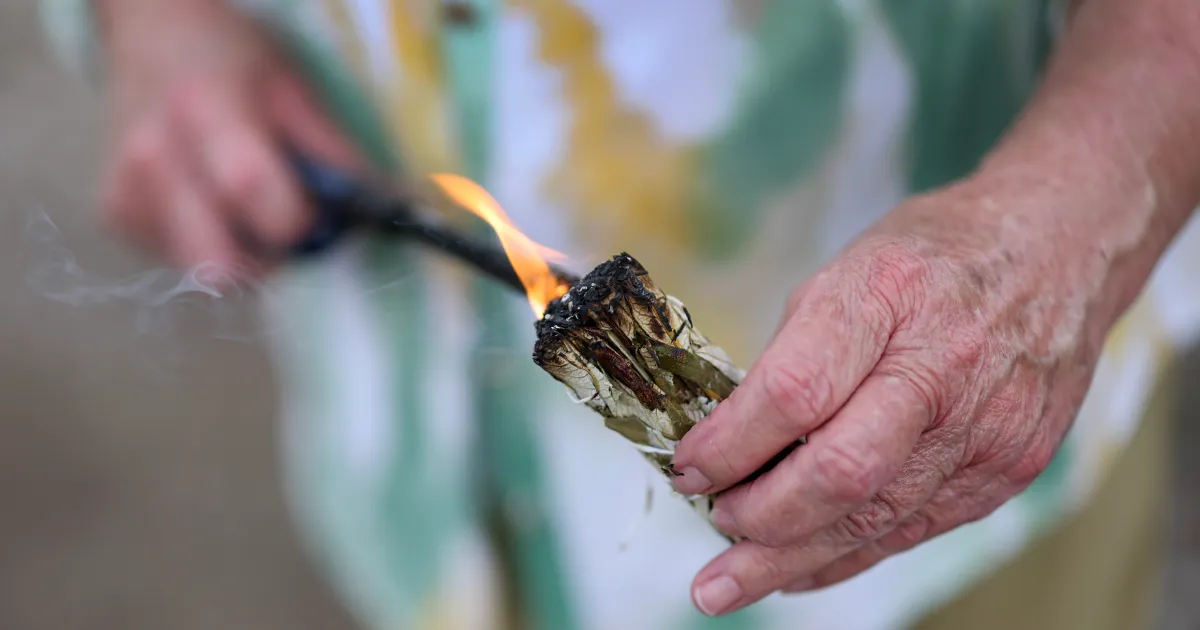
Light and move. Ignite the tip of your sage bundle, let it catch, then gently blow out the flame so it smolders and produces smoke. Move through your space methodically, allowing smoke to reach corners, closets, and areas that feel stagnant. Many practitioners move counterclockwise through a room or start at the front door and work toward the back of the home. There’s no single correct method.
Extinguish completely. When finished, press the burning end firmly into sand, soil, or your fireproof dish until no smoke remains. Never leave smoldering sage unattended, and ensure it’s fully extinguished before storing.
When people typically sage
Certain moments seem to call for this kind of reset. Moving into a new home tops the list—clearing the energy of previous occupants and establishing your own presence in the space. Seasonal transitions, particularly the shift into fall or the new year, prompt many to sage as part of a broader refresh.
After illness, conflict, or periods of high stress, saging can serve as a physical marker that a difficult chapter has closed. Some people incorporate it into regular routines: weekly before meditation practice, monthly during a cleaning ritual, or whenever a space simply feels “off.”
The common thread isn’t the specific timing but the desire to create a deliberate pause, a moment of intention between what was and what comes next.
The bottom line
Saging won’t magically transform your home or solve underlying problems. What it can offer is a framework for mindfulness, a sensory experience that signals transition, and a few quiet minutes to connect with your space and your intentions for it.
If that appeals to you, approach the practice with respect for its cultural origins, attention to safety, and realistic expectations. The value isn’t in the smoke itself but in what you bring to the ritual—your presence, your intention, and your willingness to pause in a world that rarely encourages it.