
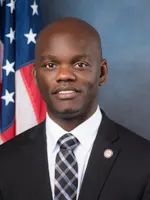
Kionne McGhee, The Miami-Dade County Fee And The Ethics Line – JP
Please Follow us on Gab, Minds, Telegram, Rumble, Truth Social, Gettr, Twitter, Youtube
Edited by Eduardo Vidal
Editor’s Note – We contacted the office of Commissioner McGhee for comment and at publication have not received a response.
Miami, Florida – Miami-Dade County’s budget debates have exposed something far more corrosive than fiscal strain: a governing culture where ethics warnings are written, disclosed and then ignored — with bipartisan silence.
At the center of this culture is Commissioner Kionne McGhee, enabled not only by his Democrat allies, but also by Republicans who publicly posture about accountability, while quietly protecting the same nonprofit culture.
The Ethics Commission Drew a Bright Line
In April 2021, the Miami-Dade Commission on Ethics and Public Trust issued Inquiry 2021-66, addressed directly to Commissioner McGhee, regarding his employment with the nonprofit Children of Inmates. The opinion was narrow, conditional, and explicit.
Commissioner McGhee was permitted to work for the nonprofit only because he represented to the Ethics Commission that:
• his nonprofit role would not overlap with his county duties,
• he would not conduct or solicit activities in Miami-Dade County, and
• he would not use his elected position to benefit the organization.
The Ethics Commission then laid out firm prohibitions:
• he may not exploit his county position to benefit Children of Inmates,
• he may not represent the nonprofit before any county board or agency, and
• if the organization ever became a county contractor or vendor, his employment there would be prohibited under state and county ethics law.
The Ethics Commission further warned that if circumstances changed, then Commissioner McGhee was expected to seek new guidance and abstain from working for the nonprofit. This was not advisory fluff. It was a line drawn in ink.
The Financial Relationship Was Ongoing
According to the Florida Commission on Ethics, Form 6 disclosures, Commissioner McGhee has reported income from Children of Inmates every year since at least 2022, including $99,416.18 in 2023, disclosed under oath.
This relationship is not historical. It is current, paid, and recurring. Disclosure, however, is not permission.
Then Commissioner McGhee Directed New Contract
Despite the Ethics Commission’s explicit conditions — and despite his ongoing financial relationship — Commissioner McGhee directed the Miami-Dade Department of Corrections to enter into a Memorandum of Understanding with Children of Inmates.
This is the exact scenario the Ethics Commission warned against. The separation that made the employment “permissible” disappeared the moment McGhee used County authority to advance an organization that pays him. At that point, the conflict ceased to be theoretical. It became operational.
No Recusal. No Review. No Explanation.
The public has not been shown:
• a recusal memorandum,
• a new ethics opinion,
• an independent conflict analysis, or
• documentation that Commissioner McGhee sought guidance after circumstances changed.
The Ethics Commission told him to do exactly that. No one demanded it.
Where Are the Miami Republicans Now?
Where are the Miami Republicans who stood at the September 18, 2025 budget meeting wringing their hands about government accountability, fiscal discipline and taxpayer trust? They’re smiling for the camera.
Commissioner Rene Garcia, long associated with HOPE Mission, is photographed alongside Commissioner Marleine Bastien of the Family Action Network, grinning next to Commissioner McGhee — the same commissioner flooding social media with choreographed nonprofit meet-and-greets, while shutting down public comment.
Standing comfortably among them is County Mayor Daniella Levine Cava — not merely a participant, but la alcaldesa of the nonprofit class, embodiment of Miami-Dade’s permanent governing elite.
This is not oversight. This is not resistance. This is collusion through comfort.
Accountability Theater
Miami-Dade County does not lack speeches about accountability. It lacks anyone in power willing to give something up. Not one Commissioner — Republican or Democrat — has relinquished their $2 million office budget. Not one has proposed shrinking their personal political operation. Not one has meaningfully cut staff, perks or self-directed discretionary spending.
They posture about deficits , while guarding their own kingdoms. They lament budget gaps, while maintaining six-figure staffers, glossy communications teams and nonprofit partnerships that recycle the same insiders again and again.
The Broader Nonprofit–Political Ecosystem
This matter arises from a structural overlap between a tax-exempt nonprofit, a for-profit policy consulting firm, and direct engagement with government officials under common leadership.
Children of Inmates, Inc. is a federally recognized 501(c)(3) public charity, granted tax-exempt status effective January 4, 2011. As a public charity, it is required to operate exclusively for charitable purposes, avoid private benefit, and refrain from substantial efforts to influence legislation or public policy.
The organization is led by Shellie E. Solomon, who simultaneously serves as Chief Executive Officer of Justice & Security Strategies, Inc., a for-profit consulting firm whose stated areas of practice include criminal justice, justice system reform, and public policy development for governmental clients. This dual role is publicly disclosed.
Public materials and organizational communications show Children of Inmates operating in close proximity to:
- elected officials,
- senior corrections officials,
- law enforcement leadership, and
- justice-system policy discussions.
These engagements occur in policy-adjacent environments where relationships with decision-makers are established and influence is exercised, rather than in purely service-delivery settings.
At the same time, Justice & Security Strategies, Inc. markets expertise in justice policy and system reform — work that depends on credibility, access, and trust within those same governmental and justice institutions.
Florida Division of Corporations records confirm that Justice & Security Strategies, Inc. is an active for-profit corporation in good standing, with Shellie E. Solomon and Craig D. Uchida in leadership roles and annual reports filed consistently.
Viewed collectively, this structure raises regulatory concerns regarding potential private benefit and impermissible coordination. Specifically, it creates a risk that the nonprofit’s tax-exempt status, institutional access, and public-interest positioning may be leveraged, directly or indirectly, to advance the interests or policy objectives of a related for-profit entity under common control.
For oversight purposes, the issue is not intent but structure and effect. Technical compliance in filings does not, by itself, resolve whether the arrangement satisfies the substantive requirements of tax-exempt operation and public-sector ethics standards.
Why This Is an Ethics Failure
This is not about ideology. It is not about charity. And it is not about intent. It is about an elected official doing what the Ethics Commission explicitly warned him not to do — using County authority in a way that benefits an organization from which he receives personal income, without renewed guidance, abstention or transparency. Ethics rules exist to prevent this exact moment.
The Bottom Line
The Ethics Commission did not say, “Do whatever you want.” It said, do not cross this line. That line has now been crossed — publicly, deliberately and without consequence. And the most damning fact is not that the warning existed. It is that everyone involved knew it existed.
Republicans have effectively green-lit this conduct — not through votes, but through silence — so long as they are invited to the photo ops, included in the nonprofit media events, and spared scrutiny of their own nonprofit relationships.
In Miami-Dade County, ethics violations don’t need approval — they just need bipartisan silence.