
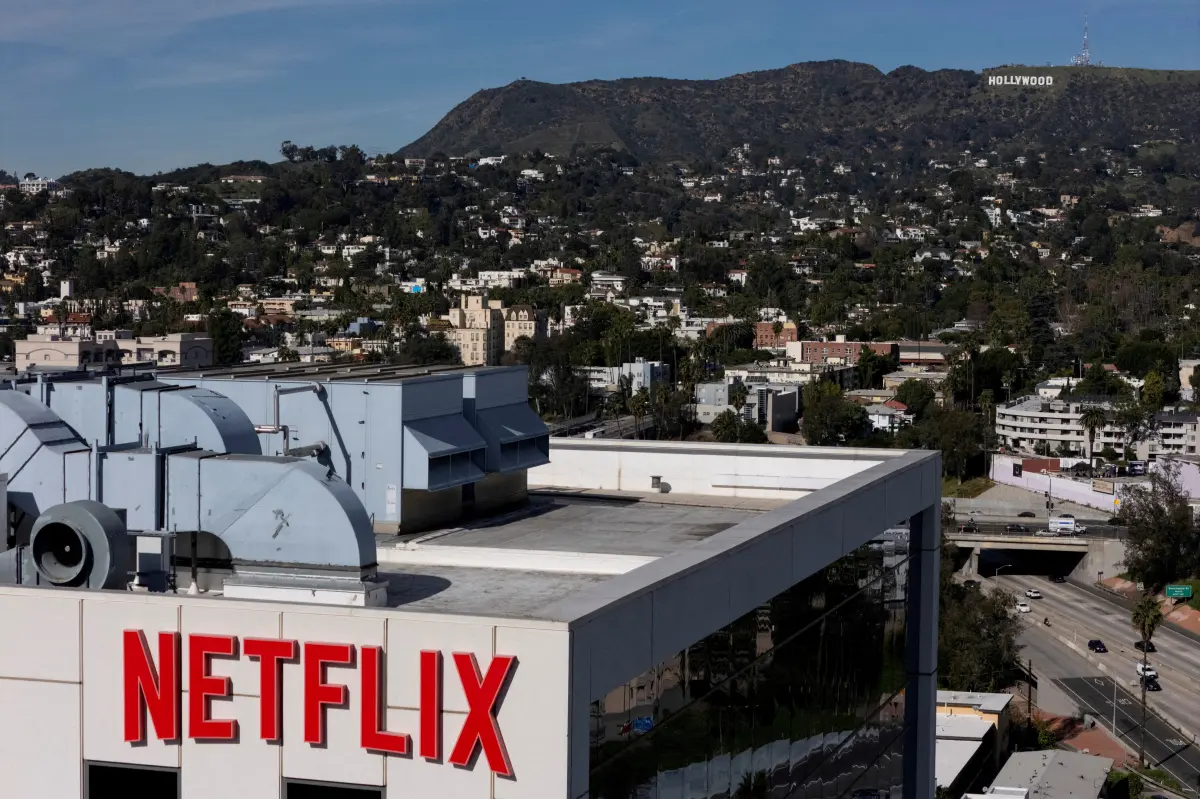
Hollywood merger would scale up the ‘woke’
If two failing fast-food chains merged, Americans would not expect better meals. They would expect bigger portions of the same bad product.
That is exactly what’s unfolding in Hollywood today.
A potential merger between Netflix and Warner Bros. Discovery is not a recipe for creative renewal.
It’s a plan to combine two of the most politically driven and culturally divisive studios into one.
For Americans, that just means larger portions of the same woke –– and divisive –– preaching.
The news that Netflix has granted Warner Bros. Discovery a seven-day waiver to reopen merger talks with Paramount Skydance should, in theory, signal opportunity.
Corporate mergers in entertainment should be about efficiency, innovation, stronger content pipelines, and increasing shareholder value.
But this consolidation wave represents something more than a routine business transaction.
If Netflix emerges as the dominant acquirer, it will unite two of the most culturally influential studios in America into one narrative powerhouse.
That should concern not only investors and consumers, but anyone worried about the growing cultural divide in this country.
Hollywood is not just another industry.
It is the primary storytelling engine of the United States and one of the most powerful cultural exporters in the world.
Download The California Post App, follow us on social, and subscribe to our newsletters
California Post News: Facebook, Instagram, TikTok, X, YouTube, WhatsApp, LinkedIn
California Post Sports Facebook, Instagram, TikTok, YouTube, X
California Post Opinion
California Post Newsletters: Sign up here!
California Post App: Download here!
Home delivery: Sign up here!
Page Six Hollywood: Sign up here!
When consolidation occurs in entertainment, it does not merely concentrate market share.
It concentrates the power to shape social norms, influence political discourse, and define what viewpoints are acceptable in mainstream culture.
The numbers already tell a stark story.
Over the past five years, both Netflix and Warner Bros. Discovery have underperformed the S&P 500, trailing the index by roughly -44% and an astonishing -127%, respectively.
That is not normal market fluctuation.
It reflects structural failure driven in part by alienating core audiences.
Instead of correcting course, a merger would scale up the very model that produced this decline.
Viewers did not abandon these platforms because of pricing or technology.
Many left because they were tired of being lectured.
They saw a steady stream of content promoting a narrow set of political viewpoints while dismissing or caricaturing others.
Unlike traditional monopolies that control goods or services, entertainment consolidation controls something far more consequential: cultural oxygen.
When a small group of executives determines which stories get told and which perspectives are excluded, the result is not merely reduced competition.
It is a narrowing of acceptable public discourse.
This is why combining two of Hollywood’s most ideologically uniform studios would not calm America’s cultural tensions. It would inflame them.
Recent Senate antitrust hearings underscored this divide, as lawmakers questioned Netflix leadership about the ideological direction of its programming.
The debate reflects a growing concern: that dominant platforms may be using market power to normalize contested social viewpoints without meaningful transparency or accountability.
Supporters of consolidation argue that larger companies can deliver better products at lower cost.
But in cultural industries, scale often produces the opposite effect. Large conglomerates become more insulated from consumer feedback, more internally homogeneous, and less willing to course-correct.
A Netflix-led merger would not create diversity of voices. It would institutionalize a single dominant cultural perspective at unprecedented scale.
There is also a clear alternative path. A stronger Paramount emerging from its Skydance partnership could represent a healthier outcome by encouraging real competition in both business strategy and cultural perspective.
Competition, not consolidation, drives innovation, restores trust, and better reflects the diversity of American audiences.
Entertainment works best when it mirrors the breadth of American life rather than attempting to reshape it.
Combining two of the most prominent “woke” studios into a single dominant force will not reduce cultural conflict. It will intensify it.
Bill Flaig is the Founder and President of JP Values ETF (ACVF). Learn more at www.investconservative.com