
FBI Blocked Probe Into Potential International Function in Charlie Kirk Assassination, Says Joe Kent
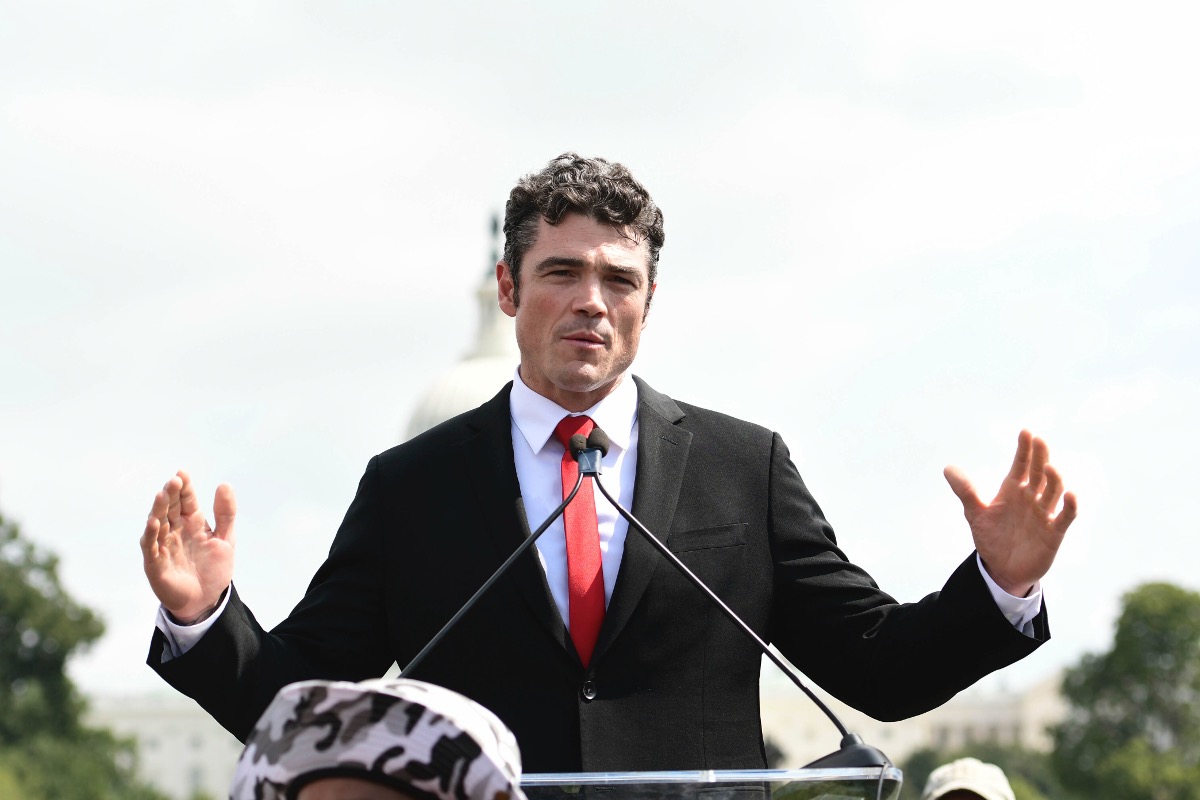
Tucker Carlson’s interview with the former director of the National Counterterrorism Center, Joe Kent, has ignited a whirlwind of controversy. Kent resigned early this week, publicized his resignation letter on social media, and shortly afterward appeared on one of the most popular podcasts for a two-hour interview. Carlson’s episode with Kent has garnered 6.5 million views just on X and YouTube. In addition to that there are downloads through Spotify and Apple, where Carlson’s show consistently ranks in the top five.
Most of the frenzy stems from Kent accusing Israel of employing deceptive tactics to essentially bamboozle President Donald Trump into starting a war with Iran. But he also made alarming comments about the FBI blocking his former agency from following up on foreign leads tied to the assassination of Charlie Kirk. In the interview, Kent carefully walked a line of suspicion and caution.
Prevented From Following Leads
“You believe there was reason to investigate foreign ties to Charlie Kirk’s murder and were told by the … FBI and DOJ — ‘No, you’re not allowed to investigate that’?” Carlson asked Kent.
“They basically cut off our access to be able to get into that information,” Kent responded.
The former federal intelligence chief repeatedly emphasized that he wasn’t saying he was convinced of a foreign element in Kirk’s assassination, only that his agency was prevented from following leads he thought were worth pursuing. “We still had a lot more leads to run down that pertain to some kind of a foreign nexus that we were stopped from investigating,” he said.
Kent said his former agency was told that Tyler Robinson was a lone gunman and to leave the case alone. “And maybe he is,” Kent added, but
there were data points that we needed to investigate. … There was still a lot for us to look into that I can’t really get into. But there was still linkage for us to investigate that we needed to run down. I’m not making any conclusions. … I’m just saying there’s unanswered questions.
The task of the National Counterterrorism Center (NCC) is to investigate foreign ties to crimes in the United States, to investigate potential acts of terrorism. “If we don’t find any foreign ties, we back off,” Kent said. “What I’m saying without getting into too much detail is there was more for us to investigate.”
He said his agency’s access to the case files was cut off early. He also said that they were prohibited from sending people to the scene of the crime to gather information:
After the crisis period, the first week or so … we basically were told that, “Hey, we’ll get back to you if we find any kind of foreign ties, etc., that we want you guys to look into.” Meanwhile, we had already dug up a decent amount of leads. Again, I’m not saying that we had anything concrete, but we found more work that we needed to do to say that we had done our due diligence. We were then told that, “Hey, you guys need to stop. You can’t work on this anymore.”
Requests Not Fulfilled
What followed was a “bureaucratic dispute,” according to Kent. The NCC was officially allowed back on the case later. But it didn’t take long before their work was hampered again, this time in more subtle ways. Kent said that neither the FBI nor Utah authorities met their data requests:
They didn’t ever officially come back and say, “You can’t look at this, anymore.” All of the requests just continued to die on the vine with the various agencies that we needed to actually fulfill those requests.
Kent acknowledged the perspective of the FBI. They blocked his investigation because they wanted to turn everything over to Utah state authorities. Their stated reason was to prevent interference into local law enforcement efforts and into Robinson’s trial. Moreover, as far as the FBI is concerned, the evidence against Robinson is overwhelming, Kent said.
Reports from back in October, when news broke of this probe being blocked, echo what Kent told Carlson. “[FBI Director Kash] Patel and other senior officials believed Mr. Kent was overstepping, treading on F.B.I. responsibilities and potentially interfering with the investigation and the prosecution of the suspect,” The New York Times reported. They added:
While Mr. Robinson is currently facing only state charges, some administration officials were concerned that Mr. Kent’s efforts could provide fodder to defense lawyers, who could use the notion that more than one person was involved in Mr. Kirk’s killing to raise reasonable doubt in the minds of jurors, said those aware of the matter.
Critics and Supporters
The Times noted that Patel was “troubled” that Kent went through FBI material on the Kirk assassination. There was even a White House meeting to discuss what he did. According to the paper, the meeting was attended by Patel, top Justice Department officials, Vice President J.D. Vance, White House Chief of Staff Susie Wiles, Kent himself, and Kent’s then-boss, Director of National Intelligence Tulsi Gabbard.
But Kent also had his supporters, who said he was simply doing his job, “running down leads and making sure no foreign or domestic groups were linked to Mr. Kirk’s death.”
Kent’s comments about the Kirk investigation, like those about the Iran war, have drawn support as well as smears. We decided to publish what he said because there is journalistic value in what the former head of a major federal intel agency that was somewhat involved in the Kirk investigation says. Reporting what an official says is also not equivalent to an endorsement. It’s simply a report. And while Kent is under FBI investigation and accused of leaking to the media, that does not mean what he says is not newsworthy, especially given his clean past. On that same note, given the FBI’s troubling long history of corruption, their investigation into someone is far from an indication of guilt.
It’s also important to keep in mind that Kent wasn’t fired — he resigned. Note also that the attacks against him didn’t emerge until after he resigned and publicized his reason for doing so. Moreover, Kent is a decorated combat veteran. He completed 11 combat tours in the Middle East. He has earned, among other awards, the Bronze Star Medal, the Army Commendation Medal, the Army Achievement Medal, and the Combat Infantryman Badge. There is more reason to take him seriously than not.