
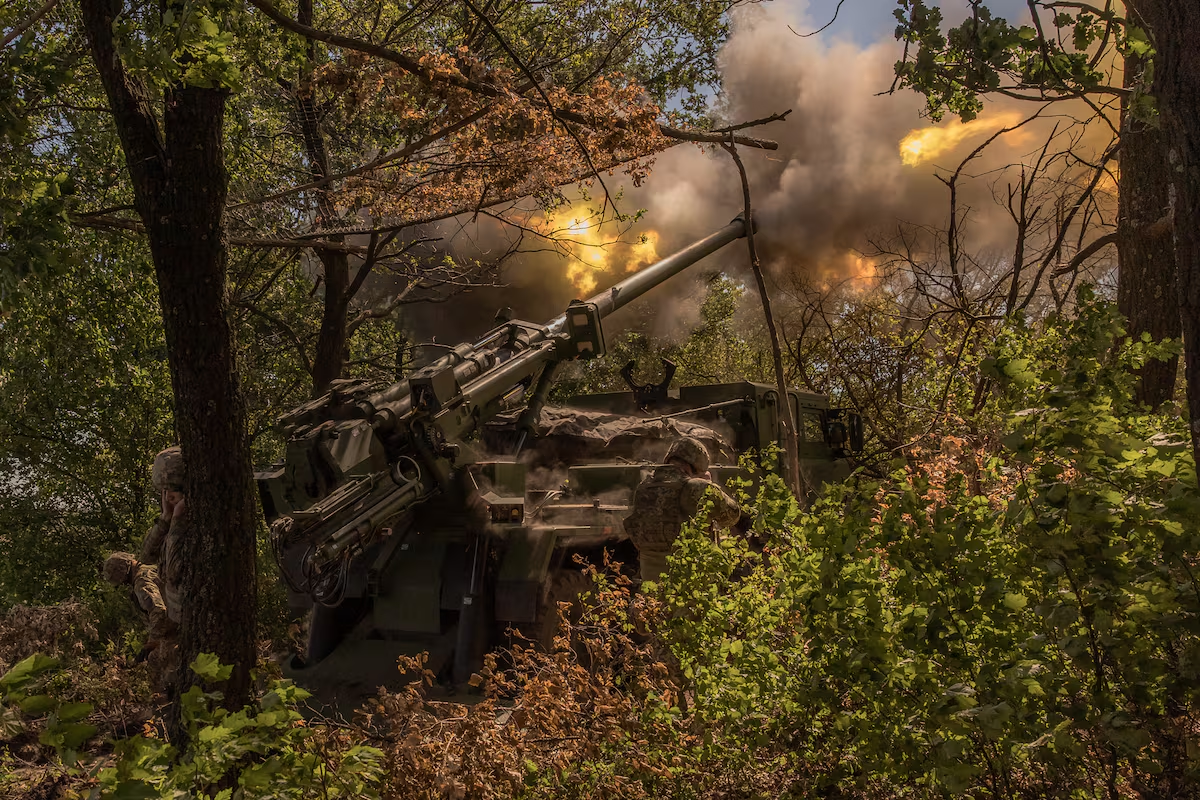
EU mandates buy-European desire in new Ukraine help bundle
BERLIN — The European Commission this week formally proposed a €90 billion ($104.4 billion) loan package for Ukraine spanning 2026 and 2027, with a novel condition that Kyiv must prioritize purchasing weapons and military equipment from European manufacturers.
The package allocates roughly €60 billion for military assistance and €30 billion for “general budget support,” according to the Commission’s announcement.
The European preference clause − which requires Ukraine to buy from EU member states, associated countries like Norway and Iceland, or Ukrainian producers when available − represents Brussels’ most explicit attempt yet to leverage aid flows to bolster Europe’s defense industrial base. It also comes at a time of growing calls for European strategic independence and a deepening rift with the U.S. administration of President Donald Trump, which is the world’s largest arms exporter.
“For us, it is a lot of money. These are billions and billions that are being invested. And these investments should have a return on investment in creating jobs, in creating research and development,” Commission President Ursula von der Leyen said, explaining the preference for purchases in Europe. She emphasized Ukraine could turn to third countries “from time to time” if equipment is unavailable in Europe, describing a cascade principle: priority for Europe, and if this is not possible, procurement abroad.
The conditionality has already sparked divisions among member states. Germany sent a letter to EU capitals on Monday stating it “does not support proposals to limit third country procurement to certain products and is concerned that this would put excessive restrictions on Ukraine to defend itself,” Politico reported. The Netherlands has similarly called for maximum flexibility.
France, by contrast, appears to have been at the forefront of the push to include a “buy European” clause in the latest loan proposal.
The advance comes as President Donald Trump pushes for negotiations between Kyiv and Moscow, with von der Leyen framing the package as essential for Ukraine’s negotiating position.
“We all want peace for Ukraine. And for that, Ukraine must be in a position of strength — on the battlefield and at the negotiating table,” Von der Leyen said.
The loan will be financed through common EU borrowing using “enhanced cooperation,” a mechanism allowing willing member states to proceed when the full bloc cannot reach consensus. This makes decisions easier and veto-proofs them against the likes of Russia-friendly governments in Hungary and Slovakia.
The proposals now head to the European Parliament and Council, with the Commission saying swift adoption is essential for first disbursements to begin in the second quarter of 2026.
Linus Höller is Defense News’ Europe correspondent and OSINT investigator. He reports on the arms deals, sanctions, and geopolitics shaping Europe and the world. He holds a master’s degrees in WMD nonproliferation, terrorism studies, and international relations, and works in four languages: English, German, Russian, and Spanish.