
Home Enemies Then and Now
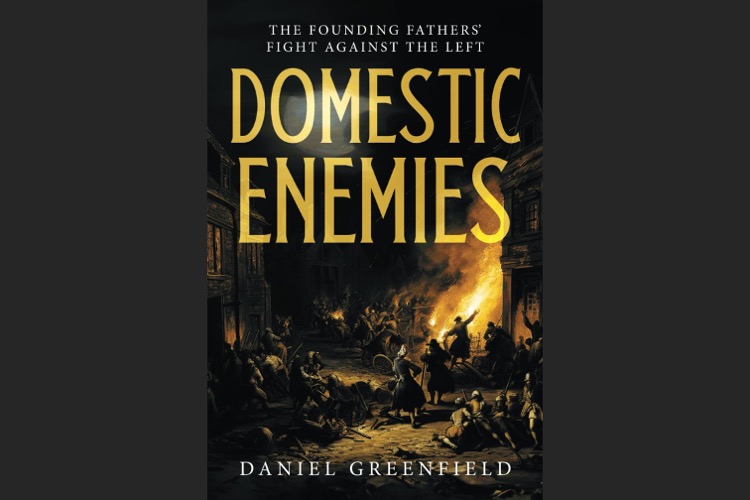
Daniel Greenfield delivers a bracing, unapologetic polemic in his recent work Domestic Enemies: The Founding Fathers’ Fight Against the Left. He views American political history as a prolonged war between constitutional patriotism and a persistent radical Left. Conservatives must take this bestseller seriously, very seriously. In the book, Greenfield deliberately skips a calm academic balance; instead, he indicts the modern Democratic machine. He traces its roots through Aaron Burr, Tammany Hall, and the Jacobin wing of the early Jeffersonians.
Today, conservatives often find themselves fighting on the battleground progressives have defined. Greenfield’s treatise boldly redefines the battlefield.
Central Thesis: Burr’s America vs. the Founders’ America
The author argues that modern America embodies Aaron Burr’s dark vision more than the ideals of Washington, Jefferson, or Hamilton. Political machinery, financial tricks, and identity politics hollow out the American Republic. He contrasts Jefferson’s agrarian ideal and Hamilton’s commercial one with Burr’s corrupt urban world of clientelism and grievance. As a result, Burr’s America surrounds us in the 21st century. We see it in decaying cities, failing schools, tainted water, and consortium politics.
Political institutions never stay neutral, for rival moral projects capture them. According to Greenfield, one particular American project systematically attacks the Constitution. This framing achieves three notable goals for conservatives. First, it places today’s crises — ballot harvesting, weaponized bureaucracy, and demographic shifts — within a centuries-long story. In other words, these issues aren’t mere glitches in a sound system. Second, it revives Federalist warnings. It is known that liberty’s worst foes invoke democracy, equality, and aid for the distressed. Third, it highlights a key truth: political evil rarely arrives in the form of a single tyrant. It builds a disciplined apparatus that controls money, votes, and stories.
The Burr Chapter: Birth of the Machine
Greenfield shines brightest in his opening chapter on Aaron Burr and the Manhattan Water Company. In 1799, Burr pitched a clean-water project for New York. However, he engineered a financial and political weapon instead. The Water Company’s charter lasted forever. In addition, it granted eminent domain. Surplus funds flowed into banking and politics — not water. Eventually, the company became a bank. More precisely, it formed a Democratic Party toolset. It bought land for Democratic voters, swelled voter rolls, and trapped people in debt for ideological loyalty.
This episode captures Greenfield’s sharp insight. The Left’s blend of financial power and patronage roots deep in Democratic DNA—not just the New Deal or Great Society. Burr used easy credit to build reliable voting blocs and reshape electorates. This scene foreshadows urban patronage, subprime crises, and regulatory weapons against foes. (In this chapter, Greenfield even adds a measured satire.) Burr’s final shabby home now hosts a Chase Bank branch — his scheme’s heir. As is known, both Aristotle and Madison feared factions. Greenfield reveals American factions with balance sheets.
Tammany, Slums, and Urban Moral Decay
Corruption in New York’s water system birthed the Five Points slum. Tammany Hall patrons mastered the art of gang politics there. Workers filled Collect Pond with debris, but it turned swampy. Unstable, disease-plagued housing rose. Tammany gangs ruled it — and continue to rule it in the modern era. This history serves as a moral parable: such environments breed politics that trade aid, jobs, and protection for solid votes. Thus, leaders of one particular ideology profit from vice and dependency.
Greenfield sharpens his conservative point further: decayed environments don’t just happen to follow progressive rules. They nurture Left-promoted clientelism. Slums like Five Points dot America. Residents vote Democratic lifelong while the agency robs them endlessly. Without a doubt, dysfunction and one-party dominance reinforce each other. Subsidize dependency and covertly finance crime long enough, and you secure reliable precincts. From that perspective, the ascent of a communist to the mayor of New York City was preordained.
French Revolution and American Jacobins
Greenfield richly explores the French Revolution’s influence on the early American Republic. Citizen Genet stirred tricolor mobs, so they yelled, “Down with King Washington!” while mock guillotines appeared in Philadelphia. These acts prove a domestic Jacobin strain. It viewed America simply as the Left’s revolutionary outpost. Federalists warned, of course. French agents and allies aimed to detach the American people from the government. They wanted America to serve France.
Two lessons emerge here. Foreign ideology threatens most through cultural capture. Imported myths deem native institutions illegitimate (and ultimately force them to be). Radical egalitarianism can destroy liberty — the French Revolution proved it. America chose ordered liberty for survival, not preference. Abigail Adams called it war: religion versus atheism, morality versus depravity, and liberty versus the Left. Her words ring bold yet grounded.
Inflation and Redistribution’s Moral Bounds
Rhode Island’s paper-money chaos under the Articles grips readers today. The Country Party inflated the currency “to relieve the distressed.” They forced legal tender on creditors. It was an example of when (by using the Marxists’ lexicon) class warfare nearly sank the Constitution. Monetary folly often masks moral claims of unlimited compassion.
Greenfield connects this to Modern Monetary Theory, trillion-dollar coins, and endless debt for “social justice.” This temptation dates to the Republic’s start. Nevertheless, states can’t print away constraints forever, even if they commonly brand resisters as anti-poor. Rhode Island retreated to the Constitution. Will we?
Speech, Subversion, and Federalist Responses
Greenfield critiques Federalist excesses, too. The Alien and Sedition Acts clumsily tackled actual threats. Domestic factions served hostile powers. Judge Addison warned: “Control the press, control the country.”
Conservatives face this dilemma now. How can we protect free institutions when those who despise them control the cultural gates? Suppressing speech risks as much as subversion. However, neutral rules are ineffective when faced with revolutionary logic. Social media monopolies raise the stakes even higher.
Style, Strengths, and Limits
Daniel Greenfield writes with muscle and drive. He links vivid episodes — Burr’s loans, Tammany gangs, French boasts, revolutionary songs—into a Leftist narrative from the 1700s to recent elections. Biographies add narrative pull well.
Academics may want more counterexamples and endless nuance. He clearly demonstrates that the American Left spans diverse eras. Nevertheless, Greenfield seeks moral genealogy, not precise taxonomy. He succeeds boldly. He recasts the American Republic as a constant defense of constitutional liberty against foes waving equality, democracy, and progress.
Greenfield’s timely book shines a bright torch into the Democratic scheme’s filthy basement. While progressives may recoil, conservatives — and anyone caring for America’s moral fate — should welcome the light.
Gary Gindler, PhD., is the author of Left Imperialism (2024) and Left Anti-Semitism (scheduled for March 2026).