
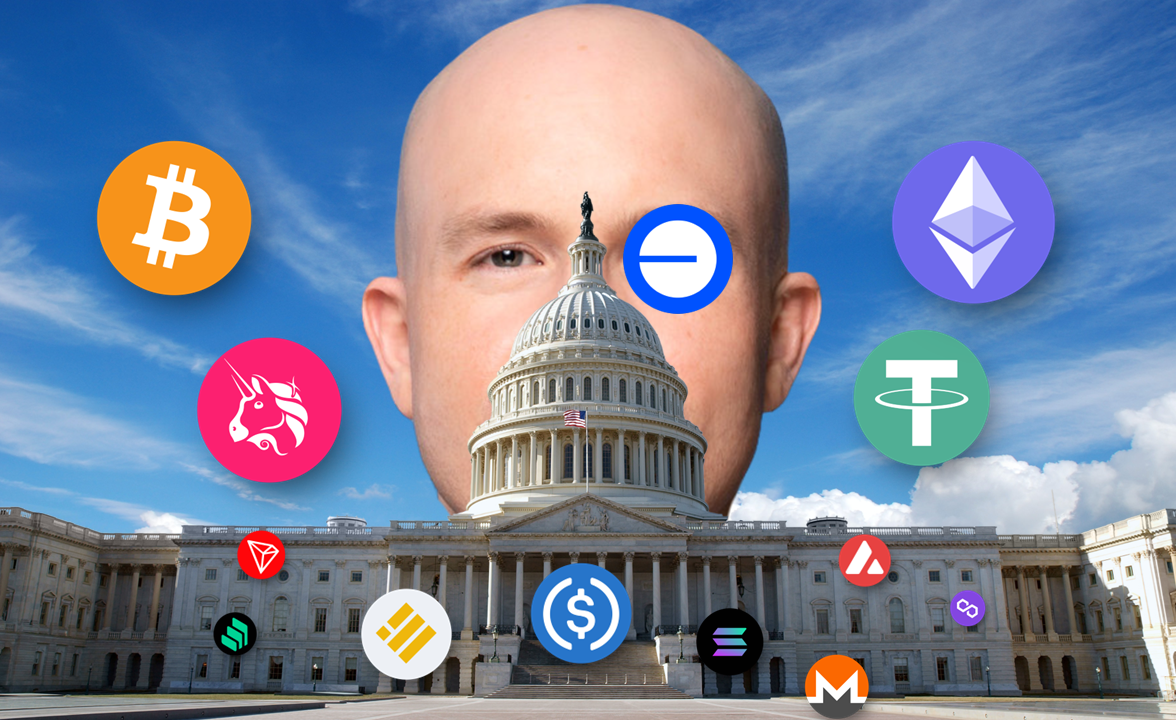
Deepening Divides: The CLARITY Act’s Contentious Path and the Forces Driving Discord
The ongoing discourse surrounding the Senate’s latest draft of the CLARITY Act has exposed sharp fractures within the crypto ecosystem, pitting traditional banking interests against digital asset innovators, and even dividing the industry itself. The Senate Banking Committee’s markup, originally set for January 15, 2026, was postponed to late January following a surge of opposition, particularly from Coinbase CEO Brian Armstrong, who withdrew support just hours before the session. This delay, echoed by the Senate Agriculture Committee, underscores a lack of bipartisan votes and highlights how entrenched interests are stalling progress amid disputes over consumer protections, innovation, and regulatory power.
Banking Lobby vs. Crypto Innovation: The Yield Ban Flashpoint
A core divide revolves around restrictions on stablecoin yields, where banking associations are accused of orchestrating protections that shield their $6.6 trillion deposit base from competition. Fifty-three banking groups, including the American Bankers Association and state-level entities, have lobbied aggressively for prohibitions on yields for idle stablecoin holdings, framing them as threats to traditional lending and community banking models. Critics argue this amounts to regulatory capture, with banks like Bank of America warning of a potential $6 trillion migration to stablecoins if yields are allowed, effectively using legislation to eliminate rivals rather than innovate.
On the crypto side, this has fueled accusations that the draft prioritizes incumbents, stifling financial inclusion for unbanked populations in emerging markets who rely on stablecoins for yields inaccessible through traditional banks. Armstrong has been vocal, labeling these provisions as allowing banks to “ban their competition,” directly contributing to the markup’s postponement and amplifying market volatility as Bitcoin dipped 2% in response.
Industry Schism: Coinbase’s Stand vs. Broad Support
Within the crypto sector, a clear split has emerged, with Coinbase’s abrupt withdrawal creating ripples that forced the delay and exposed fault lines. Armstrong’s critique—that the draft erodes privacy through DeFi prohibitions, imposes a de facto ban on tokenized equities, and diminishes CFTC authority in favor of the SEC—has positioned Coinbase as a leading antagonist, arguing a “bad bill is worse than no bill.” This stance has drawn support from developers and firms like Etherealize, who highlight narrow decentralization criteria, heavy disclosures, and contradictory DeFi definitions that could burden small teams and enable surveillance.
Conversely, major players such as Robinhood CEO Vlad Tenev, Andreessen Horowitz, Circle, Paradigm, Kraken, and Ripple have reaffirmed their backing, viewing the draft as a pathway to bipartisan consensus despite imperfections. Tenev, for instance, emphasized a “path forward” for features like staking, contrasting sharply with Coinbase’s position and illustrating how self-interest—such as regulatory moats for larger exchanges—may be exacerbating internal rifts. This division has led to accusations of betrayal, with some viewing Coinbase’s move as placing it between its user base and potential progress, while others see supporters as compromising core crypto principles.
Regulatory Turf Wars: SEC vs. CFTC and Developer Protections
Another major fault line lies in the jurisdictional balance between the SEC and CFTC, where critics like Armstrong claim the draft subordinates the CFTC, potentially stifling innovation through stricter SEC oversight. This has sparked concerns from developers about mandatory registrations and surveillance, which could criminalize permissionless DeFi and force innovation overseas. Organizations like the North American Securities Administrators Association (NASAA) add to the tension by pushing for stronger investor protections, clashing with crypto advocates who fear overreach.
Supporters, including Senate Republicans, counter that the draft protects developers and closes loopholes without undue burdens, but the 137 proposed amendments reflect unresolved debates. This turf war is prolonged by the need for bipartisan buy-in, with figures like Senators Tim Scott and John Boozman delaying proceedings to negotiate with Democrats like Cory Booker, revealing how political maneuvering is a key driver of impasse.
Political and Broader Stakeholder Pressures
On the political front, the delays stem from insufficient votes, with Senate leaders like Boozman prioritizing consensus amid midterm pressures, potentially pushing resolution into 2027. Crypto skeptics in Congress, influenced by banking lobbies, are seen as entrenching anti-competitive elements, while pro-crypto voices like Senator Cynthia Lummis advocate for refinements to maintain U.S. leadership.
Broader sentiment on platforms like X and Reddit shows pessimism, with users accusing the draft of fostering surveillance and regulatory capture, further polarized by figures like Armstrong whose actions have galvanized opposition. As negotiations continue, these divides—fueled by banking influence, industry infighting, and political calculus—threaten to prolong uncertainty, with stakeholders like Coinbase wielding outsized power to shape or derail the outcome.