
Croatia’s Airspace Sovereignty Milestone: Rafale-Powered Modernization, Regional Rivalry, And Strategic Leverage In Bosnia – The Balkan
Please Follow us on Gab, Minds, Telegram, Rumble, GETTR, Truth Social, Twitter, and Facebook, Youtube
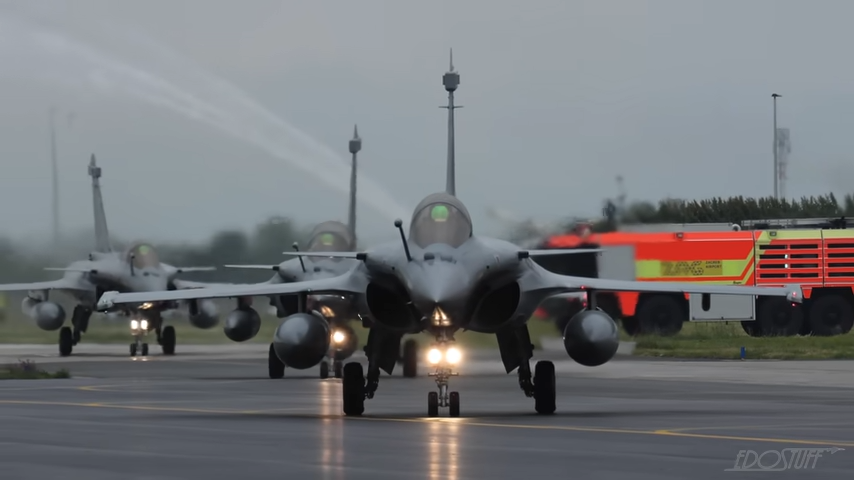
On January 1, 2026, Croatia achieved a defining moment in its post-independence defense history by assuming full, independent control of its national airspace. This long-awaited transition relies on the operational readiness of its 12 Dassault Rafale F3R multi-role fighter jets, purchased in 2021 for roughly 1.13 billion euros. After years of intensive training and gradual deliveries completed in April 2025, the Croatian Air Force’s 191st Fighter Squadron now handles peacetime air policing, surveillance, and rapid-reaction tasks entirely on its own, while remaining fully integrated into NATO’s Integrated Air and Missile Defence System. The end of transitional support previously provided by Italy’s Eurofighters and Hungary’s Gripens marks not just a technical handover, but a powerful symbol of restored national sovereignty and growing military self-reliance.
This development sits at the heart of Croatia’s broader and ambitious military modernization program. Over the past several years, Zagreb has pursued an aggressive upgrade agenda aimed at overcoming the limitations of its post-1995 defensive posture. In addition to the Rafales—which offer superior air-to-air, air-to-ground, and reconnaissance capabilities compared to the retired MiG-21s—the modernization includes the acquisition of Leopard 2A8 main battle tanks from Germany, upgraded M2A2 Bradley infantry fighting vehicles from the United States, Caesar Mk2 self-propelled howitzers from France, HIMARS rocket systems, Bayraktar TB2 drones from Turkey, and various support platforms such as Black Hawk helicopters and heavy transport trucks. Defense expenditure has climbed to comfortably exceed NATO’s 2% GDP guideline, while the reintroduction of mandatory short-term military service for men (with voluntary participation for women) seeks to rebuild trained reserves and improve overall readiness. Together, these investments are reshaping the Croatian Armed Forces into a technologically advanced, NATO-interoperable force capable of credible deterrence and meaningful contribution to alliance missions.
The modernization effort unfolds against the backdrop of a persistent, low-intensity military rivalry with neighboring Serbia. The competition, deeply rooted in the unresolved grievances of the 1990s wars, has taken on new momentum in recent years as both countries justify their procurements by pointing to the other’s buildup. Serbia has responded with its own acquisitions—Russian Pantsir air defense systems, Chinese FK-3 missiles, and upgrades to its tank and artillery fleets—while also reinstating conscription. Although Serbia maintains larger numbers in certain categories such as armored vehicles and active personnel, Croatia holds a clear qualitative advantage in air power thanks to the advanced Rafales, which provide better sensors, range, and versatility than Serbia’s aging MiG-29s. NATO membership further tilts the strategic balance in Croatia’s favor, offering collective defense guarantees that Serbia, pursuing military neutrality does not enjoy. While direct conflict remains highly improbable due to alliance deterrence and economic interdependence, the ongoing arms dynamic keeps security tensions simmering and contributes to a divided regional landscape.
Perhaps the most significant strategic ripple effect of Croatia’s strengthened military posture is felt in Bosnia and Herzegovina, where it indirectly bolsters the negotiating position of the Bosnian Croat community. Bosnian Croats, who make up about 15% of the population and are concentrated mainly in Herzegovina and parts of central Bosnia, have long maintained that the current Federation entity—shared with the Bosniak majority—systematically disadvantages their political, cultural, and electoral interests. Led by figures such as Dragan Čović and the HDZ BiH party, they continue to press for constitutional reforms that would grant Croats a level of autonomy comparable to that enjoyed by Serbs in Republika Srpska, often described as the creation of a “third entity” or a restructured federal arrangement. Zagreb has consistently supported these demands through diplomatic advocacy, financial assistance, and political pressure, arguing that genuine implementation of Dayton’s constituent-people principle requires parity for all three groups.
A more capable and technologically superior Croatian military adds considerable weight to this advocacy. During the 1992–1995 Bosnian War, direct Croatian military involvement proved decisive in shaping outcomes for Bosnian Croat forces. In the present day, advanced assets such as precision-strike aviation, long-range artillery, and persistent surveillance drones serve as a form of strategic reassurance: any serious attempt to further marginalize Croat rights could invite a robust response from a neighboring state with overwhelming qualitative superiority and full NATO backing. This implicit deterrence strengthens the hand of Bosnian Croat leaders in negotiations with Sarajevo, making it more difficult for Bosniak-dominated institutions to dismiss or delay reforms. While opponents criticize this dynamic as external meddling that threatens Bosnia’s fragile unity, supporters contend that only credible parity can prevent the kind of ethnic imbalances that historically fueled instability. In practice, Croatia’s growing military strength enhances the confidence of Bosnian Croats to pursue their autonomy goals through political channels, potentially creating a more balanced power distribution within the country or, alternatively, deepening existing divisions if the process becomes confrontational.
Ultimately, Croatia’s achievement on January 1, 2026, and the wider modernization program reflect a deliberate strategic choice: to move from post-war recovery toward proactive deterrence and regional influence within the NATO framework. While this course heightens competition with Serbia and provides meaningful backing for Bosnian Croats, its long-term impact will depend on whether the resulting balance of power encourages pragmatic dialogue or entrenches further polarization in the Western Balkans.