
Chinese language Uncommon Earth Metals Commerce Battle Highlights Significance Of Titanium To US Safety – JP
Please Follow us on Gab, Minds, Telegram, Rumble, Truth Social, Gettr, Twitter, Youtube
The now-described ‘trade war with China’ by President Trump has highlighted the importance of rare-earth metals to U.S. national security and western economies in general. This importance also applies to another ‘transitional’ metal — Titanium.
Ensuring an abundant supply of the material is critical as the ‘Golden Age’ approaches. In addition, how the U.S. uses diplomacy to ensure this supply is an existential issue.
Sanctions are often praised as moral weapons—the civilized alternative to armed conflict. They promise to punish aggressors without the bloodshed of war. But when those measures reach deep into the supply chains that sustain national defense, they risk weakening the very foundations of sovereignty they claim to protect. In an age of technological interdependence, no great power can remain secure without control over the materials that keep its industries alive. Sovereignty today is not only territorial; it is industrial, writes International Policy Digest.
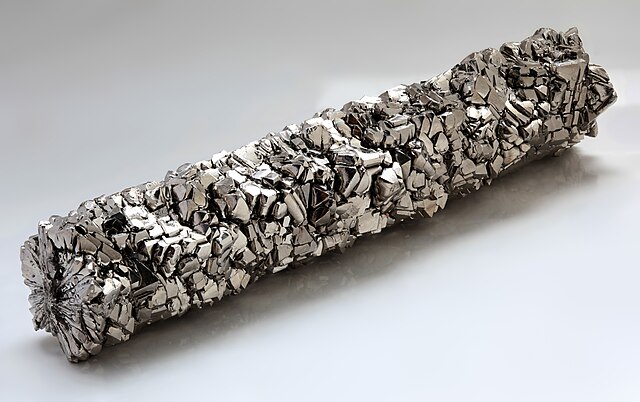
Titanium makes that case unmistakably. Stronger than steel yet remarkably light, it is essential to nearly every modern defense platform. Fighter jets, spacecraft, and naval vessels rely on it for durability and corrosion resistance. Drone warfare—with its relentless demand for lightweight airframes—has further underscored titanium’s value. The U.S. Navy has even explored marine-grade titanium for stealthy undersea components designed to survive decades in corrosive environments. Across every branch of defense, this metal is woven into the architecture of power, they ad.
Yet America no longer produces its own titanium sponge—the crucial precursor used to manufacture titanium metal. According to the U.S. Geological Survey, the United States is more than 95 percent import-reliant, depending heavily on suppliers in Russia, China, Japan, and Kazakhstan. The last domestic sponge facility shut down quietly in 2020, leaving the world’s leading aerospace power dependent on foreign sources for a material vital to aircraft, ships, and precision weapons.
Sweeping restrictions that ensnare neutral intermediaries or allied traders would only compound America’s exposure to shortages, they write.
As the Department of War gets into the minerals business, government policy must support a robust private sector to solve the problem.