
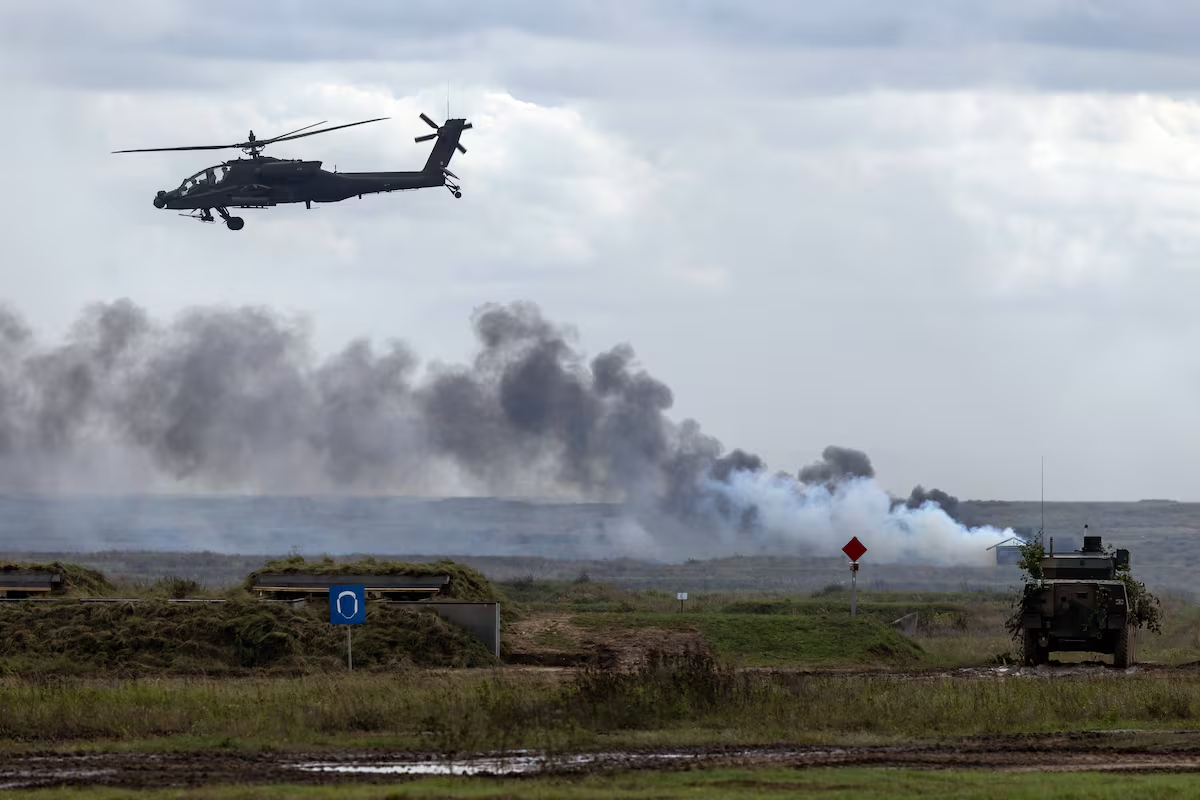
Apache helicopters downed drones in air-to-air fight with 30mm proximity ammo
HUNTSVILLE, Alabama — The U.S. Army’s Apache attack helicopter AH-64 broke new ground by firing 30mm proximity ammunition at drones in air-to-air combat during a December exercise in Yuma, Arizona, according to the service.
The live fire test saw Apache pilots engage drones flying on ranges at Yuma Proving Ground using the 30x113mm XM1225 Aviation Proximity Explosive, called APEX.
The APEX rounds have proximity fuzes that cause them to detonate when they close in on a target, releasing a wide radius of blast fragments.
The 30mm rounds are designed to be fired at targets requiring precision to hit, such as small boats, drones and enemy combatants, without requiring changes to the Apache’s existing weapon system.
The fragments excelled at destroying drones in flight, the service has stated, in addition to being effective against ground targets.
“The XM1225’s proximity fuze has the potential to increase soft-skinned ground and aerial target vulnerability, providing the Attack [Division] community an additional capability so long as those targets are susceptible to detection, classification, and tracking,” Maj. Vincent Franchino, test pilot and Attack Division chief at Redstone Test Center in Huntsville, Alabama, said in a statement.
The APEX technology was developed in-house by the U.S. Army Combat Capabilities Development Command’s Armaments Center, with support from Picatinny Arsenal and Northrop Grumman.
Proximity fuzes have a long history within the U.S. military. The first were developed by the United States during World War II and were used against aircraft and Germany’s V-1 flying bombs.
The move to upgrade helicopter weapons capabilities for drone warfare is part of the Army’s drive to modernize combat units to address and incorporate unmanned systems.
Army Chief of Staff Gen. Randy George announced last month that the service will begin fielding the Bell MV-75 tiltrotor aircraft by the end of this year and that larger unmanned aerial systems classed in Groups 3, 4 and 5 are being integrated into Army combat aviation brigades.
Zita Ballinger Fletcher previously served as editor of Military History Quarterly and Vietnam magazines and as the historian of the U.S. Drug Enforcement Administration. She holds an M.A. with distinction in military history.