
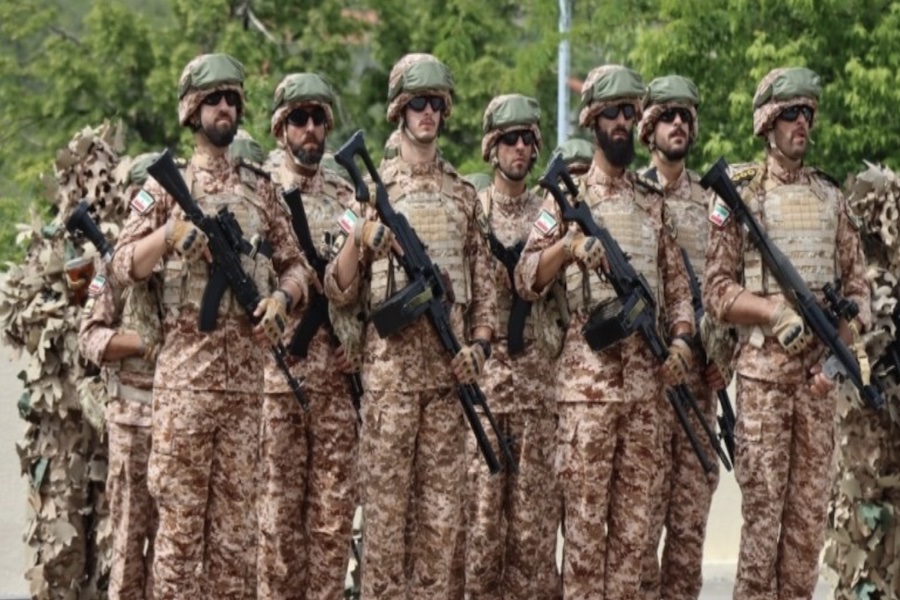
Two IRGC Members Killed By ‘Anti-Government And Separatist Agents,’ Iranian State Media Announces
Iranian state media outlets reported Wednesday, July 1, that two members of the Islamic Revolutionary Guard Corps (IRGC) were killed in the western city of Paveh in Kermanshah Province.
The incident occurred on the evening of June 30, near the border with Iraq’s Kurdistan region. State television described the event as “a terrorist and cowardly act.”
It added that “exact details of this incident and the measures being taken to identify those responsible are under review.” Two additional IRGC members were wounded in the shooting at the victims’ homes.
Iranian state media identified the perpetrators as “anti-government and separatist agents.” Reports from the IRGC’s media network Sepah News stated that a team of saboteurs working for separatist groups had entered Iran through the northwestern border with Iraqi Kurdistan.
According to Sepah News, IRGC troops intercepted the team and killed four individuals, with blurry photographs of the deceased released in connection with the operation.
A newly formed Kurdish militant group identifying itself as Xore Heva (Sun of Hope) claimed responsibility for the Paveh attack. The group stated its goal is to “promote political awareness, strengthen Kurdish national identity, and confront the policies of the Islamic Republic of Iran.”
It described the attack as retaliation for actions taken against anti-government protesters in 2022.
The Paveh incident formed part of a series of reported attacks on Iranian security personnel in western and other regions on or around the same period. In the city of Baneh, a gunman reportedly killed two police officers at a security checkpoint.
In Saravan in the southeastern province of Sistan and Baluchistan, an IRGC member named Amirhossein Arbabi and his wife were killed, with Iranian state television attributing that incident to “Zionist-American mercenaries.” The Hengaw Organization for Human Rights reported they were slain as they left an IRGC headquarters.
Separate clashes in West Azerbaijan Province resulted in the deaths of four fighters from the East Kurdistan Defense Units (YRK). “We have not taken the side of any power, nor have we launched any attacks against the Iranian regime,” the YRK said at the time.
Iranian forces conducted missile and drone strikes on Kurdish opposition party headquarters and residential areas in Iraqi Kurdistan, with the Hengaw Organization reporting at least three female Peshmerga fighters and one 17-year-old civilian killed, along with at least 20 others sustaining serious injuries.
These events occurred against a backdrop of earlier domestic developments in Iran. Protests began on December 28, 2025, in Tehran amid economic difficulties, including a sharp depreciation of the Iranian rial.
The demonstrations spread to numerous cities across the country. President Masoud Pezeshkian initially acknowledged economic grievances and called for dialogue, while state media covered the protests as driven by the economic situation.
On January 8, 2026, Iranian security forces initiated a response involving the deployment of personnel and other measures across multiple provinces. A nationwide internet and telecommunications blackout was implemented on January 9, while then-Supreme Leader Ali Khamenei addressed the situation in a speech that same day.
Reports from Iran’s Ministry of Health indicated at least 30,000 deaths in the initial phase of the response. Human rights advocates provided estimates ranging from approximately 12,000 to 20,000 deaths, which culminated in the suppression of protests by January 12.