
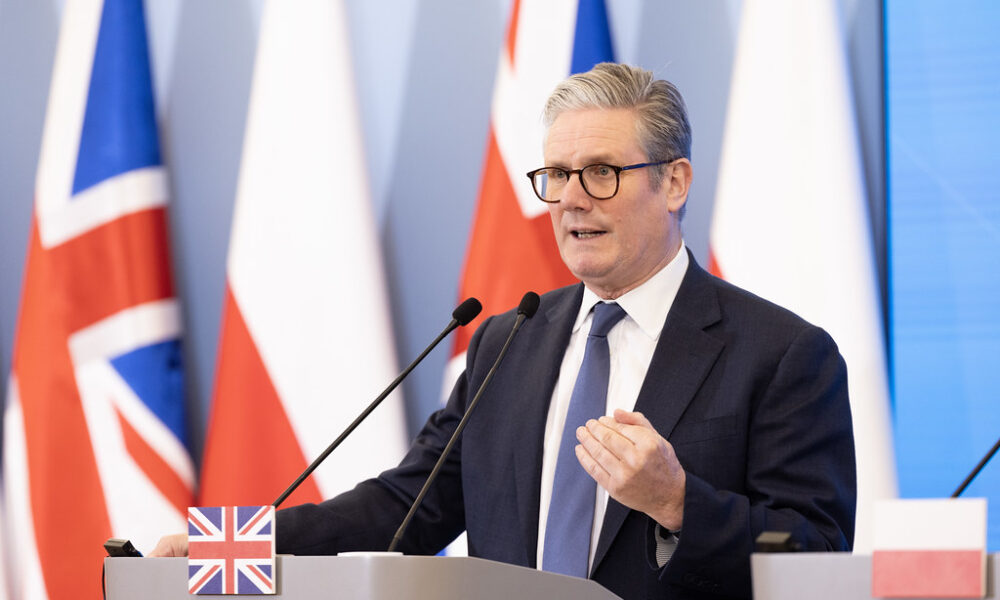
JUST IN: UK Prime Minister Keir Starmer Resigns, Supplies Timetable
U.K. Prime Minister Keir Starmer announced Monday morning that he will be resigning as leader of the Labour Party and as Prime Minister. The announcement took place in a statement delivered outside 10 Downing Street after rumors of his impending resignation were widely circulated a day earlier.
In his statement, Starmer addressed questions within the party about his suitability to lead Labour into the next general election.
“The question my party is asking is whether I am best placed to lead it into the next general election. I have heard the answer… I accept that answer with good grace,” he said while speaking outside 10 Downing Street. “Every decision I’ve taken has been about putting the country I love first. That is why I will resign as leader of the Labour party. I have spoken to His Majesty the King this morning to inform him of my decision.”
Starmer went on to express commitment to an orderly transition. “I will do everything I can to ensure an orderly handover of power, and will give my successor my full support,” the outgoing prime minister added before thanking his colleagues, staffers, and family.
Starmer will remain in post as Prime Minister until a new Labour leader is selected. He requested that the party’s National Executive Committee (NEC) establish a timetable for the leadership contest.
Under this plan, nominations will open on July 9, and the process will be completed by the summer parliamentary recess. This timeline aims to ensure a new leader is in place before Parliament returns in September 2026.
In the United Kingdom’s parliamentary system, when the governing party holds a majority in the House of Commons, the leader of that party becomes Prime Minister upon appointment by the monarch. No immediate general election is required. Labour secured a substantial majority in the July 2024 general election, and this position is expected to remain in place pending any future developments.
The Labour Party leadership election process, which is triggered by the leader’s resignation, follows established party rules. Candidates must be sitting Labour Members of Parliament. To appear on the ballot, a candidate requires nominations from at least 20% of Labour MPs (approximately 81 MPs based on current numbers).
Candidates must also secure support from either 5% of Constituency Labour Parties (CLPs) or at least three affiliated organizations (including at least two trade unions) representing at least 5% of affiliated membership.
Once nominations are validated, the election proceeds to a ballot of Labour Party members, typically conducted on a one-member-one-vote basis, often using the alternative vote system. The winner of the leadership contest is then invited by the King to form a government and becomes prime minister.
Andy Burnham, the former Mayor of Greater Manchester and now MP for Makerfield following his recent victory in the June 18 by-election, is widely regarded as the frontrunner. His return to Parliament has positioned him strongly for a leadership bid.
Other potential contenders include former Deputy Prime Minster Angela Rayner, Wes Streeting, Starmer’s former Health Secretary who resigned earlier this year, Ed Miliband, David Lammy, and Shabana Mahmood.