
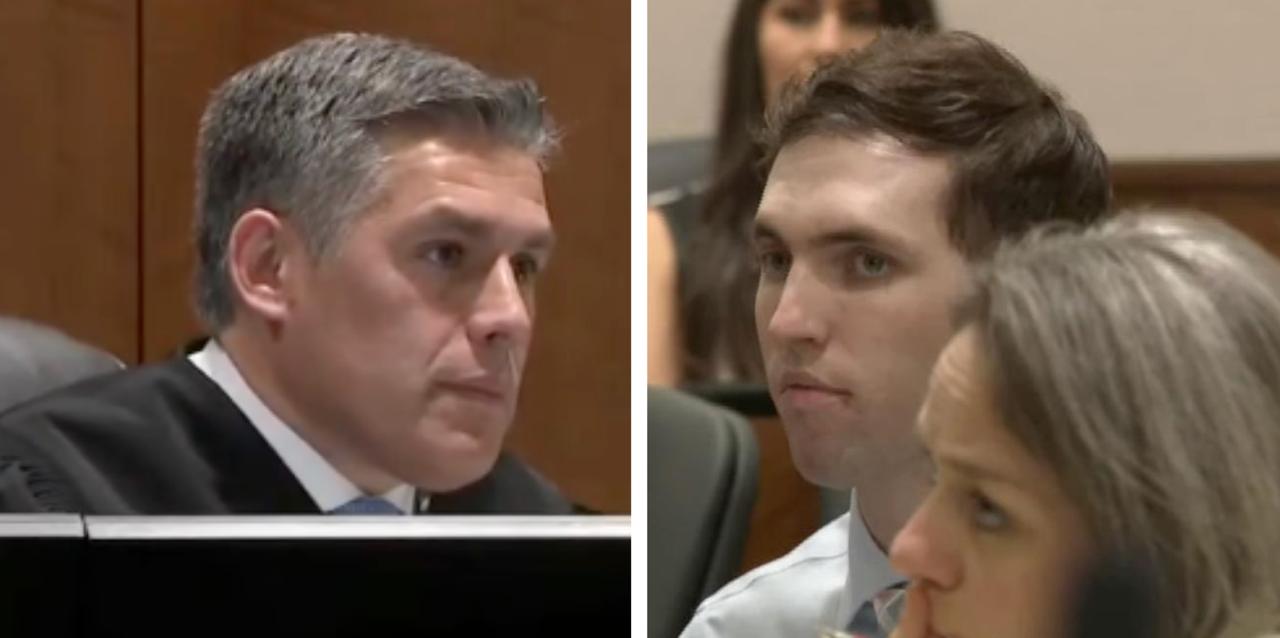
BREAKING: Choose Graf to enable cameras in courtroom throughout trial of Charlie Kirk’s accused killer Tyler Robinson
The defense had been seeking the exclusion of electronic media coverage such as cameras, microphones, and still photographers.
Judge Tony Graf ruled on Friday that cameras would be allowed at the trial for Tyler Robinson, the man charged with the September 2025 killing of Turning Point USA founder Charlie Kirk, rejecting the defense’s motion for a blanket ban.
Graf ruled that reporters must file requests for electronic media coverage for court proceedings at least 14 days before the scheduled proceeding. He said that if either party is seeking to suspend or restrict electronic media coverage of a court proceeding, they must file a motion no later than 10 days before the court proceeding, with the motion addressing the particular circumstances that would require such an action.
Graf noted that the court has instituted remedial measures during the proceedings so far, including placing the video camera at the back of the room, “which has minimized, if not entirely mitigated, the potential for media to capture conversations at the council’s tables and documents on the council’s computer screens.
The defense has been seeking to keep electronic media coverage out of the courtroom for months. The defense wrote in a January filing that the exclusion of devices such as cameras, microphones, and still photographers “is necessary to ensure Mr. Robinson’s rights to due process, to a fair and impartial jury, to counsel, to be free from unreasonable searches and seizures, and to be free from cruel and unusual punishment, as required by the Fourth, Sixth, Eighth and Fourteenth Amendments to the United States Constitution and article I, sections 7, 9, 10, 12, and 14 of the Utah Constitution.”
“The phrase ‘media circus,’ often overused, is most typically identified with Judge Lance Ito’s mishandling of the OJ Simpson case,” Robinson’s defense stated. “But in this case, that phrase is particularly apt, at least in relation to the extent and content of the sensationalistic and prejudicial pretrial publicity that has thus far been produced in this case, and that will no doubt continue unrestrained unless this motion is granted.”
In the courtroom, the defense has repeatedly taken issue with electronic media coverage of their client. They first attempted to have cameras banned in October, along with requesting that Robinson appear in civilian clothing and outside of shackles. Graf at the time allowed for civilian clothing, but said he must remain shackled. Cameras were ordered not to film his entrances and exits from the courtroom.
In a December 11 hearing, the defense claimed that Robinson had been filmed in shackles, and that he had been zoomed in on while speaking to his attorneys. The defense moved to have cameras banned from the hearing, however, Judge Graf said, “I find that excluding the cameras from the courtroom would be disproportionate for this hearing.” The cameras were ordered to be moved toward the back of the room instead.
They argued that broadcasting the case would “cause irreparable bias and prejudice to Mr. Robinson,” and “threatens to undermine Mr. Robinson’s fundamental right to a fair and reliable trial and sentencing hearing by an impartial jury.”
They cited the ruling in the case of Bryan Kohberger, the man convicted of killing four University of Idaho students, that blocked photos and videos inside the courtroom. The defense called during an April hearing Dr. Bryan Edelman, who played a key role in getting a change of venue granted in the Kohberger case.
Edelman said during the hearing that people with “a lot of influence and power,” such as President Trump and former Attorney General Pam Bondi, have made “strong, prejudicial, inflammatory statements,” which is “unique” to this case. He also said that outlets were “confusing viewers with what happened in hearings” in mixing statements from hearings and court documents, and that a focus on a protective order that was filed on behalf of Erika Kirk, Charlie Kirk’s widow, “goes to future dangerousness of impressions of the defendant earlier…negative character is prejudicial.”