

NEW: U.S. Plane Lands Safely After ‘Vanishing’ Over Qatar
A U.S. Air Force Boeing KC-135 Stratotanker declared an in-flight emergency while operating over the Persian Gulf near the Strait of Hormuz. The aircraft transmitted the international distress code 7700, indicating a general emergency, before its transponder signal was lost from public flight-tracking platforms such as Flightradar24 as it approached Qatari airspace.
The KC-135R Stratotanker, identified in some tracking data by registration number 62-3578, departed from Al Dhafra Air Base in the United Arab Emirates. It was conducting routine operations in support of US military activities in the region when the emergency code was activated.
Flight data showed the aircraft entering a circular holding pattern over the Persian Gulf prior to the distress signal. It then began a controlled descent while heading toward Qatar. Two Airbus H125 light utility helicopters were observed departing Al Udeid Air Base in Qatar shortly afterward, consistent with standard search-and-rescue protocols in response to an emergency declaration from a military aircraft, according to a report from Newsweek.

Public reports of the incident initially circulated through flight-tracking observations and regional media outlets, including Iranian state-linked sources that noted the 7700 squawk and the subsequent loss of signal. Some early accounts described the aircraft as having “vanished” from radar, prompting speculation amid ongoing regional tensions.
However, a US defense official informed Newsweek that the aircraft landed safely, and the Pentagon confirmed the resolution of the incident without further elaboration. No official statement has been issued by U.S. Central Command (CENTCOM) or the Air Force detailing the precise cause of the emergency as of the latest available information
U.S. officials further stated that there was no evidence linking the event to enemy activity.
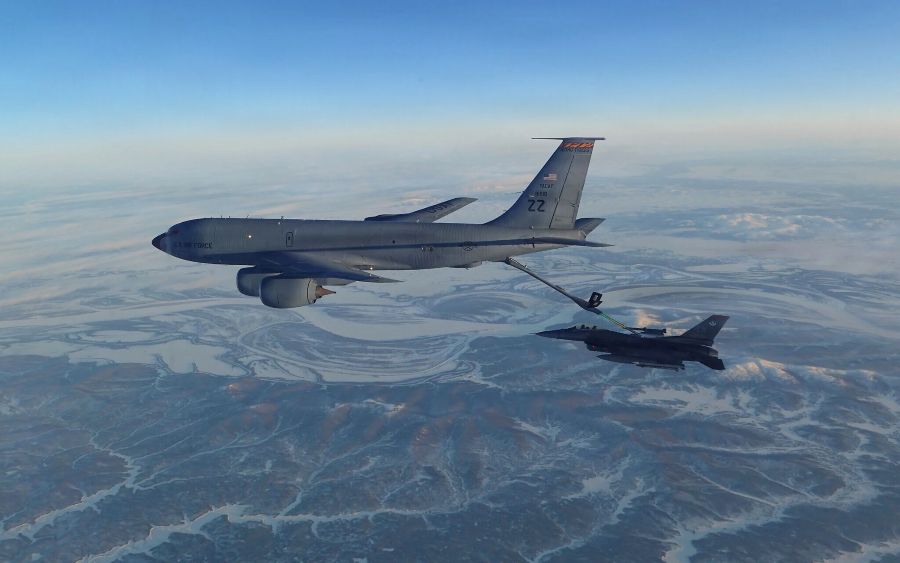
A KC-135 participates in a mid-air refueling operation
The KC-135 Stratotanker, often referred to in operational contexts as an aerial refueling platform, forms the backbone of the U.S. Air Force’s tanker fleet. Introduced in the late 1950s and based on the Boeing 707 airframe, the KC-135 remains in widespread service due to its capacity to carry up to 200,000 pounds of fuel and its ability to refuel multiple aircraft simultaneously via boom or drogue systems.
The Stratotanker supports extended missions for fighters, bombers, and transport aircraft, enabling sustained presence in areas like the Persian Gulf without reliance on ground refueling.